Water inside an outdoor distribution box does not automatically mean the door seal has failed. Rain may enter through a cable connection, moisture may arrive through a conduit, or water vapor already inside may condense on a cold surface. Each route calls for a different response.
The useful question is not simply, “Which enclosure has a higher IP rating?” It is, “Where did this water come from, and what evidence supports that explanation?” This guide helps maintenance teams and project buyers investigate the cause before approving repairs or specifying replacement equipment.
Keep a Wet Distribution Box Out of Service Until Assessed
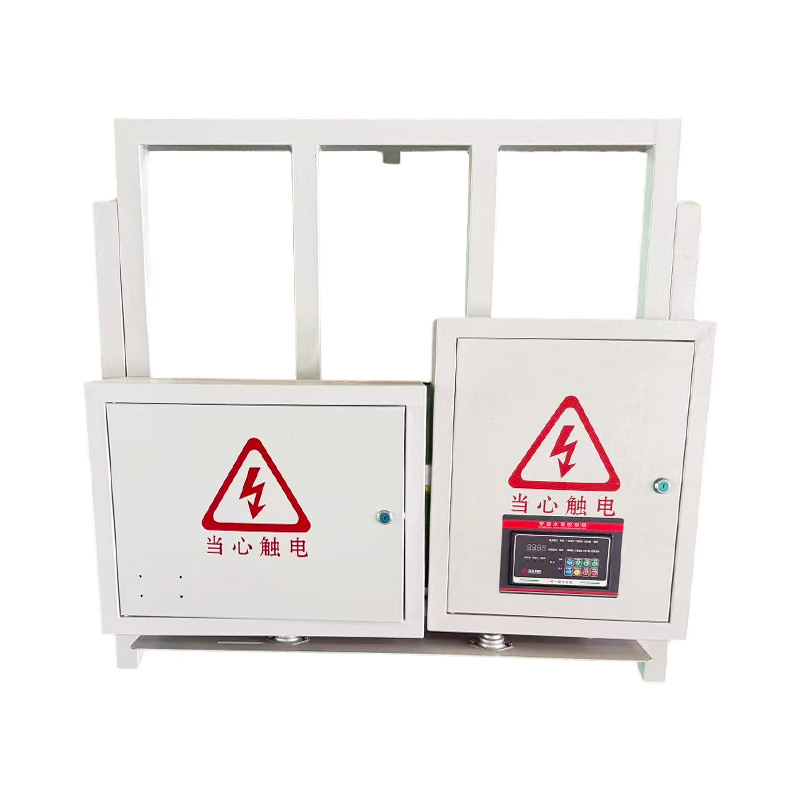
Do not open, touch or attempt to dry an outdoor distribution box that may be energized. Restrict access and have qualified electrical personnel establish a safe condition, including isolation of all relevant supplies and verification before internal inspection. Follow the equipment instructions and applicable local work rules; OSHA’s electrical work-practice requirements provide one recognized reference.
Dry-looking equipment is not necessarily safe equipment. The Electrical Safety Foundation’s water-damage guidance warns against restoring power without proper evaluation.
The checks below are an investigation brief for qualified personnel, not instructions for opening or repairing energized equipment.
Identify the Water Source Before Choosing a Remedy
Treat moisture in an outdoor distribution box as three working possibilities: external liquid entering through an opening, moisture traveling through connected wiring routes, or condensation forming internally.
More than one mechanism may be present. A leaking connection can introduce water that later evaporates and condenses elsewhere. Finding droplets on the door therefore does not establish that the door is the entry point.
Start an incident record with the discovery time, recent weather, cleaning activity, operating state and maintenance history. Include whether cables, meters or communications equipment were recently added.
When inspecting an outdoor distribution box, keep observations separate from conclusions. “Water mark below the upper cable entry” is evidence. “The entire enclosure is defective” is a conclusion that requires further support. That distinction makes discussions between the installer, maintenance team and supplier much more productive.
Read the Moisture Pattern Without Overdiagnosing It
Use the following matrix to organize an outdoor distribution box investigation. The possibilities are prompts to test, not definitive diagnoses. Internal observations should come only from an approved, safely isolated inspection.
| Observed pattern | Possibility to investigate | Evidence needed to distinguish the cause |
|---|---|---|
| A localized trail below one cable entry | Entry-seal leakage or water arriving along the wiring route | Entry details, cable routing and rain history |
| Moisture near one door corner | Uneven closure, damaged sealing surface or nearby opening | Door alignment and gasket condition |
| Fine droplets across several cold surfaces | Condensation | Internal temperature, humidity and surface-temperature history |
| Water concentrated around a conduit connection | Water or humid air arriving through the conduit | Upstream route and sealing arrangement |
| Moisture first appears after modification | An altered opening or closure condition | Before-and-after drawings and photographs |
| Repeated dampness during shutdown | Cooling-related condensation or an inactive moisture-control provision | Shutdown timing and environmental records |
A photograph taken several hours after discovery may show where water collected, not where it first entered. Preserve the sequence of observations before cleaning or dismantling changes the evidence.
Why a Higher IP Rating May Not Solve the Problem
IEC 60529 classifies enclosure ingress protection under defined conditions. It does not turn an outdoor distribution box into an unlimited waterproof container or replace an assessment of the complete installation.
The rating of an outdoor distribution box describes a configuration: doors closed as intended, specified openings and suitable fittings. Do not assume an altered gland plate or added display preserves the original protection. Environmental evaluation also applies to enclosure accessories such as plugs, latches and window kits.
An IP rating is also not a condensation-control strategy. Preventing external liquid ingress cannot stop moisture already inside from condensing when a surface becomes cold enough.
For an outdoor distribution box with a recurring problem, confirm both the declared rating and the as-installed arrangement. Buying a higher-rated empty shell while retaining the same unsuitable entry details may leave the real cause unresolved.
Examine Cable Entries as Complete Sealing Assemblies
A cable entry has several interfaces: the cable jacket to the gland seal, the gland body to the enclosure, and any removable plate to the cabinet. Evaluating only the visible nut overlooks the rest of the connection.
IEC 62444 provides construction and performance requirements for cable glands. For the actual installation, obtain the selected gland’s instructions and dimensional limits rather than assuming every similarly threaded fitting is interchangeable.
Match the Seal to the Actual Cable
For an outdoor distribution box, have the installer verify cable outside diameter, seal range, jacket condition and the specified washers or entry accessories. Request confirmation of the mounting-hole dimensions and tightening requirements.
Treat two cables passed through a single-cable seal, improvised packing or a missing entry washer as details requiring manufacturer review. More sealant or greater tightening force is not evidence of a correct connection.
Follow the Wiring Route Beyond the Box
Review whether the route directs runoff toward an entry or connects to a damp underground duct. Temperature differences along raceways can also create condensation concerns, as recognized in published raceway sealing provisions.
For an outdoor distribution box, bottom entry is a layout choice, not proof that the connected route cannot carry moisture. Have the designer assess the entire route and specify any necessary seals or water-management details.
Check Door Seals, Mounting and Later Modifications
Treat the door as an assembly of gasket, sealing land, hinges and latches. During a safely isolated inspection, document cuts, trapped debris, displaced gasket sections and uneven closure. Compare the condition with the manufacturer’s maintenance instructions.
If the problem began after mounting, ask whether the enclosure remains square and whether the door closes as designed. If it followed servicing, establish which parts were removed, replaced or adjusted.
An outdoor distribution box may also have openings for meter windows, pushbuttons, antenna connections or spare cables. Review every penetration, including unused holes. Electrical enclosure component evaluation includes sealing fittings, hole plugs, rain hoods and access hardware—not just the enclosure body.
Keep the corrective action specific. Replacing a damaged gasket is different from resolving a distorted frame or an unsuitable accessory. Record the approved part and installation detail instead of leaving the repair as an undocumented field modification.
Understand Condensation During Cooling and Shutdown
Condensation becomes possible when a surface reaches or falls below the dew point of the surrounding air. The National Weather Service’s explanation of dew point distinguishes this temperature from relative humidity alone.
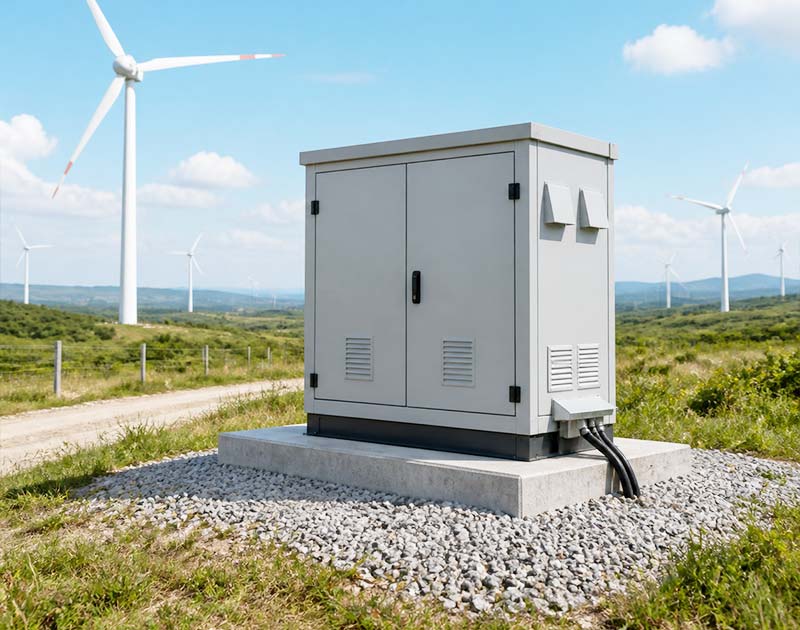
An outdoor distribution box can therefore develop internal droplets without rain passing through its door. Humid air may have entered during servicing or through connected openings; subsequent cooling can bring internal surfaces to the condensation threshold.
Compare Surface Temperature with Internal Dew Point
Suppose an investigation establishes an internal dew point of 22°C while a cabinet surface falls to 19°C. Condensation is physically plausible at that surface. These illustrative values are not universal limits or heater settings.
Use measurements that describe the air inside the enclosure and the relevant surfaces. A weather-app humidity reading or a single midday measurement cannot establish what happened overnight.
For an outdoor distribution box that becomes damp only during shutdown, compare the operating and cooling periods. Check whether a specified heater or other moisture-control provision remains available when the main load stops. Treat that as a hypothesis to verify, not a reason to energize wet equipment.
Separate Leak Prevention from Condensation Control
Once the likely mechanism is established, select measures for that mechanism. Restoring an entry seal addresses a liquid-water route. Managing surface temperature or internal humidity addresses condensation. One does not automatically accomplish the other.
Anti-Condensation Heating
An enclosure heater may help keep vulnerable surfaces above the dew point, but it does not remove incoming rainwater. Warming air can lower relative humidity without removing its water vapor, a distinction explained in the National Weather Service’s humidity guidance.
For an outdoor distribution box, request a manufacturer-reviewed heater arrangement, control method, clearances and supply requirements. Avoid generic wattage rules that ignore enclosure size, heat loss and ambient conditions.
Venting and Drainage
Pressure-equalization devices, drains and ventilation openings serve different purposes. Do not assume a breathing accessory actively dries the air, or that a drain prevents condensation from forming.
Do not drill an improvised hole in an outdoor distribution box. Any proposed fitting must be compatible with the enclosure, correctly positioned and assessed for the required protection. A moisture-control modification also needs maintenance instructions and confirmation that it does not obstruct the electrical layout or compromise the assembly’s thermal performance.
Review the Installation Site, Not Just the Cabinet
Document roof runoff, irrigation spray, cleaning practices, standing water and nearby surfaces around the outdoor distribution box. Photograph cable approaches and the enclosure base as well as the front door.
A protective hood should be evaluated as part of the installation. It is not permission to use an unsuitable enclosure, and it must not block access or required cooling. Likewise, a flood-exposed location needs a site-level decision; ordinary weather protection should not be treated as immersion protection.
For project selection, Lanshan’s guide to indoor and outdoor distribution cabinets provides a broader starting point. Resolve the actual exposure before deciding which cabinet arrangement fits.
Do Not Confuse an Empty Enclosure with a Finished Assembly
IEC 62208 addresses empty enclosures before switchgear and controlgear components are incorporated. That is a different stage from an outdoor distribution box containing protective devices, wiring, terminals and metering equipment.
For the finished assembly, confirm the applicable part of the IEC 61439 series and the relevant verification. Part 1 contains general rules and must be used with the applicable assembly part; an empty-enclosure report does not establish every characteristic of the completed equipment.
Request the configuration covered by the declared protection, including gland plates, accessories and installation instructions. If site work changes those details, obtain a documented assessment instead of assuming the original claim remains unchanged.
Example: A Cabinet That Is Wet Only on Monday Morning
Consider a hypothetical outdoor distribution box serving an industrial utility area. Moisture is discovered after weekend shutdowns, including weekends without rain. The maintenance team initially suspects the door gasket.
The investigation should test that explanation against the timing. Request environmental records covering shutdown and restart, inspect the defined entry points, and check the approved moisture-control arrangement. Do not replace the gasket and declare success simply because the box looks dry on a warm afternoon.
Suppose the inspection finds no localized ingress trail, while recorded surface temperatures fall below the internal dew point overnight. That supports condensation as a working explanation, although it does not rule out another moisture source.
For this outdoor distribution box, the next decision would be a reviewed humidity or temperature-control measure, followed by assessment under the relevant shutdown conditions. If evidence instead identifies water traveling through a conduit, the corrective work must address that route.
The lesson is to let the operating pattern guide the investigation, rather than letting the first visible droplet determine the repair.
Decide What Can Be Repaired and What Must Be Replaced
Repairing the enclosure does not establish that the equipment inside remains serviceable. Water-damaged protective devices require their own evaluation. The Electrical Safety Foundation identifies molded-case circuit breakers, fuses and several protective or electronic devices among equipment requiring replacement after water damage.
For an outdoor distribution box, obtain a component-by-component disposition from qualified personnel and the relevant manufacturer. Distinguish an approved enclosure repair from an approved return to service. Do not use drying, successful switching or a single test result as a universal acceptance criterion.
Keep the inspection findings, replaced parts and final authorization with the equipment record.
Specify a Replacement Around the Failure You Need to Prevent
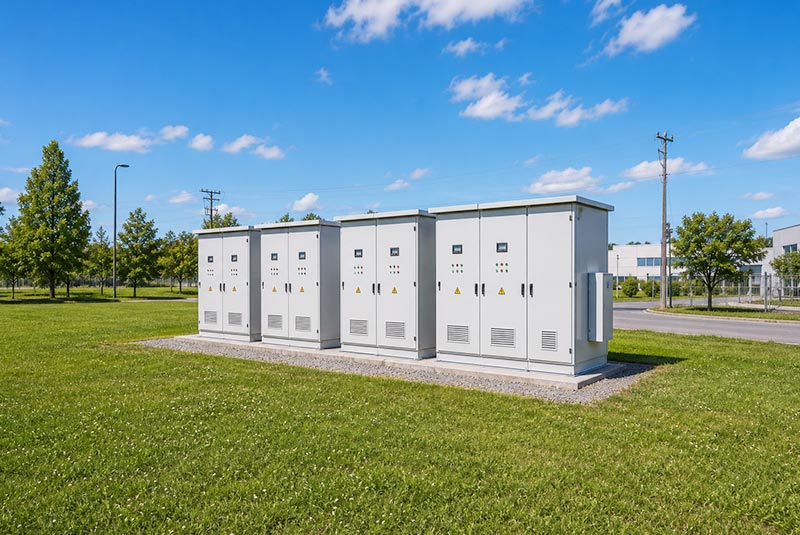
A replacement outdoor distribution box should address the established exposure and entry arrangement, not merely reproduce the original dimensions.
| Information to submit | Why it belongs in the configuration review |
|---|---|
| Incident photographs and timing | Connect the proposed change to the observed problem |
| Cable sizes, quantities and entry drawing | Define glands, openings and termination space |
| Rain, cleaning, humidity and temperature conditions | Establish the environmental duty |
| Circuit schedule and electrical ratings | Preserve required distribution and protection functions |
| Mounting and access details | Confirm the installation arrangement |
| Required protection and verification documents | Define what must be demonstrated before acceptance |
Lanshan’s integrated distribution box supports project-specific configurations, with published steel and stainless-steel enclosure options and selectable protection levels. Request confirmation for the particular outdoor arrangement; do not apply every series option to every supplied unit.
Agree who supplies entry fittings, who performs site modifications and who checks the final installation. Record the as-installed arrangement so future cable additions receive the same review.
Conclusion
A reliable outdoor distribution box needs suitable enclosure protection, correctly designed entries and a moisture strategy matched to its operating conditions. Identify the water source before choosing the remedy, then assess the affected electrical equipment separately.
Contact Lanshan Electric with your circuit schedule, enclosure drawing and site conditions to discuss a distribution box configuration suited to your project.
FAQ
Why is water inside my outdoor distribution box after rain?
Possible routes include cable entries, door interfaces and later-added openings. Also investigate water arriving through connected ducts. The location where water collects is not necessarily its entry point; use a qualified inspection to establish the route.
Can an IP65 outdoor distribution box develop condensation?
Yes. Ingress protection does not prevent water vapor already inside from condensing on a sufficiently cold surface. Evaluate the internal dew point, surface temperatures and operating cycle rather than treating the IP marking as condensation protection.
Should I add a drain hole to stop moisture buildup?
Not as an improvised repair. Have the manufacturer assess whether a rated drainage or pressure-equalization fitting is appropriate and how it affects enclosure protection. Drainage also does not establish that water-exposed electrical devices are safe.
Is a stainless-steel outdoor distribution box automatically waterproof?
No. Material selection does not establish the protection of doors, entries or accessories. Specify the completed arrangement and its declared performance, then confirm suitability for the actual exposure and installation.
Can I restore power once the inside looks dry?
No. Appearance alone does not establish safe operation after water exposure. Qualified personnel must determine the required replacement or approved recovery work and authorize return to service under the applicable procedures.