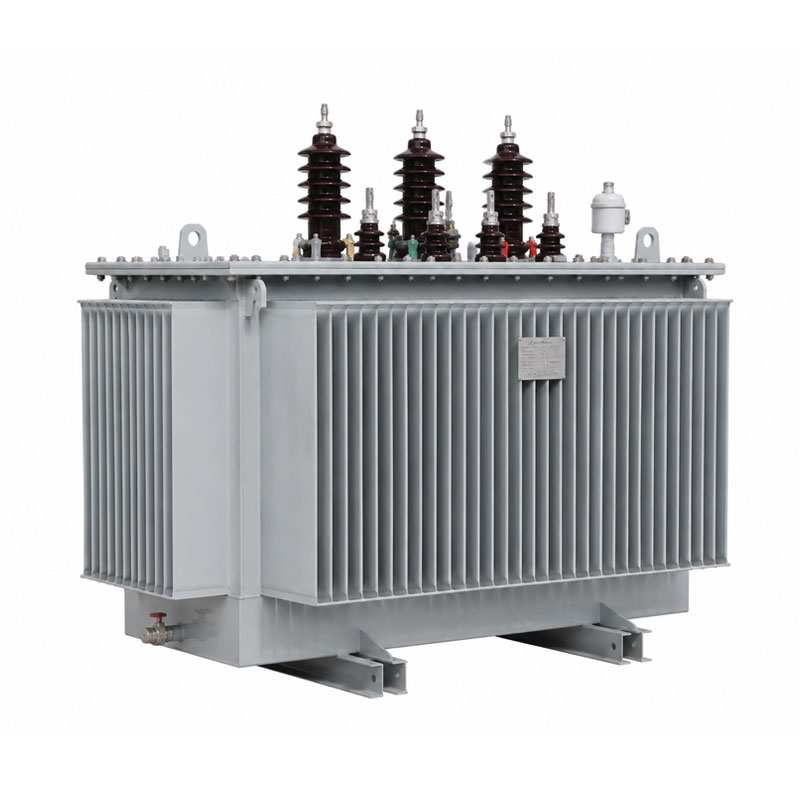
A dry type vs oil immersed transformer decision should not be reduced to a simple indoor-versus-outdoor rule. Both designs can deliver reliable voltage transformation, but they manage insulation, heat, fire exposure and maintenance in fundamentally different ways. Those differences become important when the transformer is placed inside an occupied building, exposed to weather, enclosed in a compact substation or expected to carry variable industrial loads.
For project engineers and technical buyers, the useful question is not which technology is universally better. It is which configuration fits the actual site, loading profile, fire strategy, environmental conditions and maintenance model. This guide compares the two designs from that project perspective and shows what information should be sent to a supplier before final selection.
Start with the Core Design Difference
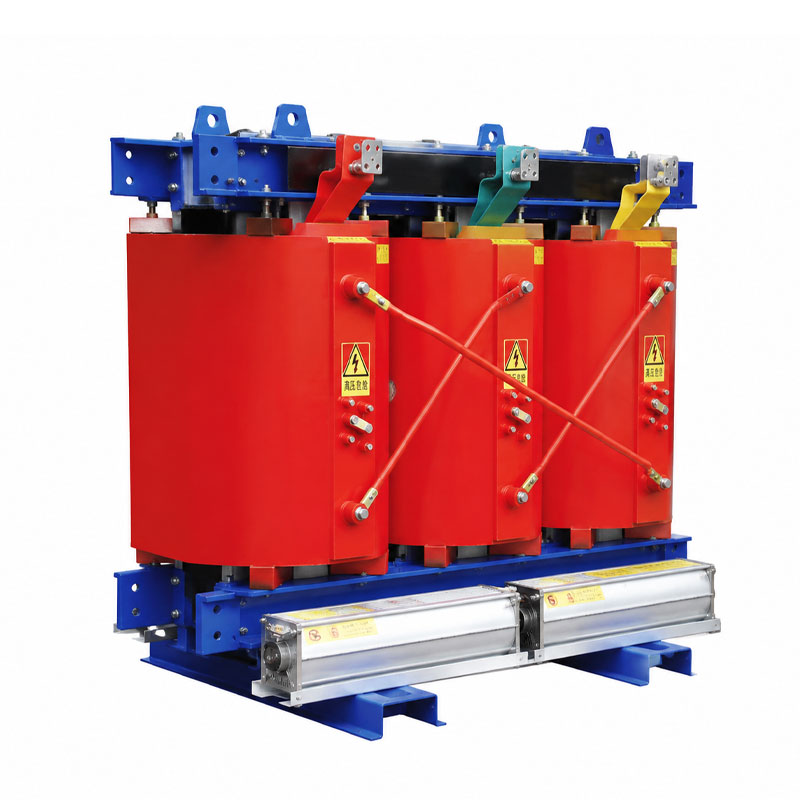
The dry type vs oil immersed transformer comparison begins with the insulation and cooling medium. A dry-type transformer uses solid insulation and air for cooling, either by natural air circulation or by forced air. An oil-immersed transformer places the active parts in an insulating liquid that also transfers heat to the tank and radiators.
IEC 60076-11 applies to dry-type power transformers within its defined scope, while IEC 60076-1 provides general requirements for power transformers and IEC 60076-7 addresses loading of mineral-oil-immersed transformers. These standards describe different equipment families and loading behavior, so a project specification should not copy assumptions from one construction to the other.
This single design difference affects room layout, cooling, fire and spill control, inspection routines and how the equipment reacts to environmental exposure. It does not mean one construction is automatically safer, more efficient or longer-lived in every project.
Dry Type vs Oil Immersed Transformer at a Glance
| Faktor keputusan | Dry-type transformer | Oil-immersed transformer | Apa yang harus diverifikasi pembeli |
|---|---|---|---|
| Insulation and cooling | Solid insulation; air cooling | Insulating liquid provides insulation and heat transfer | Exact construction and cooling mode |
| Typical siting logic | Often considered for indoor and occupied-building applications | Often considered for outdoor substations and industrial yards | Local rules, room design and environmental exposure |
| Liquid containment | No insulating-oil containment | Containment may be required depending on liquid and site rules | Fluid type, quantity and site requirements |
| Maintenance focus | Cleaning, connections, fans and temperature monitoring as applicable | Oil condition, seals, accessories, cooling and electrical connections | Manufacturer maintenance instructions |
| Thermal assessment | Use dry-type loading guidance and actual enclosure conditions | Use liquid-immersed loading guidance and actual ambient conditions | Load profile, ambient, enclosure and cooling availability |
| Fire review | No combustible mineral-oil inventory, but not fireproof | Liquid characteristics and installation measures must be reviewed | Product fire behavior and building/site fire strategy |
| Environmental risk | No oil leak from the transformer | Leak and spill consequences depend on fluid and installation | Fluid specification, containment and drainage |
| Expansion decision | Check room heat rejection and physical access | Check site space, containment and cooling arrangement | Future load and replacement route |
The dry type vs oil immersed transformer table is a screening tool, not an approval checklist. The final decision requires configuration-specific ratings, losses, environmental limits and installation requirements.
Choose by Installation Location, Not by Habit
Installation location is often the first major filter in a dry type vs oil immersed transformer study. A dry-type unit may simplify an indoor design where the project wants to avoid insulating liquid inside the building. An oil-immersed unit may integrate naturally into an outdoor substation where containment, access and maintenance can be designed around it.
Indoor Electrical Rooms
For an indoor room, evaluate fire separation, ventilation, sound, delivery access and the consequences of placing liquid-filled equipment inside the building. A dry-type transformer does not eliminate fire-safety engineering, but it removes the insulating-oil inventory from the room. IEC 60076-11 includes environmental, climatic and fire-behavior classifications that should be matched to the offered design.
Outdoor and Utility-Style Installations
For an outdoor site, the dry type vs oil immersed transformer choice changes. Oil-immersed equipment can use the surrounding air and radiator surfaces effectively, while the site can be designed with appropriate containment and access. A dry-type transformer installed outdoors normally requires an enclosure and a specific thermal and ingress-protection review rather than simply moving an indoor unit outside.
Do not let location alone decide the project. A dry-type transformer can be used outdoors when designed for it, and liquid-filled transformers can be installed indoors when the building design and applicable rules permit it. The dry type vs oil immersed transformer selection must be supported by the actual arrangement.
Compare Fire and Spill Requirements Separately
Fire risk is one of the most discussed dry type vs oil immersed transformer differences, but vague claims create poor specifications. Dry-type equipment avoids mineral oil, yet its insulation system and surrounding materials still require an appropriate fire review. It should not be described as having zero fire risk.
For an oil-immersed transformer, identify the exact insulating liquid. IEC 60296 covers mineral insulating oils, while IEC 62770 addresses natural esters within its scope. Different fluids have different properties and installation implications. A supplier should not substitute one liquid for another without a documented design review.
Then separate product characteristics from site protection. Ask the project fire and civil designers to define containment, drainage, separation and emergency requirements for the actual location. IEC 61936-1 is one reference for applicable high-voltage installation considerations, but local regulations and project requirements remain decisive.
A robust dry type vs oil immersed transformer comparison therefore lists two independent questions: what is the transformer designed and tested to do, and what must the site provide around it?
Compare Thermal Performance Using the Real Load Profile
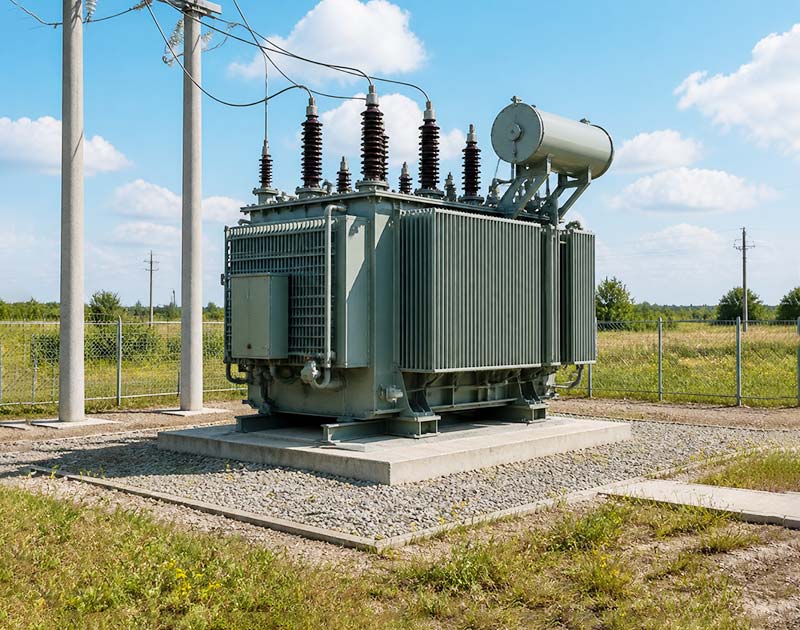
Transformer thermal behavior depends on loading, ambient temperature, cooling and time. Nameplate kVA alone is not enough for a dry type vs oil immersed transformer decision.
IEC 60076-12 provides loading guidance for dry-type transformers, including the relationship between operating temperature, time and insulation ageing. IEC 60076-7 provides corresponding guidance for mineral-oil-immersed transformers. The thermal models and construction are different, so one generic overload rule should not be applied to both.
Use the Same Duty for Both Proposals
Give both suppliers the same hourly or representative load profile, ambient conditions, altitude and expected high-load duration. If one proposal is evaluated at a lower ambient temperature or with fan assistance while the other is not, the dry type vs oil immersed transformer comparison is not technically equal.
Check Enclosure Effects
A transformer inside a compact substation or room does not operate in free air. The enclosure changes heat rejection. Ask for losses at the relevant load, cooling mode and environmental conditions, then have the station or room ventilation assessed. Do not infer whole-system thermal capability from the standalone transformer rating.
Where forced cooling is offered, record the natural-cooling rating separately from the fan-assisted rating. Define what happens if auxiliary cooling becomes unavailable. Spare transformer capacity and spare cooling capability are not the same thing.
Do Not Assume One Type Is Always More Efficient
Efficiency is often oversimplified in a dry type vs oil immersed transformer comparison. The correct comparison uses guaranteed no-load loss, load loss and the site load profile for the same rating and voltage requirements.
No-load loss is present whenever the transformer is energized. Load loss varies with loading and winding current. A project operating at light load for much of the year may value these components differently from a continuously loaded industrial site. Ask for both values rather than accepting a generic “high efficiency” claim.
Cooling auxiliaries should also be visible. If a dry-type transformer depends on fans at the planned duty, or an oil-immersed design uses forced-air cooling, include auxiliary consumption and the operating schedule in the lifecycle assessment.
The dry type vs oil immersed transformer decision should therefore be based on comparable guaranteed data, not on a general belief that one construction is always more efficient.
Maintenance Requirements Are Different, Not Zero vs High
A dry-type transformer avoids oil sampling and leak management, but it still needs inspection. Depending on the design and environment, maintenance may include cleaning, checking ventilation paths, examining connections, reviewing temperature records and maintaining cooling fans.
An oil-immersed transformer adds liquid-system responsibilities. The maintenance plan may include checking seals, oil level, protective accessories and insulating-liquid condition, according to the manufacturer and project requirements. The exact program depends on the tank design, fluid and service conditions.
For the dry type vs oil immersed transformer evaluation, compare the site team’s actual capability. An industrial owner with an established transformer oil program may consider liquid maintenance routine. A commercial building operator with limited high-voltage maintenance resources may place greater value on avoiding that system.
Neither construction should be sold as maintenance-free. For a dry type vs oil immersed transformer decision, request the manufacturer’s maintenance instructions before the procurement decision, not after commissioning.
Compare Environmental Exposure and Enclosure Protection
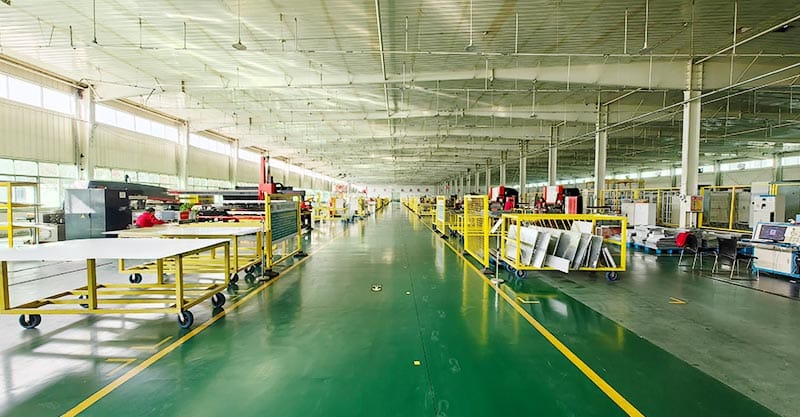
Dust, moisture, corrosive atmospheres, altitude and temperature can change the dry type vs oil immersed transformer selection. Dry-type windings are directly influenced by the air around the active parts unless an appropriate enclosure and environmental design are provided. An oil tank separates the active parts from ambient air, but external tank, radiator and accessory materials still need to suit the site.
For a dry-type transformer, ask for the applicable environmental and climatic classification, enclosure arrangement and any restrictions on condensation or contamination. For an oil-immersed transformer, ask about corrosion protection, sealing or conservator arrangement and fluid preservation.
An IP code under IEC 60529 describes defined ingress protection for an enclosure. It does not, by itself, establish corrosion resistance, UV durability, condensation control or thermal suitability. If a higher enclosure protection level changes airflow, ask whether the transformer rating or cooling arrangement also changes.
Noise and Building Integration Can Change the Decision
In offices, hotels, hospitals or mixed-use developments, sound can become a practical dry type vs oil immersed transformer selection criterion. The transformer should be assessed as an installed source, not by an isolated catalogue number.
Ask whether the declared figure is sound power or sound pressure, the measurement method, the loading and cooling condition, and whether fans were operating. Then have the building acoustic designer consider room construction, structural transmission, ventilation openings and bus or cable connections.
In a dry type vs oil immersed transformer comparison near property boundaries, the same discipline applies. Location, barriers and nighttime operating conditions can matter more than a small difference between two factory sound values.
Harmonics and Nonlinear Loads Need Their Own Review
Modern commercial and industrial loads may include drives, UPS systems, rectifiers and charging equipment. These can introduce nonsinusoidal currents that increase transformer heating. Do not solve that issue by simply choosing one side of the dry type vs oil immersed transformer comparison.
Provide the expected harmonic spectrum or representative equipment data and ask the designer to evaluate the offered transformer. IEEE C57.110 provides methods for assessing transformer capability with nonsinusoidal load currents. The analysis should be tied to the actual construction and load.
Likewise, significant single-phase loads require a phase-balance and neutral review. A generic spare-kVA percentage does not demonstrate that the proposed transformer will operate acceptably under a defined harmonic or unbalanced duty.
Use Project-Specific Cost, Not Only Transformer Purchase Price
The equipment quotation is only one part of a dry type vs oil immersed transformer comparison. The site may also need ventilation, containment, fire separation, civil work, monitoring, maintenance resources or a larger electrical room.
Instead of comparing generic prices, build a project cost boundary. Include only costs that actually differ between the two options and state who owns each item. For example, if the outdoor yard already includes containment for other liquid-filled equipment, the incremental civil requirement may be different from a standalone indoor installation.
Avoid universal lifecycle-cost percentages. Energy losses depend on the load profile; maintenance costs depend on local labor and operating strategy; civil requirements depend on the site. The most defensible comparison is transparent about those assumptions.
A Decision Matrix for Common Project Scenarios
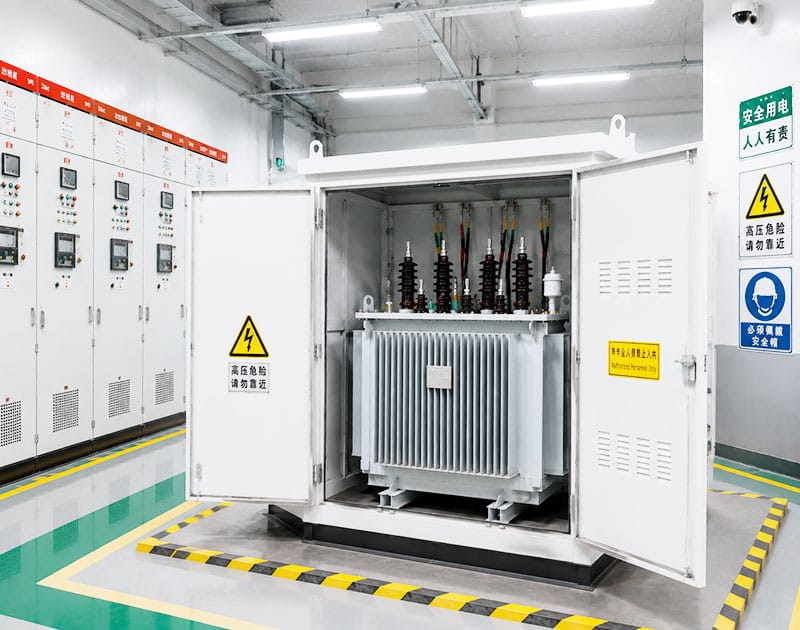
| Project scenario | Dry-type option deserves priority review when… | Oil-immersed option deserves priority review when… | Key confirmation |
|---|---|---|---|
| Indoor commercial building | Avoiding insulating liquid in occupied structure is a major objective | Building design expressly accommodates liquid-filled equipment | Room ventilation, fire strategy, sound and access |
| Outdoor industrial substation | Site requires a dry construction for a defined reason and enclosure can support cooling | Outdoor liquid-filled equipment fits the maintenance and containment strategy | Ambient, fluid, containment and cooling |
| Gardu kompak | Dry-type configuration matches the enclosure thermal design | Oil-immersed configuration matches the enclosure and spill strategy | Complete station temperature-rise evidence |
| Dusty or humid environment | Environmental classification and enclosure address the exposure | Tank system and external materials suit the exposure | Pollution, condensation and corrosion data |
| High nonlinear load | Dry-type design is evaluated for the actual harmonic current | Oil-immersed design is evaluated for the actual harmonic current | Harmonic spectrum and thermal assessment |
| Limited maintenance team | Simpler site routine is a strong project objective | Existing asset-management program supports liquid maintenance | Manufacturer maintenance plan |
This dry type vs oil immersed transformer matrix deliberately avoids naming a universal winner. It identifies the condition that should drive the engineering review.
Example: Same Load, Two Very Different Sites
Consider a hypothetical 1,000 kVA distribution duty. One installation is inside a mixed-use building; the other is in an outdoor industrial yard. The electrical capacity is the same, but the site constraints are not.
Site A: Indoor Mixed-Use Building
The indoor site has occupied rooms nearby, restricted replacement access and a mechanical ventilation system that must remove transformer losses. The dry type vs oil immersed transformer review should focus on room heat rejection, fire strategy, sound and maintenance access. A dry-type proposal may simplify the liquid-containment question, but it still needs a verified cooling and acoustic solution.
Site B: Outdoor Industrial Yard
The outdoor site has space for access and containment, and the maintenance team already manages liquid-filled electrical assets. Here the oil-immersed option may integrate naturally, but the proposal still needs the correct fluid specification, tank arrangement, cooling mode and site environmental review.
Nothing about the shared 1,000 kVA rating proves that the same construction is optimal for both projects. This is the central lesson of a dry type vs oil immersed transformer comparison: site conditions can be more decisive than nameplate capacity.
What to Send Lanshan Before Choosing a Transformer Type
Lanshan offers both a 10kV transformator tipe kering dan an transformator terendam minyak. Use the published product information as a starting point, then request a configuration-specific proposal for the actual project.
For a useful dry type vs oil immersed transformer comparison, send the same technical package for both options. That package should include the load profile, primary and secondary voltages, required vector group and impedance, site ambient conditions, altitude, indoor or outdoor location, enclosure requirements, harmonic-load information and maintenance expectations.
Also provide the room or site layout. Ask for guaranteed losses, cooling ratings, dimensions, masses, accessory lists, environmental limits and the applicable verification or test documentation. Do not transfer the broadest series capability directly into a purchase specification without confirmation.
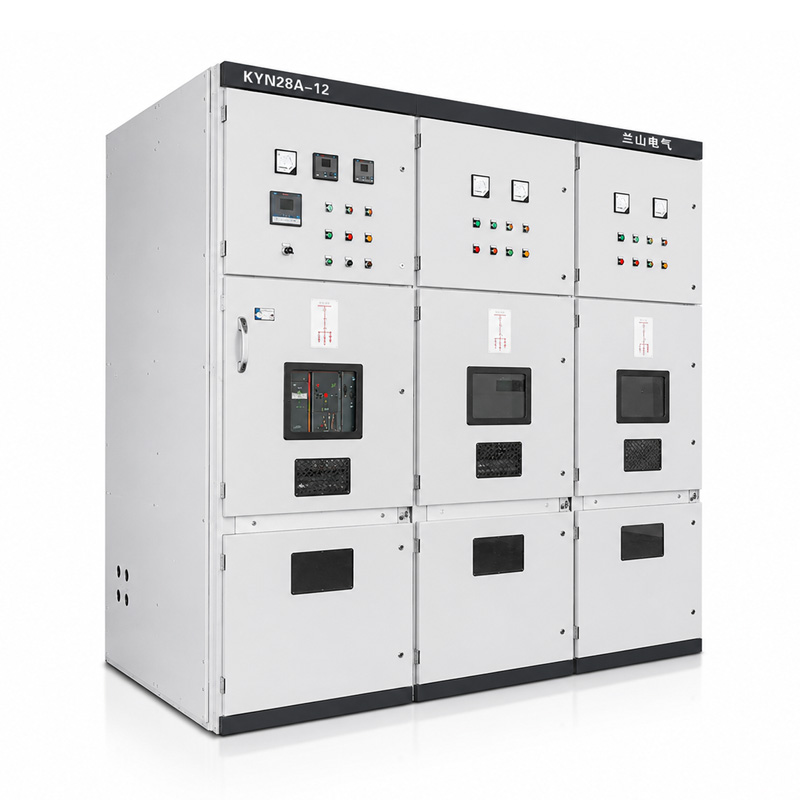
If the transformer will be installed in a compact substation, include the enclosure and ventilation arrangement in the review. If it will connect to low-voltage switchgear, coordinate the fault study, cable or bus connection and protection interface before final approval.
Kesimpulan
A dry type vs oil immersed transformer decision is strongest when it starts with the site rather than a preferred technology. Indoor location, fire and spill strategy, cooling, environment, maintenance capability, sound and load profile can all change which design is the better fit.
For the final dry type vs oil immersed transformer decision, compare both options using the same electrical duty and project assumptions. Then request configuration-specific losses, ratings, environmental limits and installation requirements. Hubungi Lanshan Electric with your load profile, voltage requirements and site layout to review suitable dry-type and oil-immersed transformer configurations.
FAQ
Which is better, a dry type or oil immersed transformer?
Neither is universally better. A dry type vs oil immersed transformer choice depends on installation location, fire and spill requirements, cooling, environmental exposure, maintenance resources and the actual load profile. Compare both against the same project duty.
Are dry type transformers only for indoor use?
No. Dry-type transformers can be designed for outdoor service with an appropriate enclosure and environmental provisions. However, moving an indoor design outdoors without reviewing ingress protection, condensation and cooling is not acceptable.
Are oil immersed transformers more efficient?
Do not assume so from construction alone. Compare guaranteed no-load loss and load loss for the same rating, voltage and operating duty. Include fan or other auxiliary power where it affects the selected cooling mode.
Does a dry type transformer have zero fire risk?
No. It removes the insulating-oil inventory but still contains electrical insulation and other materials. Review the applicable fire-behavior classification and the building or site fire strategy for the actual installation.
What information should I send for a dry type vs oil immersed transformer comparison?
Send the load profile, voltage ratio, vector group and impedance requirements, ambient conditions, altitude, room or site layout, harmonic information, cooling expectations and maintenance constraints. This allows both options to be compared on the same technical basis.