Table of Contents
Switchboard Selectivity should be settled around the project interface it controls. Selectivity depends on device settings and fault current, so a generic breaker size hierarchy does not establish coordination. The useful buying decision is therefore a documented requirement tied to the actual equipment, operating conditions and responsibility for approval.
This guide examines switchboard selectivity for buyers and engineering teams evaluating low voltage switchgear. It connects the inquiry inputs to the offered configuration, the evidence required before release and the records needed at handover. Any example is a planning scenario rather than a claim about a completed customer project.
Switchboard Selectivity: define the decision boundary
A coordinated study links sensitivity and clearing behavior across equipment boundaries. Default settings or a nominal current hierarchy cannot establish selectivity.
The immediate question for switchboard selectivity is whether the offered configuration addresses the declared duty and the receiving site. A later device substitution or additional source can invalidate an earlier coordination assumption. Put the decision owner and approval milestone beside the requirement so that purchasing does not have to infer engineering acceptance from a product name.
Inputs that make switchboard selectivity reviewable
Before asking suppliers to commit to switchboard selectivity, assemble the following information. Use the current project revision and mark any unresolved value as pending. A provisional value should remain visible as an assumption until the responsible designer confirms it.
- Current Network Study.
- Source And Transformer Characteristics.
- Selected Device Data.
- Approved Settings And Operating States.
For switchboard selectivity, keep the input schedule with the approved drawings. If the site, cable arrangement, load or control boundary changes, identify the affected input and ask whether the accepted configuration still applies. This gives the owner a practical change record instead of an untraceable chain of email assumptions.
Compare the evidence behind switchboard selectivity
| Comparison point | A reviewable offer | A question still requiring resolution |
|---|---|---|
| Decision basis | A coordinated study links sensitivity and clearing behavior across equipment boundaries. | General model name or a nominal rating with no interface definition |
| Project inputs | Current network study; source and transformer characteristics | Unstated assumptions copied from a different installation |
| Verification | Approve settings through the responsible designer, verify the values actually loaded and preserve both readable schedules and electronic files. | A claim or photograph without its applicable configuration |
| Site completion | Approved field connections and installed-condition records | Factory completion treated as proof of every site interface |
The comparison is a way to expose missing information for switchboard selectivity; it is not a ranking of brands or a declaration that one construction is suitable for every site. A simpler offer can be appropriate when it satisfies the actual boundary. A more elaborate option still needs evidence for the features on which the project relies.
Protection coordination requires device-specific evidence
For switchboard selectivity, this interface should be checked before the configuration is released. Coordinate the incomer, bus coupler and outgoing devices using the actual fault current and manufacturer data for the selected protective arrangement. Selectivity can vary with fault level and device settings, so a hierarchy of nominal current ratings is not enough. Identify the desired continuity outcome and any limits of coordination.
Settings should be controlled by the responsible designer and recorded at commissioning. A procurement substitution can change current limitation or coordination behavior even if it has the same frame size. The acceptance process should therefore compare technical evidence and configuration details, with site testing closing the interfaces that depend on the final installed system.
Record the conclusion alongside the switchboard selectivity input schedule so the next reviewer can identify its basis.
An assembly rating is a coordinated declaration
The switchboard selectivity decision also depends on the connected equipment and its documented conditions. Start with the assembly's rated voltage, continuous current and fault duty, then identify the protective devices and operating conditions associated with those values. A circuit breaker breaking capacity does not by itself establish the short-circuit performance of the assembled board. The busbars, connections, enclosure and protective arrangement need the appropriate verification basis.
Ask the supplier to distinguish rated short-time withstand, peak withstand and conditional ratings where applicable. Record the actual device types and settings that form part of the declared arrangement. If a breaker is substituted during procurement, review the assembly implications before accepting it solely because its current rating and brand appear equivalent.
If this interface changes, reopen the affected switchboard selectivity assumption before accepting the revised arrangement.
Source transfer logic needs an allowed-state matrix
A useful switchboard selectivity review follows the physical or electrical boundary described below. For two incomers and a bus coupler, document which combinations are permitted and which must be prevented. State whether source paralleling is ever allowed and who approves it. Include generator characteristics, neutral treatment and the response to source loss or return.
The control narrative should address failed transfer attempts and the availability of auxiliary supplies. Verify indications and interlocks against the same state matrix during functional testing. A transfer controller catalogue does not settle the system sequence. The designer and owner should agree the behavior before wiring is frozen so that hardware, software and operating procedures express one consistent strategy.
Keep the applicable evidence with the switchboard selectivity approval rather than relying on an unrelated catalogue example.

Surge protection requires a complete connection design
When assessing switchboard selectivity, give this supporting requirement a named owner and evidence item. Select surge protective devices within the project's coordinated protection design and the requirements of the installation. Review location, connection length, protective earthing and the required backup protective arrangement. Provide enough space to inspect condition indicators and replace the relevant modules according to the supplier instructions.
A device rating on a parts list does not prove that the wiring arrangement will deliver the intended result. Drawings should identify the connection path and any remote alarm contacts. If a device is moved during layout optimization, review the consequences rather than treating position as purely cosmetic. Include the installed configuration in commissioning records.
The final switchboard selectivity decision should state any limitation that remains at this interface.
Harmonic interaction needs a network assessment
For switchboard selectivity, this interface should be checked before the configuration is released. Capacitors can interact with system impedance and harmonic sources. Review the site's drives, rectifiers and other nonlinear loads, along with the relevant network information. Where detuning or filtering is proposed, the designer should assess the required reactor and capacitor arrangement using project-specific data.
A standard reactor percentage should not be treated as a substitute for that analysis. Procurement documents should identify ratings, losses and the evidence behind the offered combination. Include the effect on cabinet heat removal and protection. If the load mix changes later, the owner should know which original assumptions need review before adding more compensation capacity.
Record the conclusion alongside the switchboard selectivity input schedule so the next reviewer can identify its basis.
Switching technology follows load variation
The switchboard selectivity decision also depends on the connected equipment and its documented conditions. Contactor-switched and electronic switching arrangements serve different operating duties. Consider how rapidly reactive demand changes, the expected switching frequency and the acceptable response. The selected devices need suitable capacitor switching capability and a compatible thermal arrangement.
Define discharge and permitted reconnection behavior according to the supplied components and controller design. Fast switching alone does not establish a complete solution if measurement or step sizing is unsuitable. Ask the supplier to describe the intended operating sequence and maintenance implications. Functional testing should confirm commands, indications and the agreed protection behavior, while site commissioning verifies that the bank responds appropriately to the actual load profile.
If this interface changes, reopen the affected switchboard selectivity assumption before accepting the revised arrangement.
Motor starting duty differs from running duty
A useful switchboard selectivity review follows the physical or electrical boundary described below. Specify motor power, rated current, starting method, expected acceleration time and the number or sequence of starts. Include process conditions that affect restart after a supply interruption. A feeder selected only from running current may not fit contactor duty, protection behavior or source voltage dip.
Coordinate overload protection and process trips so reset and restart responsibilities are clear. For drives or soft starters, obtain their input and thermal data rather than using a conventional starter assumption. The final feeder schedule should identify the operating duty and controls, making it easier to verify that each unit serves the intended motor and process function.
Keep the applicable evidence with the switchboard selectivity approval rather than relying on an unrelated catalogue example.
Factory inspection should reconcile drawings and hardware
When assessing switchboard selectivity, give this supporting requirement a named owner and evidence item. Use the approved feeder schedule, wiring diagrams and general arrangement as the inspection baseline. Check serial numbers, installed device types, labels and specified routine evidence. Functional checks should include the relevant control, indication and interlock sequences.
Record deviations with a defined disposition and repeat affected checks if the configuration changes. A tidy cabinet is not a substitute for configuration traceability. The receiving team should be able to connect the report to the delivered sections without relying on photographs alone. Keep deferred site tests explicit, especially where protection settings or source transfer behavior depend on the installed network.
The final switchboard selectivity decision should state any limitation that remains at this interface.
Acceptance evidence for switchboard selectivity
Approve settings through the responsible designer, verify the values actually loaded and preserve both readable schedules and electronic files.
Use a requirement-to-evidence register for switchboard selectivity. Each entry should name the requirement, offered configuration, supporting drawing or report, approving party and any remaining site check. A response such as standard design or available on request should remain an open item until the relevant information is supplied and reviewed.
When switchboard selectivity affects construction, do not release the dependent site work from an unapproved drawing. When it affects protection or control, preserve the approved settings or sequence. When it affects service access, retain the accepted layout and the permitted method. These are different evidence types, and a single general compliance statement cannot replace them all.
Technical framework and supplier scope
Consult the IEC 61439-2 public scope for the relevant public background. IEC 61439-2 identifies requirements for power switchgear and controlgear assemblies. Use it with the applicable project specification and related requirements. A reference to the standard on an offer does not replace the verification evidence needed for the offered arrangement.
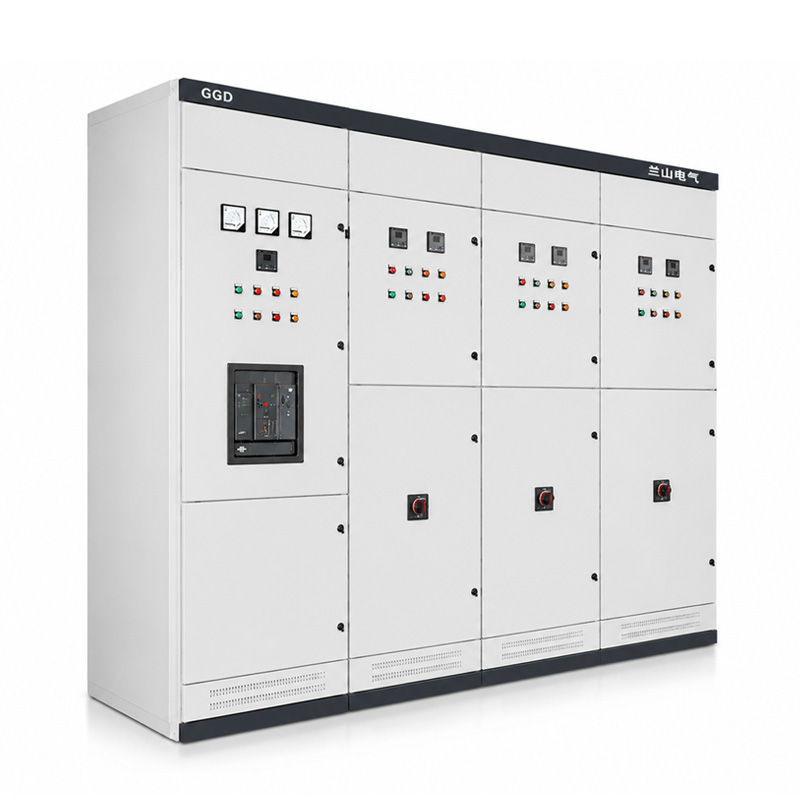
Lanshan lists GGD AC Low Voltage Switchgear Cabinet within its product portfolio. For switchboard selectivity, ask the team to confirm the exact offered configuration and its evidence. Series-level ranges or options on a product page should not be assumed to apply to every unit. The low voltage switchgear category provides the wider product context.
Prepare a switchboard selectivity inquiry
Send Lanshan the current single-line diagram or relevant system layout, the input items above and the decision deadline. Highlight switchboard selectivity in the inquiry and identify any fixed site interface or required acceptance evidence. Ask for a technical response and a visible deviation schedule before comparing the commercial offer.
For interfaces involving installation, integration or commissioning, define the required responsibility boundary with the team through its power engineering and construction service. A focused inquiry gives both parties a clearer basis for confirming equipment scope and the next engineering review.
Frequently asked questions
What information is needed to assess switchboard selectivity?
Start with current network study; source and transformer characteristics; selected device data; approved settings and operating states. Use current project documents and identify unresolved assumptions. For switchboard selectivity, the supplier response should connect those inputs to the exact proposed configuration.
Can a catalogue alone confirm switchboard selectivity?
No. Selectivity depends on device settings and fault current, so a generic breaker size hierarchy does not establish coordination. A catalogue can introduce options, but the actual interface and applicable evidence must be reviewed before switchboard selectivity is accepted for the project.
How should buyers compare switchboard selectivity offers?
A coordinated study links sensitivity and clearing behavior across equipment boundaries. Default settings or a nominal current hierarchy cannot establish selectivity. Compare scope and evidence on the same basis, then record any switchboard selectivity deviation before ranking prices.
What should acceptance verify for switchboard selectivity?
Approve settings through the responsible designer, verify the values actually loaded and preserve both readable schedules and electronic files. Keep the result linked to the supplied equipment and the final project revision so the switchboard selectivity decision can be traced later.
When should switchboard selectivity be reviewed again?
A later device substitution or additional source can invalidate an earlier coordination assumption. Revisit switchboard selectivity whenever a changed input, substituted component or altered site interface affects the accepted basis. Obtain approval for the affected condition and update the as-built record.