Table of Contents
Switchgear Alarm Rationalization should be settled around the project interface it controls. Alarm priorities should reflect consequence and response time, with nuisance alarms separated from conditions requiring action. The useful buying decision is therefore a documented requirement tied to the actual equipment, operating conditions and responsibility for approval.
This guide examines switchgear alarm rationalization for buyers and engineering teams evaluating intelligent power distribution systems. It connects the inquiry inputs to the offered configuration, the evidence required before release and the records needed at handover. Any example is a planning scenario rather than a claim about a completed customer project.
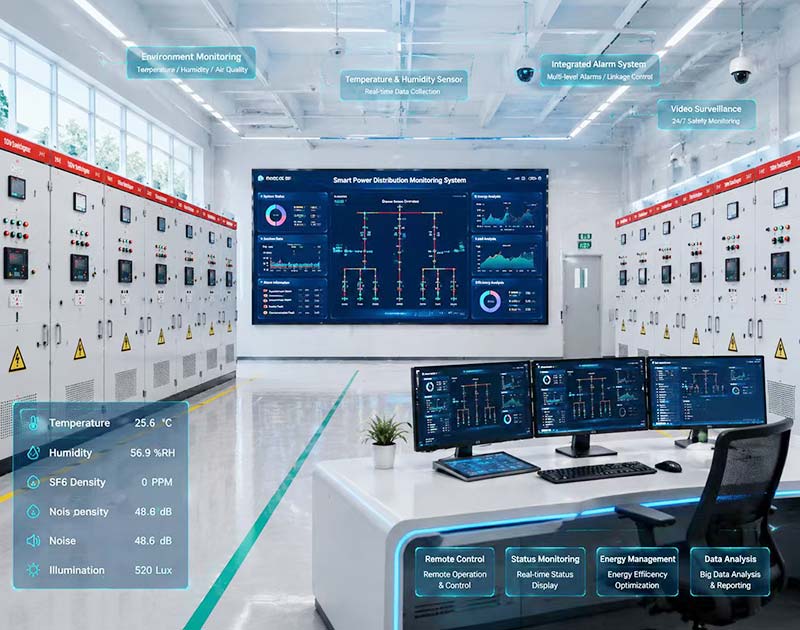
Switchgear Alarm Rationalization: define the decision boundary
An action-based alarm list directs attention to useful conditions. Counting alarms does not demonstrate reduced downtime.
The immediate question for switchgear alarm rationalization is whether the offered configuration addresses the declared duty and the receiving site. Nuisance alarms can mask important events, while poorly chosen suppression can hide a real problem. Put the decision owner and approval milestone beside the requirement so that purchasing does not have to infer engineering acceptance from a product name.
Inputs that make switchgear alarm rationalization reviewable
Before asking suppliers to commit to switchgear alarm rationalization, assemble the following information. Use the current project revision and mark any unresolved value as pending. A provisional value should remain visible as an assumption until the responsible designer confirms it.
- Consequence And Response Time.
- Operator Action.
- Delays And Deadbands.
- Acknowledgment And Return-To-Normal Behavior.
For switchgear alarm rationalization, keep the input schedule with the approved drawings. If the site, cable arrangement, load or control boundary changes, identify the affected input and ask whether the accepted configuration still applies. This gives the owner a practical change record instead of an untraceable chain of email assumptions.
Compare the evidence behind switchgear alarm rationalization
| Comparison point | A reviewable offer | A question still requiring resolution |
|---|---|---|
| Decision basis | An action-based alarm list directs attention to useful conditions. | General model name or a nominal rating with no interface definition |
| Project inputs | Consequence and response time; operator action | Unstated assumptions copied from a different installation |
| Verification | Review priorities with operators and test abnormal, acknowledged and recovered states across the complete signal path. | A claim or photograph without its applicable configuration |
| Site completion | Approved field connections and installed-condition records | Factory completion treated as proof of every site interface |
The comparison is a way to expose missing information for switchgear alarm rationalization; it is not a ranking of brands or a declaration that one construction is suitable for every site. A simpler offer can be appropriate when it satisfies the actual boundary. A more elaborate option still needs evidence for the features on which the project relies.
Alarms need a consequence and a response
For switchgear alarm rationalization, this interface should be checked before the configuration is released. Assign priorities according to the consequence and required response time of the condition. Define the action or investigation expected from the operator and identify who owns it. Repeated nuisance alarms can obscure important events, so review delays, deadbands and suppression rules with the operating team.
Those rules must not conceal a condition that requires action. Include alarm acknowledgment and return-to-normal behavior in testing. A dashboard alarm count is not a measure of reliability improvement. The useful outcome is a manageable set of signals that directs attention to specific electrical or equipment conditions with a documented response.
Record the conclusion alongside the switchgear alarm rationalization input schedule so the next reviewer can identify its basis.
Time information should support event ordering
The switchgear alarm rationalization decision also depends on the connected equipment and its documented conditions. Define the time source, synchronization method and expected behavior when synchronization is lost. Relays, meters, gateways and the historian may time-stamp data at different stages. The owner needs to understand those differences before using event order to investigate a trip.
Include time zone handling and daylight-saving behavior where relevant. Test loss of synchronization and recovery rather than checking only that clocks appear similar during normal operation. Store sufficient quality information to distinguish a reliable device event time from a gateway receipt time. This makes the record more useful for diagnosis and prevents unwarranted conclusions from a sequence whose timestamps have different meanings.
If this interface changes, reopen the affected switchgear alarm rationalization assumption before accepting the revised arrangement.
Retention should match diagnostic needs
A useful switchgear alarm rationalization review follows the physical or electrical boundary described below. Decide which questions the owner needs historical data to answer and choose sampling, event detail and retention accordingly. High-resolution records may be valuable around disturbances, while long-term energy trends can use a different interval. State storage limits and behavior when capacity is reached.
Preserve units, quality and configuration context so old values remain interpretable. Data export and retrieval should be demonstrated during acceptance. A large storage specification is not useful if the relevant event cannot be found or if its time and scaling are uncertain. The handover should include a practical retrieval method and responsibility for maintaining the records.
Keep the applicable evidence with the switchgear alarm rationalization approval rather than relying on an unrelated catalogue example.
Remote commands need authority and confirmation
When assessing switchgear alarm rationalization, give this supporting requirement a named owner and evidence item. Define who may issue a command and how local selection or interlocks affect it. The system should distinguish requested, accepted, rejected and completed actions where supported. A changed screen icon alone may not confirm that the physical device moved.
Include loss of communications during a command and the response to an intermediate state. Electrical and mechanical interlocks should remain effective. Test the complete sequence using the approved commissioning method. The control narrative and point list should use consistent terminology so operators understand whether a command failed, was blocked or remains unresolved, instead of repeatedly sending an action without a clear result.
The final switchgear alarm rationalization decision should state any limitation that remains at this interface.
Power quality measurement starts with a question
For switchgear alarm rationalization, this interface should be checked before the configuration is released. Choose measurement points and device capability around the disturbance or decision being investigated. Voltage events, harmonics and energy accounting can require different resolution and records. The point of common coupling and an internal feeder answer different questions. Define the required time information and how results will be interpreted.
A meter described as multifunction does not guarantee every analysis feature. Review supported measurements and storage behavior before purchase. Acceptance should verify the relevant functions and data export. This prevents a project from collecting large quantities of data that cannot resolve the original problem or distinguish a supply disturbance from an internal load effect.
Record the conclusion alongside the switchgear alarm rationalization input schedule so the next reviewer can identify its basis.
Local protection should have clear independence
The switchgear alarm rationalization decision also depends on the connected equipment and its documented conditions. Identify which functions operate in the relay or local controller and which depend on a gateway, server or communications path. Loss of monitoring should not be confused with loss of electrical protection. The design should state the intended behavior when external systems fail and show any actual dependencies.
Test gateway failure, network loss and restoration as part of acceptance. Local indications and control authority need an understandable state during these events. A central dashboard can improve visibility, but it should not conceal how the equipment behaves without it. The owner needs this information to plan maintenance and respond appropriately to communications alarms.
If this interface changes, reopen the affected switchgear alarm rationalization assumption before accepting the revised arrangement.
Temperature trends need electrical context
A useful switchgear alarm rationalization review follows the physical or electrical boundary described below. A connection's temperature varies with current, ambient conditions and its physical environment. Preserve those contextual measurements where they are available so a normal load increase is not automatically interpreted as deterioration. Sensor location and attachment need the supplier's approved arrangement.
Define alarm logic and the investigation process without assigning a universal threshold to every joint. A useful baseline includes representative operating states and known changes. Acceptance should verify sensor mapping and quality, while the maintenance program evaluates trends with the relevant electrical history. Monitoring supports diagnosis but does not replace inspection or establish the cause of every abnormal temperature by itself.
Keep the applicable evidence with the switchgear alarm rationalization approval rather than relying on an unrelated catalogue example.
Acceptance should follow the data path
When assessing switchgear alarm rationalization, give this supporting requirement a named owner and evidence item. Build tests from source signal through device configuration, communications, gateway mapping and final display or historian. Include values, units, status, quality and timestamps. Test device restart, network interruption and recovery as well as normal operation.
If remote control is included, verify authority and feedback using the approved method. Record the configuration versions used during testing and assess changes made afterward. A screenshot of a populated dashboard is useful evidence of appearance but does not establish complete functional correctness. The acceptance record should identify which paths were demonstrated and which interfaces remain to be verified at the installed site.
The final switchgear alarm rationalization decision should state any limitation that remains at this interface.
Acceptance evidence for switchgear alarm rationalization
Review priorities with operators and test abnormal, acknowledged and recovered states across the complete signal path.
Use a requirement-to-evidence register for switchgear alarm rationalization. Each entry should name the requirement, offered configuration, supporting drawing or report, approving party and any remaining site check. A response such as standard design or available on request should remain an open item until the relevant information is supplied and reviewed.
When switchgear alarm rationalization affects construction, do not release the dependent site work from an unapproved drawing. When it affects protection or control, preserve the approved settings or sequence. When it affects service access, retain the accepted layout and the permitted method. These are different evidence types, and a single general compliance statement cannot replace them all.
Technical framework and supplier scope
Consult the NIST SP 800-82 Rev. 3 for the relevant public background. NIST SP 800-82 Rev. 3 discusses operational technology security with attention to performance, reliability and safety. It is useful background when defining monitoring network boundaries and service access. Apply the owner's approved architecture and requirements rather than treating a monitoring product feature as a complete security solution.
Lanshan lists MNS Low Voltage Withdrawable Switchgear within its product portfolio. For switchgear alarm rationalization, ask the team to confirm the exact offered configuration and its evidence. Series-level ranges or options on a product page should not be assumed to apply to every unit. The intelligent power distribution systems category provides the wider product context.
The intelligent distribution category describes a system capability. The monitoring architecture, devices, software scope and communications functions need to be confirmed for the project; a standalone monitoring product model is not established by that category alone.
Prepare a switchgear alarm rationalization inquiry
Send Lanshan the current single-line diagram or relevant system layout, the input items above and the decision deadline. Highlight switchgear alarm rationalization in the inquiry and identify any fixed site interface or required acceptance evidence. Ask for a technical response and a visible deviation schedule before comparing the commercial offer.
For interfaces involving installation, integration or commissioning, define the required responsibility boundary with the team through its power engineering and construction service. A focused inquiry gives both parties a clearer basis for confirming equipment scope and the next engineering review.
Frequently asked questions
What information is needed to assess switchgear alarm rationalization?
Start with consequence and response time; operator action; delays and deadbands; acknowledgment and return-to-normal behavior. Use current project documents and identify unresolved assumptions. For switchgear alarm rationalization, the supplier response should connect those inputs to the exact proposed configuration.
Can a catalogue alone confirm switchgear alarm rationalization?
No. Alarm priorities should reflect consequence and response time, with nuisance alarms separated from conditions requiring action. A catalogue can introduce options, but the actual interface and applicable evidence must be reviewed before switchgear alarm rationalization is accepted for the project.
How should buyers compare switchgear alarm rationalization offers?
An action-based alarm list directs attention to useful conditions. Counting alarms does not demonstrate reduced downtime. Compare scope and evidence on the same basis, then record any switchgear alarm rationalization deviation before ranking prices.
What should acceptance verify for switchgear alarm rationalization?
Review priorities with operators and test abnormal, acknowledged and recovered states across the complete signal path. Keep the result linked to the supplied equipment and the final project revision so the switchgear alarm rationalization decision can be traced later.
When should switchgear alarm rationalization be reviewed again?
Nuisance alarms can mask important events, while poorly chosen suppression can hide a real problem. Revisit switchgear alarm rationalization whenever a changed input, substituted component or altered site interface affects the accepted basis. Obtain approval for the affected condition and update the as-built record.