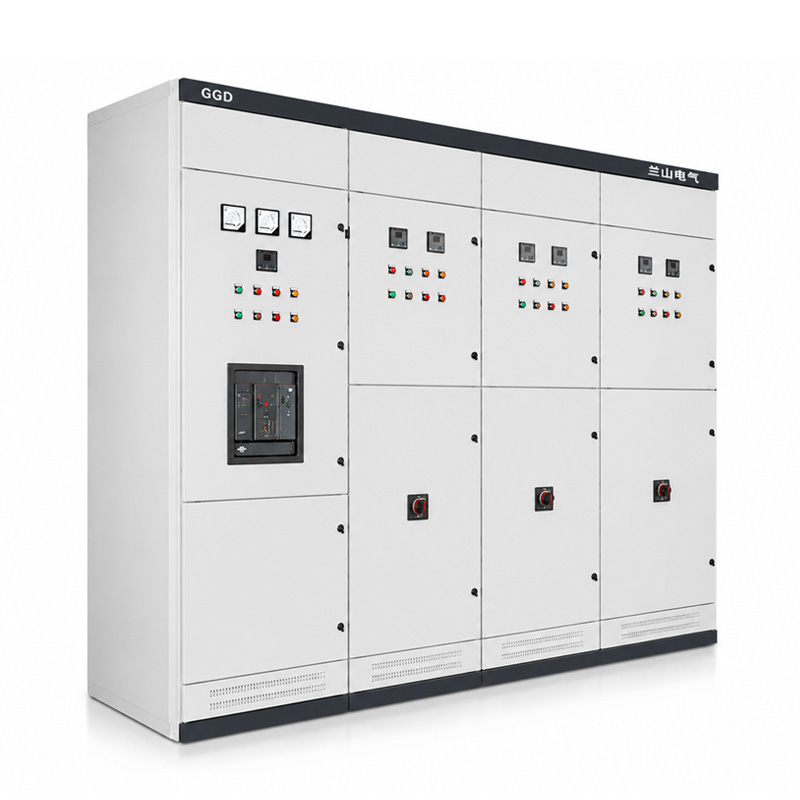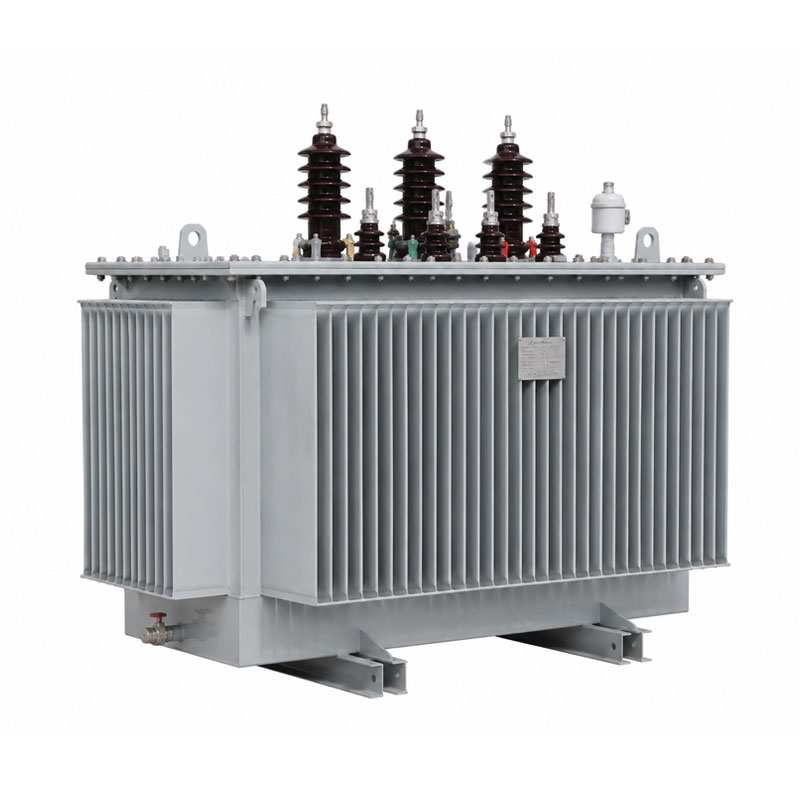
Metal clad switchgear and metal enclosed switchgear can look similar in a proposal. Both descriptions suggest equipment inside a metal housing, yet neither tells a buyer everything about maintenance access, fault performance or the installation requirements.
The distinction matters most when something needs attention. Can one feeder be isolated without interrupting unrelated circuits? Which compartments remain energized? What evidence supports an arc-resistance claim?
This guide compares the designs through those operating questions, helping project engineers and procurement teams evaluate more than the cabinet name.
Table of Contents
What Is Metal Clad Switchgear?
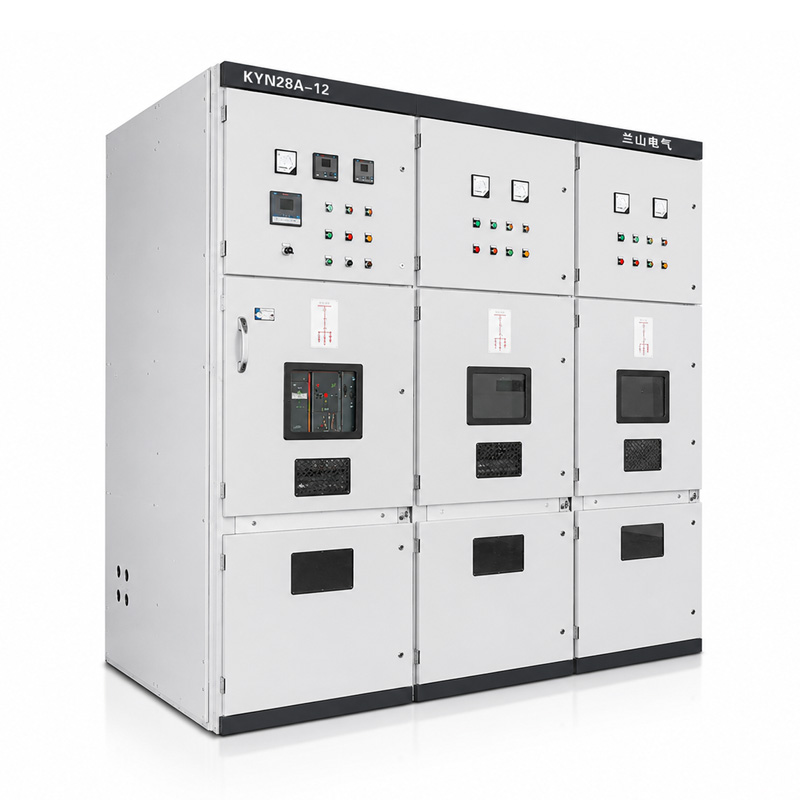
Metal clad switchgear is a specific form of metal-enclosed equipment. Under IEEE C37.20.2, its defining features include drawout, electrically operated circuit breakers and grounded metal barriers separating major functional areas. These include the main bus, instrumentation and incoming or outgoing connections.
The useful distinction is internal organization, not simply the thickness of the outer enclosure. A compartment drawing should reveal how the switching device, busbars, cable connections and controls are arranged.
For buyers evaluating metal clad switchgear, that drawing is more informative than a general statement about “enhanced safety.” Ask the supplier to identify each compartment and explain its access conditions. Then compare those conditions with the work your maintenance team expects to perform.
For background on the equipment’s distribution and protection functions, see our guide to how medium voltage switchgear works.
What Does Metal Enclosed Switchgear Actually Mean?
“Metal enclosed” is the broader description. It does not automatically mean low-voltage equipment, a single undivided compartment or a switch-and-fuse arrangement.
For example, IEC 62271-200 covers AC metal-enclosed assemblies rated above 1 kV and up to and including 52 kV. Its scope includes indoor and outdoor installations, with air-insulated or fluid-filled compartments.
In an IEEE-based specification, “metal-enclosed interrupter switchgear” has a more specific meaning under IEEE C37.20.3. That standard’s scope includes several device arrangements, including switches, fuses and circuit breakers. It should not be reduced to “equipment without breakers.”
Consequently, comparing metal clad switchgear with “metal enclosed switchgear” requires one clarification first: which actual assembly and standard does the second proposal describe?
A meaningful comparison starts with two documented designs, not two labels assumed to be opposites.
Metal Clad vs Metal Enclosed Switchgear at a Glance
Use this table as a proposal-screening tool. It separates construction terminology from performance that needs independent confirmation. The construction distinction follows the respective IEEE scopes; the remaining rows are questions to resolve with project documents.
| Comparison point | Metal clad switchgear | Other metal-enclosed designs | Evidence to request |
|---|---|---|---|
| Construction | Defined compartmentalization with grounded metal barriers under IEEE C37.20.2 | Arrangement depends on the applicable standard and design | Compartment drawings and declared standard |
| Switching device | Drawout, electrically operated circuit breakers under IEEE C37.20.2 | May use switches, fuses or circuit breakers | Device schedule and switching duties |
| Maintenance access | Assess each proposed maintenance task | Assess each proposed maintenance task | Access instructions and isolation boundaries |
| Internal arc performance | Do not infer it from the construction name | Do not infer it from the construction name | Applicable test evidence and installation conditions |
| Project suitability | Compare against the operating requirements | Compare against the same requirements | Approved ratings, layout and technical deviations |
The table deliberately avoids declaring one category universally better. A proposal only becomes preferable when its documented capabilities match the job.
Start with the Maintenance Task, Not the Cabinet Label
When selecting metal clad switchgear, write down the maintenance activities that matter to the facility. “Easy maintenance” is too broad to evaluate. Breaker inspection, cable testing and busbar work should be discussed separately.
Breaker inspection and replacement
Ask the supplier to walk through the documented conditions for withdrawing a breaker. What must be isolated? What remains energized behind barriers? What handling equipment and working space are required?
For metal clad switchgear with a proposed spare breaker, request confirmation of interchangeability, ratings, control connections and mechanical compatibility. Do not approve a spare solely because its frame dimensions appear similar.
Cable and busbar access
Next, ask about the outgoing cable compartment and main bus. Does access require a different shutdown boundary from breaker inspection? Can another source energize the cable? Which drawings establish the permitted condition?
A removable breaker should never be treated as permission to work on exposed conductors. Isolation, verification and qualified personnel remain essential. The US OSHA electrical work-practice requirements illustrate the importance of de-energization and controlled work procedures; applicable local requirements must govern the project.
The purchasing objective is to define the intended maintenance boundary before the equipment arrives, not to improvise it during an outage.
Read Service Continuity and Partition Classes Separately
For an IEC-based project, do not translate the phrase metal clad switchgear directly into a complete IEC classification.
The loss of service continuity category, or LSC, describes which other high-voltage compartments or functional units may remain energized when an accessible compartment is opened under the defined conditions. It is not a reliability score or a guarantee of uninterrupted production. The 2024 amendment to IEC 62271-200 explicitly distinguishes LSC from equipment reliability.
Ask for the declared LSC category of each relevant functional unit, its compartment-access conditions and the associated partition class. Require the supplier to explain the partition designation on the construction drawing, rather than treating an abbreviation as sufficient evidence.
For metal clad switchgear comparisons, this produces a useful acceptance question: “Does the documented access arrangement support our intended maintenance task?”
A specification that simply requests “maximum service continuity” leaves too much open to interpretation. State which equipment you need to access and which other circuits you intend to keep supplied. The engineering review can then determine whether the proposed arrangement supports that objective.
Is Metal Clad Switchgear Automatically Arc Resistant?
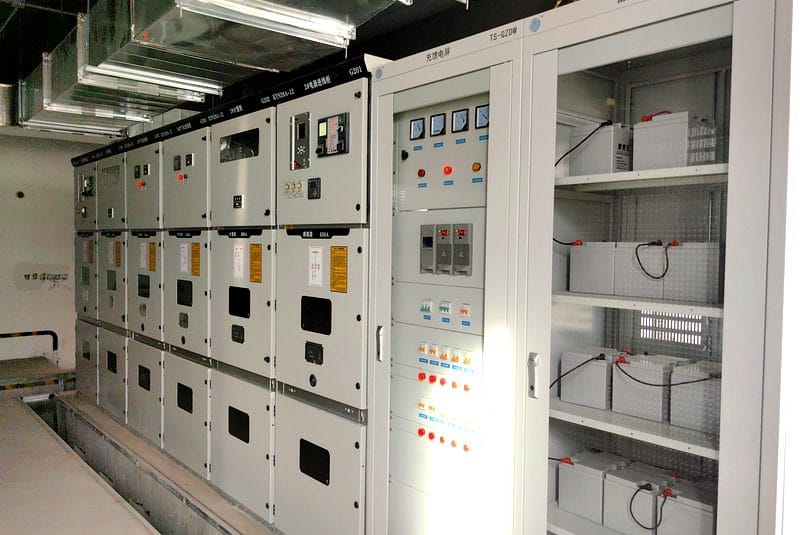
No. Metal clad switchgear describes construction; internal arc performance requires its own evaluation. IEEE C37.20.7 addresses testing and evaluation for internal arcing faults, including service and installation considerations.
For an IEC proposal, request the declared internal arc classification, where required, and the supporting evidence. For an IEEE proposal, request the corresponding arc-resistant designation and test basis. Do not assume the two systems of designation are interchangeable.
When reviewing metal clad switchgear, ask the supplier to identify the tested current, duration, accessible sides and enclosure conditions. Obtain the installation instructions associated with that performance, including any pressure-relief route, ducting or room restrictions. These questions follow from the need to evaluate the assembly in its intended installation, not just as a standalone cabinet.
Then compare the proposed installation with that documentation. Where the room arrangement differs, require written technical clarification before approval.
Neither partitions nor an internal arc classification eliminate the need for an electrical safety assessment. Treat claims such as “arc-proof” as a reason to ask for precise conditions and evidence, not as a substitute for them.
Compare Electrical Ratings on an Equal Basis
Two metal clad switchgear proposals are not equivalent just because their voltage and current entries look similar.
Build a common schedule covering rated voltage, insulation withstand levels, continuous current, short-time withstand current and duration, and the required switching duties. These are separate aspects of an assembly’s rating and verification framework.
Separate carrying current from interrupting current
The current a circuit carries in normal operation is not the same requirement as the fault current its interrupting device must clear. Evaluate the breaker duties as well as the assembly ratings; IEC 62271-100 addresses AC circuit breakers and their making-breaking tests. A breaker document alone does not establish the complete assembly’s performance.
Consider an illustrative comparison: one offer states a short-time withstand rating of 25 kA for one second, while another states 25 kA for three seconds. The current values match, but the declared durations do not. Record both values and have the protection engineer verify the required duty. These example figures are not Lanshan product ratings, and neither figure should be confused with an internal arc test rating.
For metal clad switchgear procurement, supply the system fault study or agreed fault-level data. Ask the project engineer to reconcile those requirements with the offered equipment rather than accepting an unexplained “up to” rating.
Include the site conditions
Record ambient conditions, altitude, humidity and any unusual environmental exposure. Ask whether the stated ratings apply at that site or require adjustments. Common service conditions are addressed by IEC 62271-1, alongside the relevant equipment standards.
This is also where you should resolve whether a published parameter belongs to the offered configuration or merely to a wider product family.
Check the Complete Room Layout
Evaluate metal clad switchgear within the room it will occupy. Request an installation drawing that includes the operating aisle, breaker-handling route, cable trench, door openings and any rear access.
Ask the supplier to show where a withdrawn breaker will stand and how it will reach the service area. A dimensioned cabinet outline does not answer those questions.
For metal clad switchgear with an internal arc performance requirement, coordinate the layout with the documented installation and exhaust conditions. The relevant arc-testing framework includes installation considerations, so room design should not be treated as an unrelated architectural decision.
Also request a proposed extension arrangement. Which end is available for additional panels? Will future work require access that the initial layout blocks?
At design review, walk through installation, operation, removal and expansion as four separate activities. Mark every unresolved interface on the drawing and assign responsibility before civil work is finalized.
Match the Design to the Operating Scenario
The following examples are decision frameworks, not claims that a particular cabinet guarantees a particular outcome.
A process plant with several important feeders
Suppose one incoming assembly supplies multiple production areas. The owner wants to inspect a feeder breaker while maintaining other supplies where the approved design permits.
Here, metal clad switchgear is worth evaluating against a clearly documented maintenance-access requirement. However, ask the engineer to check the complete supply arrangement, protection and shutdown procedure. The enclosure category alone cannot answer whether a production area will remain operational.
A dedicated transformer supply
Suppose another project has a single transformer feeder and an agreed shutdown window. Compare the proposed switch-fuse or circuit-breaker arrangement against the actual protection and operating requirements.
Do not exclude a suitable metal-enclosed design because it lacks a preferred marketing label. Equally, do not replace a specified breaker arrangement with a simpler option without technical approval.
An existing installation needing expansion
For an extension project, evaluate metal clad switchgear against the existing bus interface, control scheme, installation dimensions and available fault data.
Ask the supplier to identify every interface that needs verification. An equipment-family name is not a compatibility statement. The useful deliverable is a marked-up interface drawing and a list of agreed responsibilities.
Request Evidence Before Approving the Proposal
A metal clad switchgear submission should allow the reviewer to connect each important claim to an identifiable document.
Request the proposed configuration, approved ratings, general arrangement, compartment drawings and relevant type-test evidence. Agree the required routine-test records and factory acceptance scope separately, so a production inspection is not mistaken for proof of every design claim.
Where the proposed assembly differs from the tested arrangement, ask how the evidence remains applicable. IEC TR 62271-307 provides guidance on extending type-test validity within equipment families. A difference does not automatically invalidate a proposal, but it calls for an engineering justification rather than an assumption.
For metal clad switchgear, record unresolved points in a technical deviation schedule. Give each item an owner, an expected document and an approval status.
For the control scheme, request a functional description showing which signals initiate trips, which events produce alarms and how loss of auxiliary power is handled. Define who supplies and approves the protection settings. This prevents an apparently complete equipment schedule from leaving critical control responsibilities unassigned.
Finally, make the acceptance criteria specific: which drawings must be approved, which functions will be demonstrated and which records must accompany delivery? This turns broad promises into reviewable commitments without pretending that a generic checklist can replace project engineering.
Evaluating a KYN28A-12 Configuration
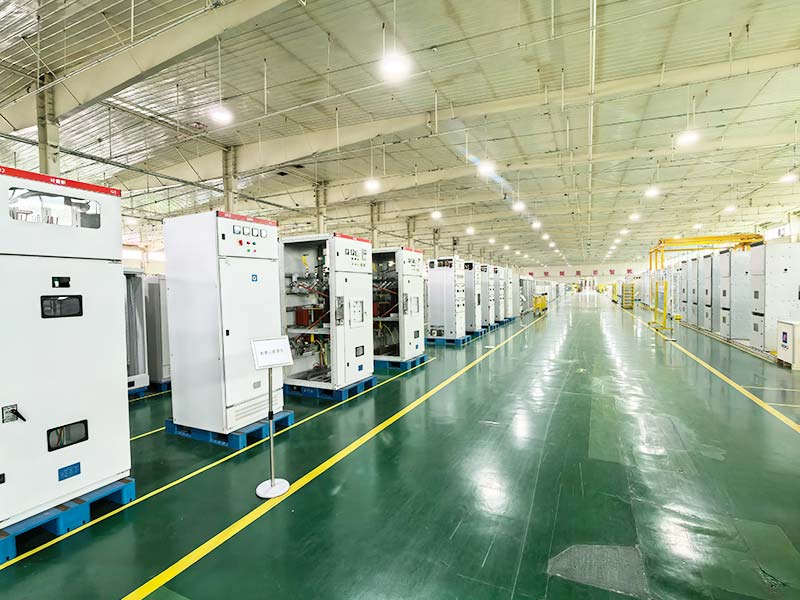
Lanshan’s KYN28A-12 medium voltage switchgear is presented with a withdrawable vacuum circuit breaker and separate breaker, busbar, cable and low-voltage control compartments. Those features make it relevant to a compartmentalized, withdrawable switchgear review.
When considering this metal clad switchgear configuration, request a project-specific datasheet and drawing set. Confirm the offered ratings, selected components, applicable standard edition, access conditions and supporting test documentation.
Do not treat a broad series parameter range as the guaranteed rating of a particular KYN28A-12 assembly. Likewise, do not infer IEEE conformity, an LSC category or internal arc performance solely from the product name.
Send the single-line diagram, system voltage, fault-level data, feeder schedule and installation layout with your enquiry. These inputs give the technical discussion a concrete starting point.
Conclusion
Selecting metal clad switchgear is not about choosing the more substantial-sounding enclosure. It is about matching construction, maintenance access, electrical duties and verified performance to the installation.
Define the maintenance task first. Compare proposals on the same rating basis, separate service-continuity claims from internal arc evidence, and resolve the room interfaces before approval.
For a project-specific discussion, contact Lanshan Electric with your single-line diagram, operating requirements and fault-level data. Request a configuration review that identifies the proposed equipment, supporting documents and any remaining technical conditions.
FAQ
What is the main difference between metal clad and metal enclosed switchgear?
Metal enclosed is the broader description. Metal clad switchgear under IEEE C37.20.2 has defined compartmentalization, grounded metal barriers and drawout circuit breakers. The exact comparison depends on the standard and construction of the alternative assembly.
Is metal enclosed switchgear only used at low voltage?
No. IEC 62271-200 covers AC metal-enclosed assemblies above 1 kV through 52 kV. The term does not, by itself, identify the voltage class or internal arrangement.
Does metal clad switchgear provide automatic arc-flash protection?
No. Construction terminology does not establish internal arc performance. Request the applicable classification or designation, supporting tests and installation conditions, and retain the project’s electrical safety assessment.
Can a breaker be serviced while other circuits remain energized?
That depends on the documented compartment arrangement, permitted access conditions and site procedures. A withdrawable breaker alone does not establish the permitted shutdown boundary or authorize work on exposed energized parts.
What should I submit for a metal clad switchgear enquiry?
Provide the single-line diagram, system voltage, fault-level information, feeder loads, protection requirements and installation layout. Include the required standard, maintenance expectations and any specified internal arc performance so the proposed configuration can be reviewed against them.