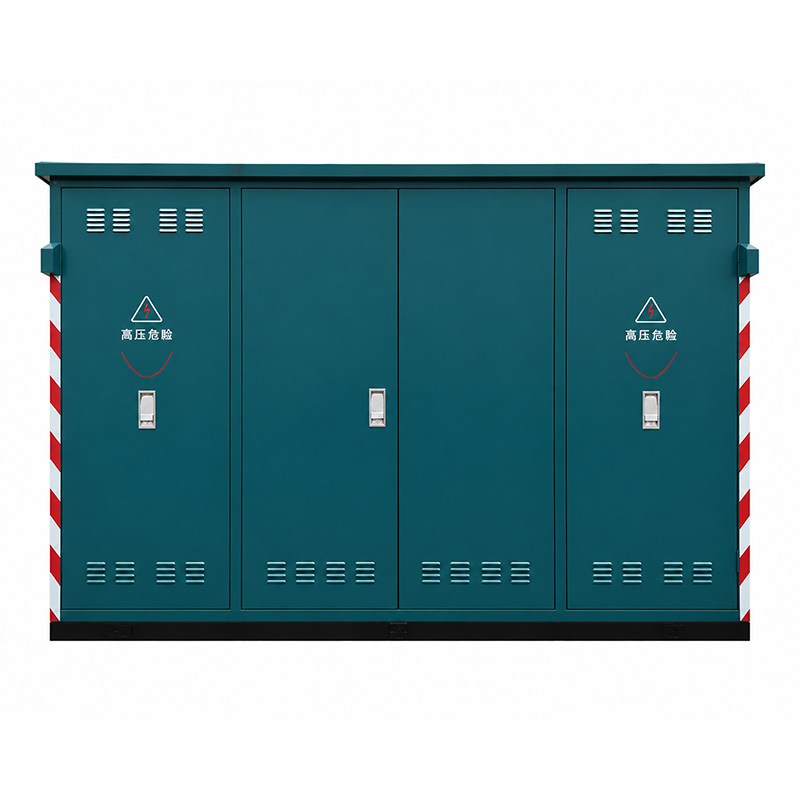
An outdoor distribution box needs more than a high number after the letters IP. The rating describes tested protection against access, solid objects and water under defined conditions, but it does not automatically prove corrosion resistance, UV durability, condensation control or suitability for every outdoor installation.
For project buyers, the practical question is not simply whether IP54 or IP65 sounds stronger. It is whether the selected enclosure, cable entries, doors, ventilation accessories and finished assembly provide the protection required at the actual site. This guide explains how to read IP ratings and how to specify an outdoor distribution box without treating one code as a complete environmental specification.
What an IP Rating Actually Means
The IP Code is defined in IEC 60529. It classifies degrees of protection provided by enclosures against access to hazardous parts, ingress of solid foreign objects and ingress of water. The code is useful because it converts general words such as “dustproof” or “water resistant” into defined test categories.
For an outdoor distribution box, however, the IP code should be read as one line in a wider specification. IEC 60529 does not by itself tell you whether a coating is suitable for coastal corrosion, whether a polymer window will withstand long-term sunlight or whether internal condensation will form during overnight cooling.
That distinction is important during procurement. A box can satisfy the required ingress-protection test and still need additional design provisions for the environment in which it will operate. Buyers should therefore request the IP code together with material, coating, sealing, cable-entry and temperature information rather than accepting “outdoor type” as a complete technical description. An outdoor distribution box specification should make those conditions visible on the same data sheet.
How to Read the Two Digits in an IP Code
The first characteristic numeral relates to access and solid-object ingress. The second relates to water. Each numeral represents a defined level within IEC 60529; the two digits should not be combined into one general score.
For example, the “6” in IP65 indicates the highest dust-ingress category in the standard, while the “5” describes protection against water jets under the specified test. IP66 changes the water-test category, not the dust category. IP67 addresses temporary immersion conditions and should not be treated as simply “one level better” for every outdoor application.
This matters when an outdoor distribution box is exposed mainly to rain and airborne dust rather than immersion. Selecting an immersion-related code may add little value if the real risks are corrosion, cable-entry leakage or condensation. Conversely, a project exposed to washdown or strong water jets should not rely on a rating selected only for ordinary rainfall.
What IP Rating Is Needed for an Outdoor Distribution Box?
There is no universal IP number for every outdoor distribution box. The required level depends on the type and direction of water exposure, dust conditions, mounting position, cleaning practices and the consequences of moisture entering the electrical equipment.
Start by defining the exposure. Is the enclosure under a canopy or fully exposed? Can wind-driven rain reach the door and cable plate? Will maintenance staff wash nearby equipment with a hose? Is the site dusty, coastal or industrial? Can surface water rise around the base? These questions describe the environmental duty more accurately than the word “outdoor.”
Then select the ingress-protection requirement with the project engineer and manufacturer. IP54 may be suitable for some sheltered applications, while more exposed installations may require a higher water-ingress category. IP65 is frequently specified for outdoor electrical enclosures, but it should not be adopted as a universal rule without checking the site and the finished configuration. The outdoor distribution box rating must follow the defined exposure, not a default procurement habit.
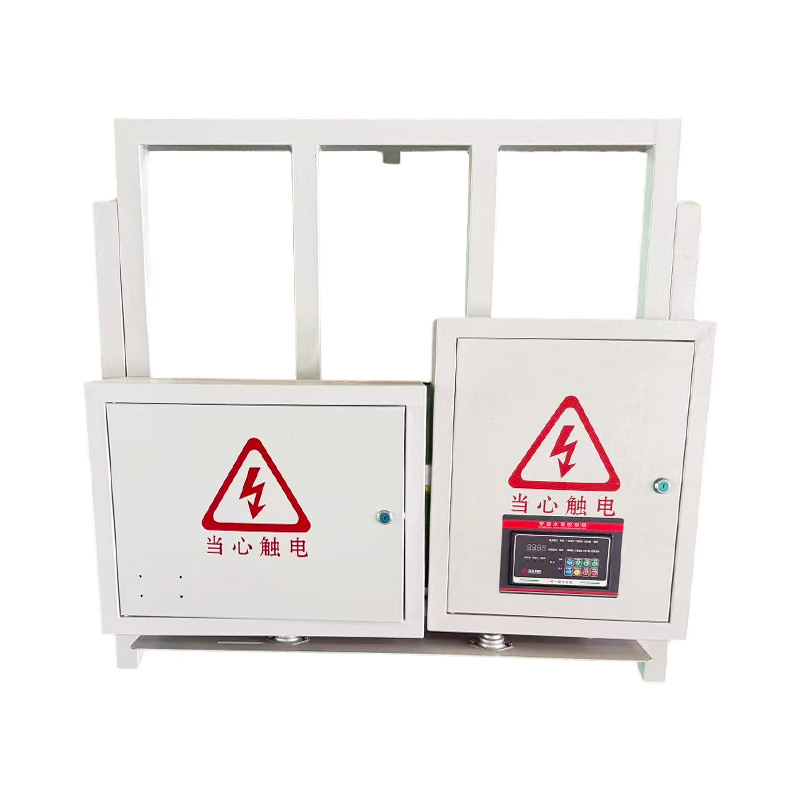
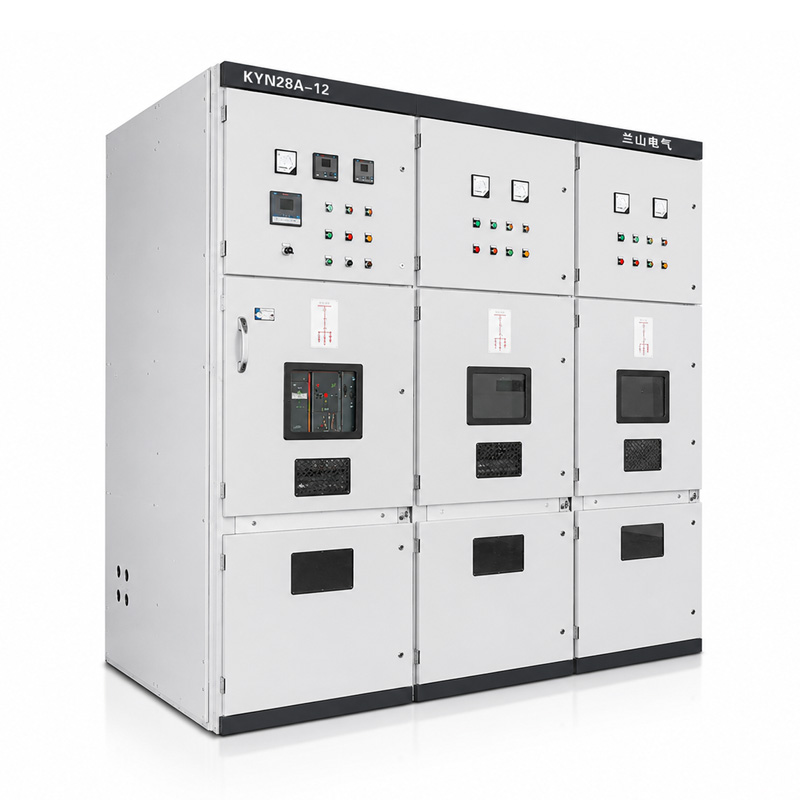
Lanshan’s integrated distribution-box solutions can be configured for different project conditions. For a specific outdoor distribution box, request written confirmation of the offered IP level and the exact enclosure, doors, gland plates and accessories to which that rating applies.
IP54 vs IP55 vs IP65 vs IP66: Focus on the Exposure
Buyers often compare IP54, IP55, IP65 and IP66 as if they were consecutive grades of overall quality. They are better understood as combinations of two separate characteristics. The table below summarizes the purchasing question behind each common code rather than replacing the official test definitions.
| IP Code | What the code tells you | Typical purchasing context | Question still to verify |
|---|---|---|---|
| IP54 | Limited dust ingress; splashing water | Sheltered or moderate outdoor exposure may be considered | Does the actual installation face driven rain, jets or heavy dust? |
| IP55 | Limited dust ingress; water jets | Projects where water-jet exposure is specified | Are cable entries and accessories rated for the same condition? |
| IP65 | Dust-tight; water jets | Frequently specified for exposed outdoor electrical enclosures | Are corrosion, UV and condensation requirements also defined? |
| IP66 | Dust-tight; more severe water-jet test | Sites with a justified higher water-exposure requirement | Can the finished enclosure still meet thermal and accessory requirements? |
| IP67 | Dust-tight; temporary immersion test | Only where temporary immersion is a real design condition | Does the actual installation require immersion capability and defined depth/time? |
Why a Higher Water Digit Is Not Automatically the Best Choice
A higher water-ingress category can be appropriate, but it may affect ventilation, thermal behavior, accessory selection and cost. If a tightly sealed outdoor distribution box contains heat-generating protective devices, the manufacturer still needs to demonstrate that the internal temperature remains within the permitted limits for the agreed load.
Do not solve a thermal problem by drilling unreviewed openings into a rated enclosure. Likewise, do not solve an ingress problem by sealing every opening without checking heat removal and condensation. The finished design has to balance electrical loading, protection and environmental exposure.
Why IP65 Does Not Mean Waterproof in Every Situation

The word “waterproof” is often used casually in product descriptions, but an IP code refers to specific standardized tests. IP65, for example, does not claim unlimited resistance to flooding, continuous submersion or every high-pressure cleaning method.
For an outdoor distribution box, buyers should ask what type of water exposure was considered and how the box will be installed. Water can reach a poorly arranged cable entry, travel along a conduit or collect around a base even when the front door has an appropriate seal.
This is why the earlier guide on water ingress and condensation should be treated as a separate diagnostic topic. The enclosure rating is important, but the installation can still create a route that was not represented by an empty-enclosure test.
If a project could experience flooding or immersion, specify that condition explicitly. Do not infer immersion capability from an IP65 label or from the general phrase “outdoor waterproof box.”
Cable Glands, Windows and Accessories Can Change the Result
An outdoor distribution box is only as well protected as its completed interfaces. Cable glands, hole plugs, door hardware, viewing windows, filter fans and other accessories become part of the environmental boundary after installation.
UL Solutions notes that enclosure-mounted accessories such as window kits, filter-fan kits and hole plugs are evaluated for their ability to maintain an environmental seal when used with rated enclosures. NEMA guidance similarly emphasizes that the overall installed rating is limited by the least protective component in the assembly.
For procurement, issue the actual cable schedule before approving the box. Provide cable outside diameters, quantities, entry directions and any spare openings. Ask the manufacturer to identify the gland plate, seals and accessories covered by the proposed rating. This keeps the outdoor distribution box environmental boundary consistent with the installed cable system.
When an outdoor distribution box is modified on site, document every new penetration. A later-added cable gland or display may require review even if the original enclosure carried the desired IP code.
IP Rating Does Not Establish Corrosion Resistance
Salt-laden air, industrial chemicals and persistent moisture attack materials in ways that the IEC 60529 ingress code does not describe. The NEMA enclosure system illustrates this difference clearly: NEMA Type 4X includes additional corrosion-related requirements that are not represented simply by assigning an IP number.
NEMA also warns that IP and NEMA ratings are not completely equivalent because the NEMA system addresses additional environmental hazards. A cross-reference may be useful for preliminary discussion, but buyers should not convert an IP code directly into a NEMA Type claim without supporting evidence.
For an outdoor distribution box in a coastal or chemically aggressive location, specify the enclosure material, coating system and corrosion environment separately. Stainless steel itself is not a universal answer; grade, fabrication, fasteners and surface treatment still matter. The outdoor distribution box IP code should remain a separate line from the corrosion requirement.
Request the manufacturer’s proposed material and finish and the evidence relevant to the project. Do not let “IP65 stainless steel” become a substitute for a corrosion specification.
UV Exposure and Weathering Need Their Own Review
Outdoor sunlight can degrade nonmetallic windows, labels, seals and coatings even when the enclosure continues to satisfy an ingress test when new. UV resistance is therefore another separate purchasing question.
UL’s enclosure-accessory guidance treats resistance to UV degradation and corrosion as characteristics distinct from the environmental seal itself. That is a useful model for an outdoor distribution box specification: ask what materials are exposed to sunlight and what evidence supports their intended outdoor use.
Check door gaskets, transparent windows, cable accessories and external labels as well as the metal shell. If the project requires a long outdoor service period in intense sunlight, make those exposure conditions part of the enquiry instead of assuming the IP code covers weathering.
Condensation Can Occur Inside a High-IP Enclosure
A high IP rating can reduce external moisture ingress without eliminating the water vapor already inside the enclosure. If internal surfaces cool below the dew point, that vapor can condense.
The National Weather Service defines dew point as the temperature to which air must be cooled for saturation to occur. In practical terms, an outdoor distribution box can be dry during a warm afternoon and develop internal droplets after a rapid nighttime temperature drop.
Condensation control may require a manufacturer-reviewed combination of thermal design, anti-condensation heating, ventilation or pressure-equalization measures, depending on the site. Those features must be coordinated with the required ingress protection instead of added afterward without review.
For projects with large day-night temperature swings or humid cable ducts, include temperature and humidity conditions in the specification. IP65 should never be interpreted as “no condensation possible.” A suitable outdoor distribution box may therefore need both ingress protection and a reviewed condensation-control strategy.
Empty Enclosure Rating vs Finished Distribution Assembly
Another important distinction is the difference between an empty enclosure and the completed electrical assembly. IEC 62208 covers empty enclosures intended for low-voltage switchgear and controlgear assemblies. IEC 61439-1 provides general rules for completed low-voltage assemblies and is used with the applicable product part.
An empty enclosure test therefore does not establish all characteristics of an outdoor distribution box after circuit breakers, busbars, meters, wiring, cable entries and ventilation accessories are installed. The completed equipment has electrical, thermal and short-circuit requirements in addition to the enclosure’s ingress protection.
Ask whether the IP claim applies to the empty shell, to a defined representative assembly or to the exact finished configuration being supplied. The answer determines what further verification the project needs.
For custom equipment, keep the approved layout and the environmental-protection details under the same revision control. Moving a large component or adding a fan can change both thermal and enclosure conditions.
Use the Installation Position in the IP Review
A laboratory code does not tell the installer where rainwater will flow across a real cabinet. The mounting height, wall spacing, canopy, conduit route and cable-entry direction all affect the actual exposure.
For an outdoor distribution box mounted on a wall, check whether runoff from the building above can reach the upper entries. For a floor-standing unit, assess splash, drainage and the possibility of standing water around the plinth. Where cleaning operations occur nearby, include the expected direction and intensity of spray.
Compare the proposed location with Lanshan’s earlier guide on indoor versus outdoor distribution cabinets. That decision should be based on the actual environment, not simply whether the box is physically located outside a building.
Request an installation drawing showing cable entries and any external accessories. Then have the supplier confirm the rating for that installed orientation.
A Practical Selection Matrix for Project Buyers

The following matrix turns common site descriptions into questions that can be answered in a technical enquiry. It does not assign a mandatory IP rating because local rules, risk assessment and the manufacturer’s design still control the final selection. Use it to make the outdoor distribution box requirement specific enough for suppliers to quote the same environmental duty.
| Site condition | Main exposure to define | What the RFQ should address |
|---|---|---|
| Outdoor wall under a canopy | Wind-driven rain, dust, cable routing | Required IP code, top-entry protection and gasket/accessory details |
| Exposed industrial yard | Rain, dust, cleaning spray, heat | Water-ingress category, thermal design and corrosion system |
| Coastal installation | Salt air plus rain and humidity | Ingress protection plus material/coating and corrosion evidence |
| Hot humid climate | Condensation and high internal temperature | IP rating plus heat removal and condensation-control strategy |
| Flood-prone area | Standing water or temporary immersion | Site elevation and explicit immersion requirement; do not infer from IP65 |
What to Request from the Manufacturer
For an outdoor distribution box enquiry, provide the circuit schedule together with the environmental conditions. State the required voltage, current, enclosure material, mounting arrangement and cable-entry details. Add the required IP code only after the exposure has been defined.
Request a drawing that identifies doors, gaskets, gland plates, ventilation devices and external accessories. Ask which configuration is covered by the claimed ingress protection and whether any site-installed item needs an equal or higher rating.
Also request the applicable assembly verification and routine-test documents. IP protection is only one characteristic of the completed distribution equipment. Electrical clearances, temperature rise, protective-device selection and short-circuit capability still require their own project review.
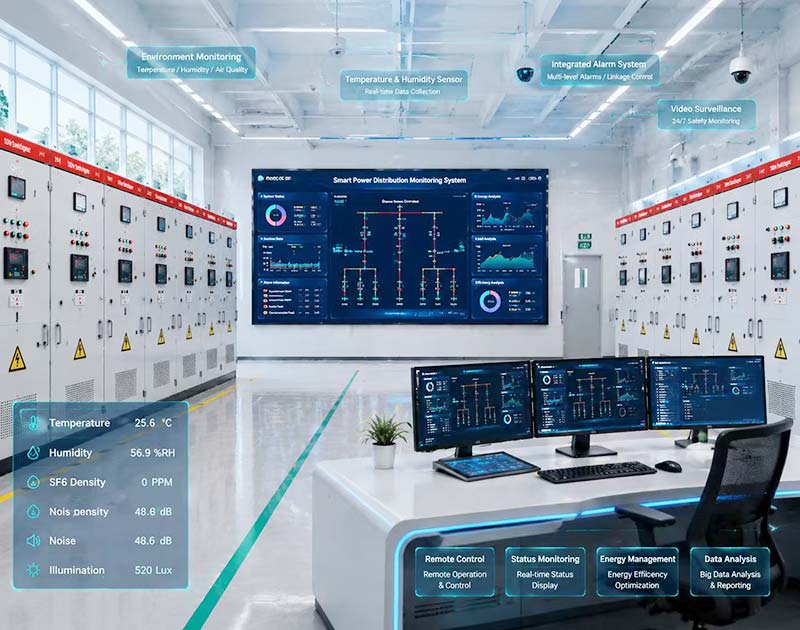
Lanshan’s integrated distribution box can be configured for project-specific distribution, protection and monitoring needs. Send the actual environment and cable information instead of requesting only “an IP65 box,” so the enclosure and internal arrangement can be reviewed together.
Conclusion
Selecting an outdoor distribution box by IP code alone is an incomplete approach. The code gives valuable information about defined solid and water ingress tests, but corrosion, UV exposure, condensation, accessories and the finished assembly must be considered separately.
Define the site first, then agree the rating and installed configuration. A well-specified outdoor distribution box connects the IP requirement to the finished installation. For project-specific selection, contact Lanshan Electric with your circuit schedule, enclosure drawing, cable-entry requirements and environmental conditions.
FAQ
What IP rating is best for an outdoor distribution box?
There is no single best rating for every site. Define rain, dust, washdown, mounting and flood exposure first, then select an IP code with the project engineer and manufacturer. A commonly requested rating such as IP65 should not replace that assessment.
Is IP65 fully waterproof?
No. IP65 describes protection against dust ingress and a defined water-jet test under IEC 60529. It does not claim unlimited immersion, flooding or resistance to every cleaning process.
Is IP66 always better than IP65 outdoors?
Not automatically. IP66 represents a different water-ingress test, but project suitability also depends on heat dissipation, cable entries, corrosion, UV exposure and condensation. Select the rating for the actual exposure rather than choosing the largest number.
Does an IP rating include corrosion protection?
No. IEC IP codes address access, solid foreign objects and water ingress. Corrosion resistance needs separate material, coating and environmental requirements. NEMA enclosure Types illustrate why ingress and corrosion characteristics should not be treated as the same rating.
Can adding cable glands reduce the enclosure protection?
Yes, if the installed gland, hole plug or other accessory is not compatible with the required environmental rating or is installed incorrectly. Review the complete cable-entry arrangement and maintain documentation for later modifications.