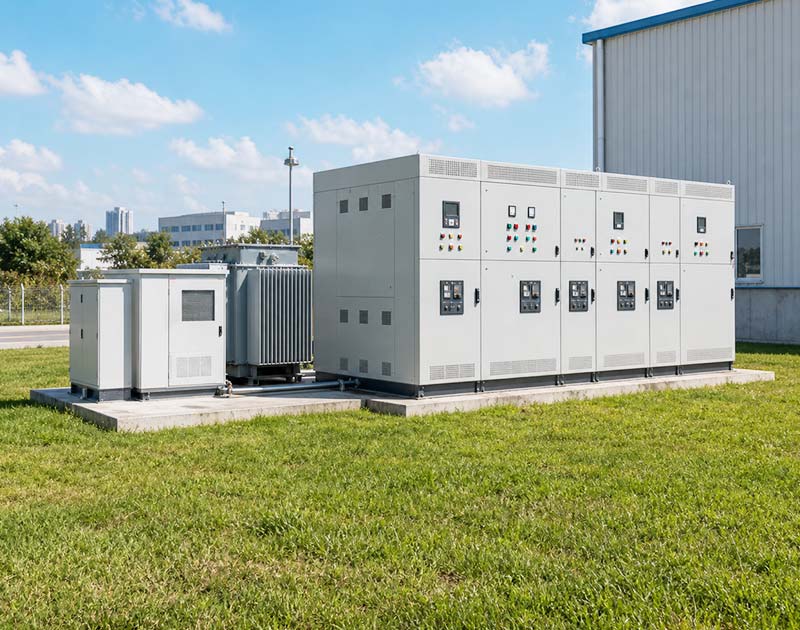
A low voltage switchboard should be selected around the shutdowns a plant can tolerate, not just the current it must carry. Before comparing cabinets, ask what happens when a feeder fails, a breaker needs replacement or one incoming supply becomes unavailable.
For process plants, those questions lead to better decisions about fixed or withdrawable construction, bus sections and protection. This guide explains how to specify a low voltage switchboard around production continuity without confusing modular equipment with an uninterrupted power supply.
Table of Contents
Start with What Must Stay Running
Begin with a process dependency map. Identify which loads can stop independently, which support several production areas and which are needed to bring the process to a controlled stop.
Consider a hypothetical plant with two production lines sharing one cooling pump. Separate electrical feeders for the production lines will not preserve either line if both depend on that pump and its supply fails. The cooling arrangement, not just the feeder arrangement, must be reviewed.
For each low voltage switchboard, write an operating objective: for example, maintain essential cooling while one production feeder is isolated under an approved procedure. Avoid an undefined requirement such as “maximum reliability.”
That objective gives engineers a basis for evaluating supply paths, standby equipment and maintenance boundaries. Safety-related functions require their own engineering assessment; a general production-continuity plan must not redefine them.
Define the Assembly Before Comparing Proposals
In this guide, low voltage switchboard refers to an industrial distribution assembly in an IEC-based project. IEC 61439-2 addresses power switchgear and controlgear assemblies, including equipment rated up to 1,000 V AC or 1,500 V DC.
Terminology is not interchangeable across every market. For example, UL 891 covers switchboards within its own defined scope. Specify the required assembly standard and local approval requirements rather than assuming a familiar product name establishes compliance.
Also clarify the supply boundary. Does the main board feed separate motor control centers, or must the proposed assembly contain motor-starting units? Lanshan’s overview of low voltage switchgear in industrial projects introduces these distribution and control functions.
Build the Load Schedule Around Operating Modes
A low voltage switchboard specification needs more than the sum of breaker ratings. Give each outgoing circuit a design current, load description and operating pattern. BEAMA’s guidance on specifying an assembly emphasizes these inputs because simultaneous loading affects assembly selection.
Prepare separate scenarios for normal production, startup, cleaning and planned expansion. In a batch process, cleaning equipment may operate after production stops; in another facility, cleaning and production may overlap. Do not apply the same diversity assumption to both arrangements.
Distinguish an installed spare feeder from an operating load. Equally, identify whether standby equipment can run alongside the duty equipment during changeover.
The low voltage switchboard supplier should receive the same operating scenarios as the transformer and protection engineers. Otherwise, compatible-looking equipment may be selected using contradictory assumptions.
Fixed or Withdrawable: Match the Maintenance Task
The choice between fixed and withdrawable construction should follow the expected service work. Compare the actual device arrangement, not a promise that one cabinet is universally more reliable.
When Fixed Construction Fits
A fixed low voltage switchboard deserves consideration where circuit arrangements are stable and the owner can accommodate the documented shutdown needed for replacement work.
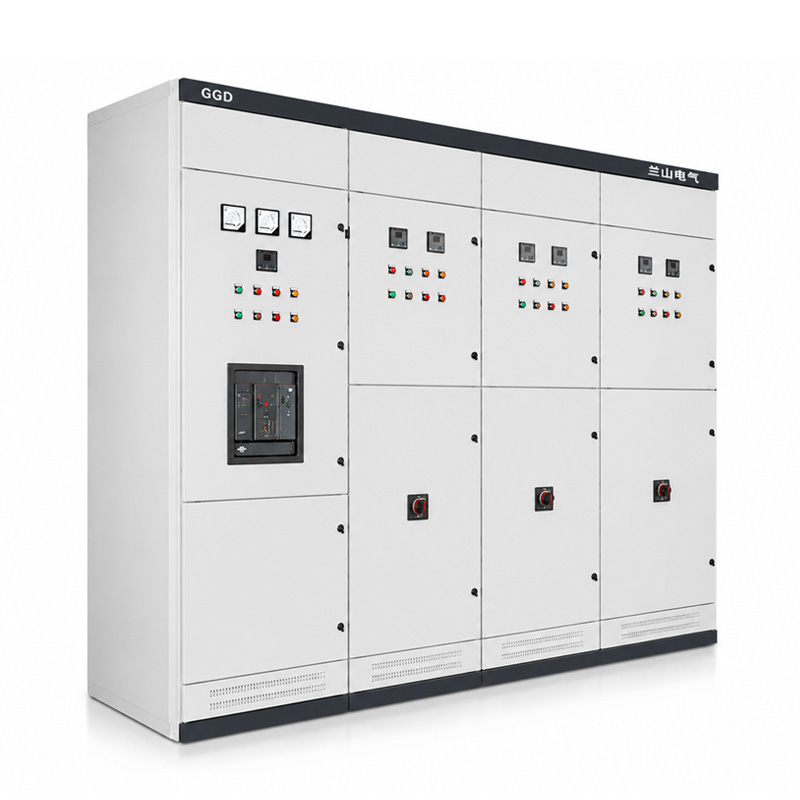
Lanshan’s GGD low voltage switchgear cabinet uses a fixed structure for distribution and control applications. Review its proposed layout against your feeder schedule and maintenance requirements rather than assuming every fixed assembly has identical access conditions.
When Withdrawable Units Add Value
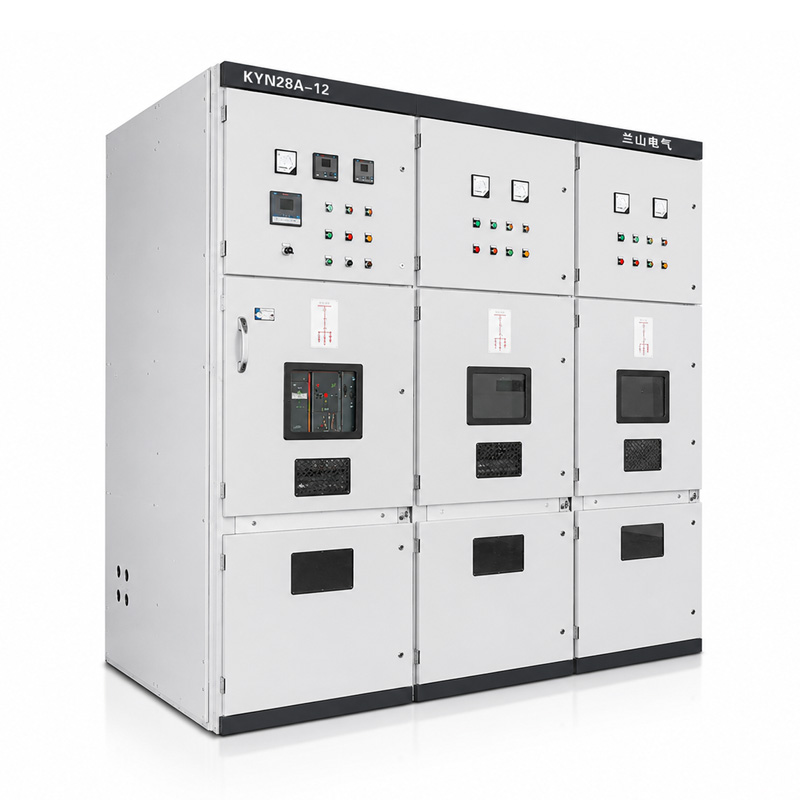
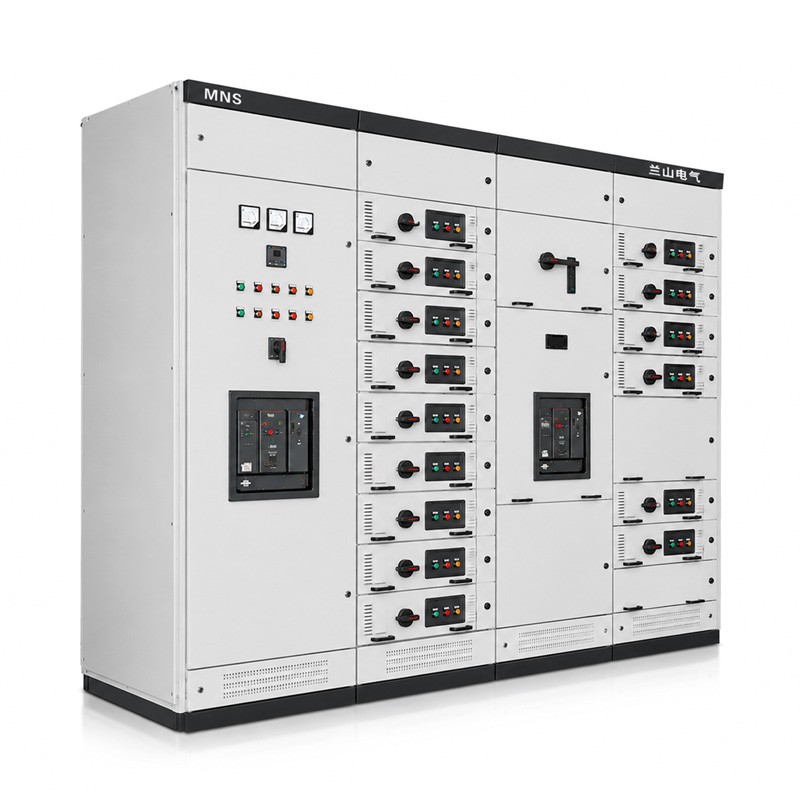
A withdrawable low voltage switchboard is worth evaluating where the maintenance strategy calls for replacing functional units separately. Lanshan’s withdrawable low voltage switchgear provides modular units for feeder and motor-control applications.
Ask which connections separate during withdrawal, what remains energized and what access is permitted. A replacement drawer also needs confirmed electrical ratings, control wiring, mechanical compatibility and settings. Matching dimensions alone are not an interchangeability statement.
Withdrawable does not mean hot-swappable. Qualified personnel must follow the equipment instructions and applicable isolation procedures. The US OSHA electrical work-practice requirements illustrate the need to control exposure to energized parts; the project’s local requirements govern.
Separate Feeder Access from Busbar Access
Ask the supplier to demonstrate three distinct tasks on the low voltage switchboard drawing: removing a functional unit, accessing its outgoing terminals and inspecting the main bus. Do not assume they share the same isolation boundary.
The agreed form of internal separation should be related to those tasks. IEC TR 61439-0 provides guidance for specifying assembly characteristics, including internal separation. Request a drawing showing the busbars, functional units and cable-terminal compartments.
Internal Separation Is Not an Arc-Fault Guarantee
A separation designation alone does not establish internal arc-fault performance. IEC TS 61641:2026 addresses verification of internal arc-fault protection and distinguishes different protective approaches.
Where that performance is specified, request the relevant evidence and installation conditions for the offered low voltage switchboard. Do not treat an enclosure claim as permission for energized maintenance; the technical specification explicitly excludes maintenance working conditions and personal protective equipment from its scope.
Decide Whether the Main Bus Needs Sectioning
Drawout feeders and bus sectioning answer different questions. The first concerns functional-unit construction. The second concerns how the distribution system is divided.
For a low voltage switchboard serving several process areas, ask whether a single main bus creates an unacceptable shared shutdown boundary. Evaluate separate sections against defined events: an incoming supply outage, feeder maintenance and a bus fault should not be treated as the same event.
If a bus coupler is proposed, define its normal position and the permitted source combinations. Ask the engineer to document which loads may transfer, the capacity available afterward and the conditions that must block transfer.
Two incomers do not prove source independence. Trace both supplies upstream. Likewise, transferring supply cannot bypass a damaged bus section unless the actual arrangement provides an approved alternative path.
A low voltage switchboard transfer scheme also needs an agreed interruption tolerance. Where a process cannot tolerate a break, specify a suitable continuity solution separately rather than expecting the coupler to provide it.
Define restoration as carefully as supply loss. Which motors may restart automatically, which require operator approval, and which must wait until cooling or lubrication is available? Have the process and electrical engineers agree the restart sequence and its demand on the surviving source. A low voltage switchboard should support that approved sequence, not turn restored voltage into an uncontrolled plant restart.
Check Protection Selectivity, Not Just Breaker Size
Protection selectivity aims to have the appropriate downstream device clear an overcurrent while avoiding unnecessary operation upstream. IEC TR 61912-2 provides application guidance for determining selectivity between low-voltage overcurrent protective devices.
For the low voltage switchboard, request a coordination review covering the proposed devices, settings and available fault current in each permitted supply mode. Different frame sizes alone do not demonstrate coordination.
State the operating consequence you are trying to avoid. A fault on an auxiliary conveyor should not unnecessarily disconnect unrelated process supplies where the protection design can achieve selectivity.
Ask where selectivity is demonstrated and where limitations remain. Have the engineer reconcile any intentional protection delay with equipment withstand and the electrical safety assessment. Continuity should not be pursued by simply increasing trip delays.
Keep the approved settings with the delivered documentation. A later device substitution or setting change should trigger a review rather than silently invalidating the original coordination basis.
Verify Current Ratings at the Assembly Level
A low voltage switchboard needs a declared capability for the offered assembly, not just a collection of component ratings. IEC 60947-2 concerns circuit breakers; assembly verification is a separate requirement under the IEC 61439 framework.
Normal Load and Temperature Rise
Confirm the assembly rating and circuit-group loading conditions. Four adjacent, heavily loaded circuits should not be assessed as though each operated alone. Ask the manufacturer to identify the simultaneous loading supported by the proposed arrangement.
Give the supplier the actual room conditions and planned enclosure configuration. IEC TR 60890 describes a temperature-rise calculation method within defined limits; it is not blanket approval for any cabinet layout.
Fault Current and Its Duration
For each low voltage switchboard incomer, provide the prospective short-circuit current and permitted source configurations. Request the assembly’s short-circuit rating, applicable duration and any dependence on a specified protective device.
For example, a proposal stating only “50 kA” is incomplete for comparison. Clarify which rating the number describes and under what conditions it applies. This is an illustrative specification issue, not a declared Lanshan product rating.
Plan the Room Around Real Service Access
Review the low voltage switchboard together with the switchroom layout, not as an isolated cabinet outline. Reserve the working clearances required by the equipment instructions and applicable installation rules.
Mark the withdrawal route, door swing, handling space and access to cable terminations. Check whether a removable unit can actually leave the room without crossing an obstructed aisle. A narrow delivery opening can also determine shipping-section dimensions.
Provide cable quantities, conductor sizes and entry directions before the layout is approved. These are assembly interfaces, not details to resolve after manufacturing; BEAMA specifically identifies external connections as a specification input.
For future expansion, distinguish spare electrical capacity from empty physical space. Confirm where another panel would connect, how its cables would enter and what shutdown the extension would require. An empty bay does not, by itself, settle those questions.
A Process-Plant Example: Finding Shared Failure Points
Consider a hypothetical facility with two production trains, duty and standby cooling pumps, and a common control system. The owner’s objective is to service one production feeder while retaining essential utilities where the approved design permits.
Use the following matrix to review the proposed low voltage switchboard. These are project questions, not a claim that one arrangement guarantees continuous production.
| Plant requirement | Arrangement to evaluate | Critical question |
|---|---|---|
| Service one production feeder | Separate functional units and defined isolation boundaries | What else must be disconnected for the actual task? |
| Retain cooling after one supply loss | Duty and standby supplies assessed across source sections | Do both pumps still depend on the same failed upstream source? |
| Maintain controls during a disturbance | Separately defined control-power continuity | What remains powered, and for how long? |
| Add another production train | Reserved capacity, panel space and cable routes | Can the proposed expansion be installed within an acceptable shutdown? |
Suppose both cooling pumps remain on one section. The standby pump cannot address loss of that section’s supply. Moving a feeder may help, but only after the engineer checks upstream independence, capacity and the changeover arrangement.
Likewise, keeping the controller energized does not keep pump motors running. Review control-power continuity and process-power continuity separately.
The value of this exercise is discovering dependencies before ordering equipment. It also gives the owner a clear record of what the low voltage switchboard design does and does not achieve.
Make Factory Acceptance Prove the Operating Logic
A factory acceptance test should address the approved operating sequence as well as the agreed inspection scope. For the low voltage switchboard, define test cases before the factory visit rather than relying on a generic demonstration.
Suggested cases include permitted and blocked closing commands, local/remote selection, loss of auxiliary control power, alarm indications and restoration behavior. Where transfer logic is included, simulate its agreed inputs and verify the expected response through an approved test procedure.
Keep Verification and Functional Testing Distinct
Design verification establishes the design basis; routine verification checks each manufactured assembly. BEAMA’s assembly verification guide explains these separate responsibilities. A successful control demonstration does not establish short-circuit or thermal capability.
Record the as-tested drawings, device schedule, settings and unresolved items. Agree who provides site protection testing and final commissioning. Factory simulations cannot reproduce every interface with the installed plant.
Prepare a Project-Specific Switchboard Enquiry
An effective low voltage switchboard enquiry combines the single-line diagram, circuit schedule, fault-level information and room layout with the plant’s operating objectives.
Add the required assembly standard, fixed or withdrawable preferences, maintenance-access expectations and future additions. Mark assumptions clearly. A supplier should be able to distinguish an engineering requirement from an option still under review.
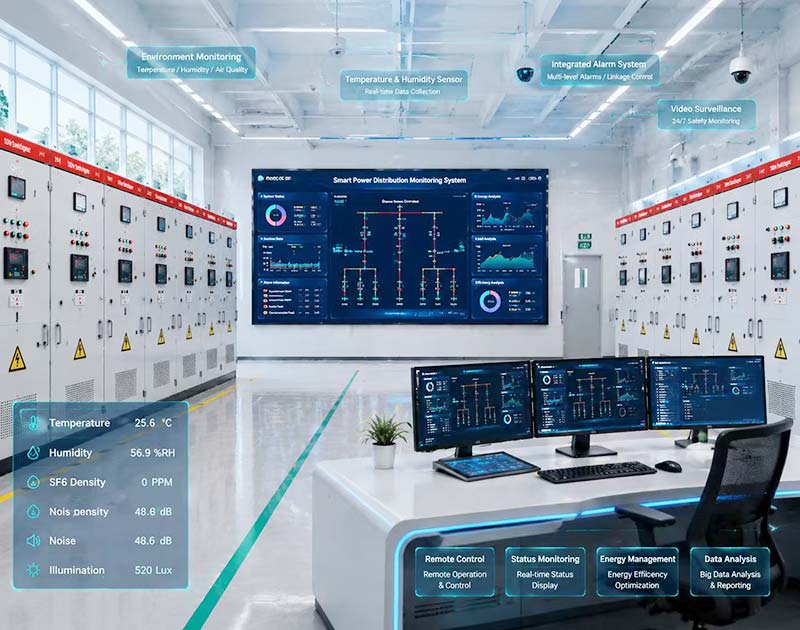
For monitoring, define the actual signals: breaker position, trip indication, current measurements and selected alarms. Identify the communications interface and who owns the integration. “Smart panel” is not a usable signal schedule.
Lanshan’s low voltage switchgear range includes fixed GGD and withdrawable configurations. Request a project-specific proposal with approved ratings, layout and verification evidence rather than transferring broad series limits into the purchase specification.
Conclusion
The right low voltage switchboard is the one whose documented arrangement matches the plant’s load, maintenance tasks and acceptable interruption boundaries. A withdrawable unit can be useful, but it cannot compensate for an unsuitable supply architecture or an overlooked shared utility.
Start with the process, review credible failure and maintenance scenarios, and verify the complete assembly. Contact Lanshan Electric with your single-line diagram, load schedule and continuity requirements to discuss a suitable configuration for your project.
FAQ
What is a low voltage switchboard used for in a process plant?
It distributes power to process feeders, motor-control equipment and auxiliary systems, with protection and control functions appropriate to the specified assembly. The scope should distinguish main distribution from equipment-level motor starting and process control.
Is a withdrawable low voltage switchboard always the better choice?
No. Evaluate whether removable units support the planned maintenance tasks and whether compatible spares and handling arrangements will be available. Fixed construction remains a candidate where its documented isolation requirements fit the plant’s shutdown schedule.
Does internal separation make a switchboard arc resistant?
Not by itself. Internal arc-fault performance needs separate evidence for the assembly and protective approach. Request the applicable verification basis and installation conditions; do not infer that performance from a separation designation.
Can two incoming supplies prevent every plant shutdown?
No. The supplies may share an upstream dependency, and a bus fault may affect downstream loads regardless of how many incomers are installed. Review source independence, transfer restrictions and shared process utilities against specific failure scenarios.
What documents should accompany a low voltage switchboard proposal?
Request the rated-data schedule, single-line and layout drawings, circuit schedule, verification evidence and proposed testing scope. Include a deviation list identifying unresolved technical conditions, then obtain the final as-built documents and approved settings at handover.