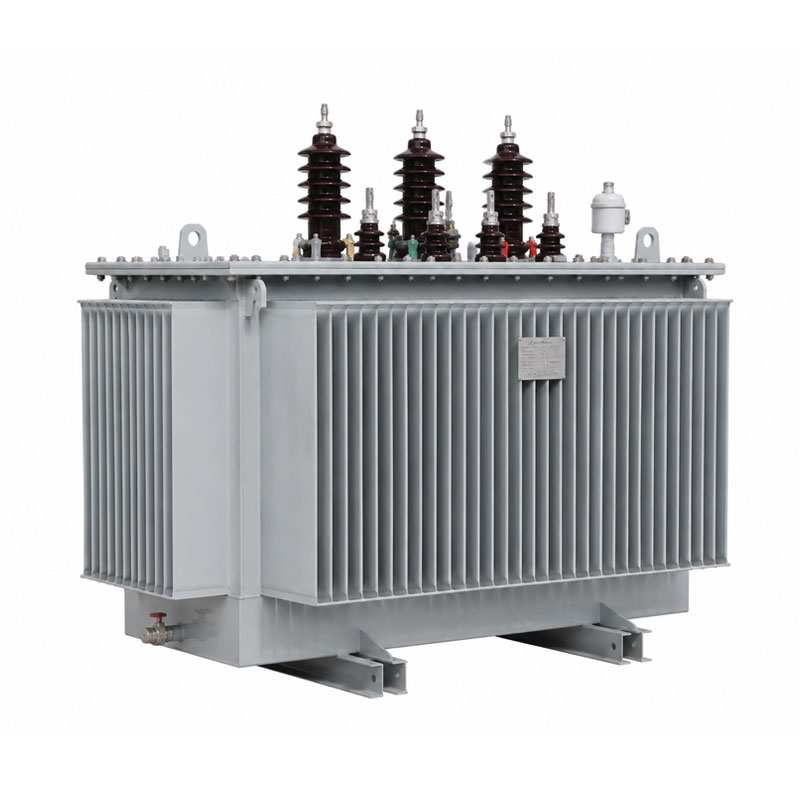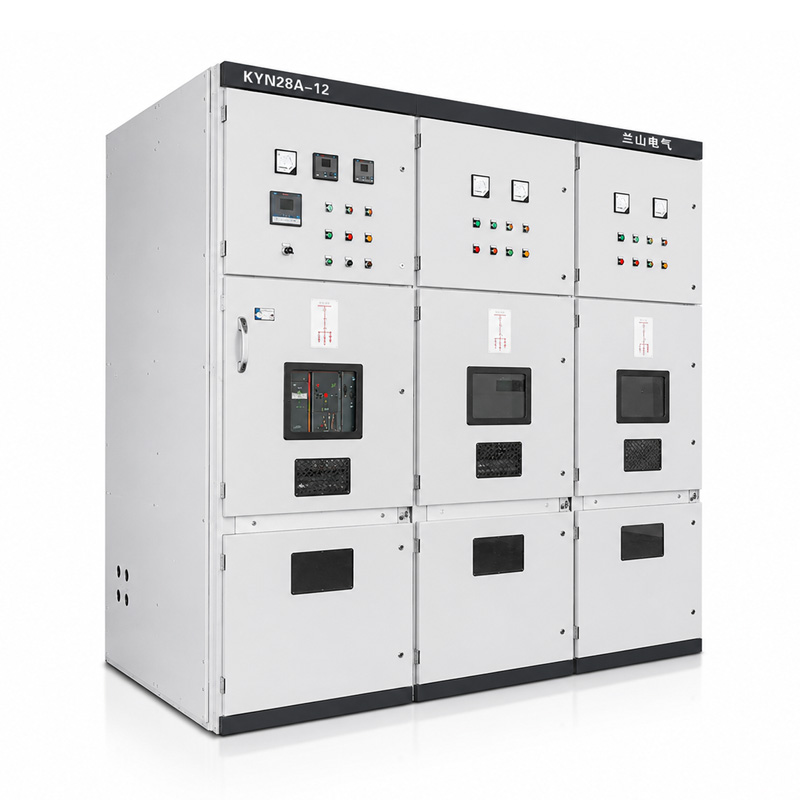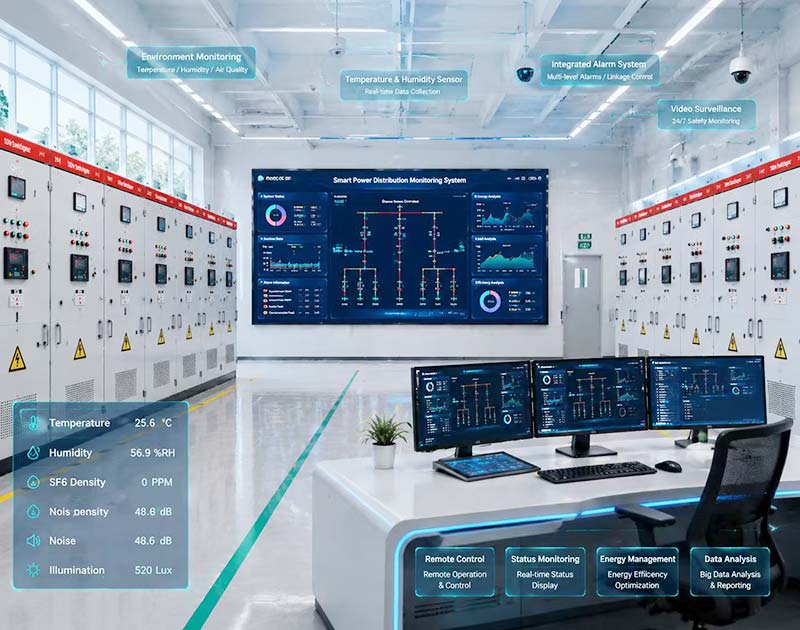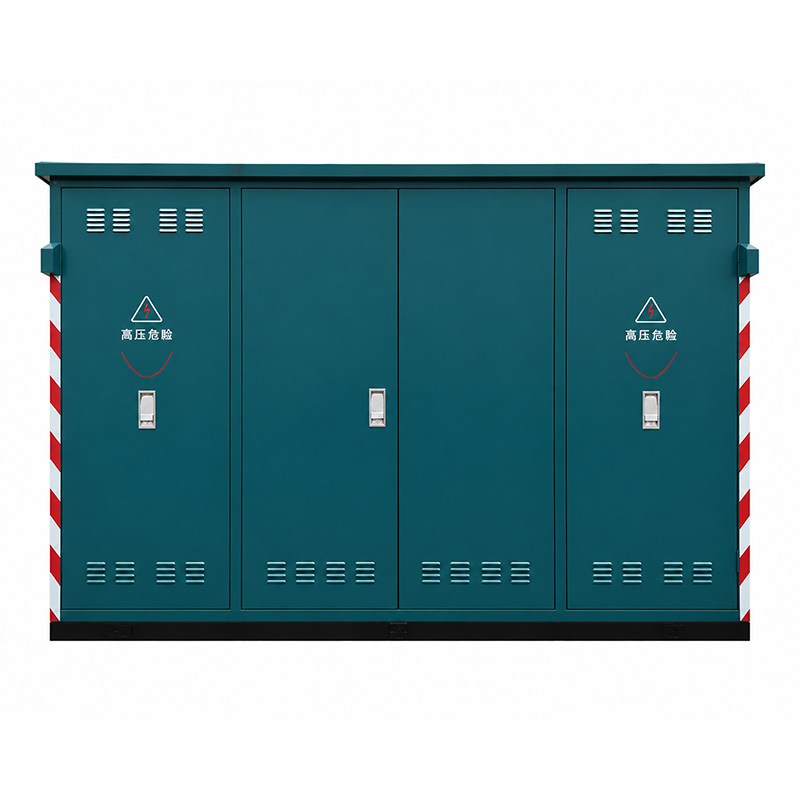
An oil immersed transformer enquiry can look complete while leaving the most consequential decisions unresolved. Two proposals may quote the same capacity and voltage ratio but assume different impedance, cooling conditions, insulating liquid or protection accessories.
The purpose of a request for quotation, or RFQ, is to make those differences visible before an order is placed. This guide focuses on distribution projects: how to specify the electrical duty, define the oil system and obtain evidence for the configuration that will actually reach your site.
What Should an Oil Immersed Transformer RFQ Include?
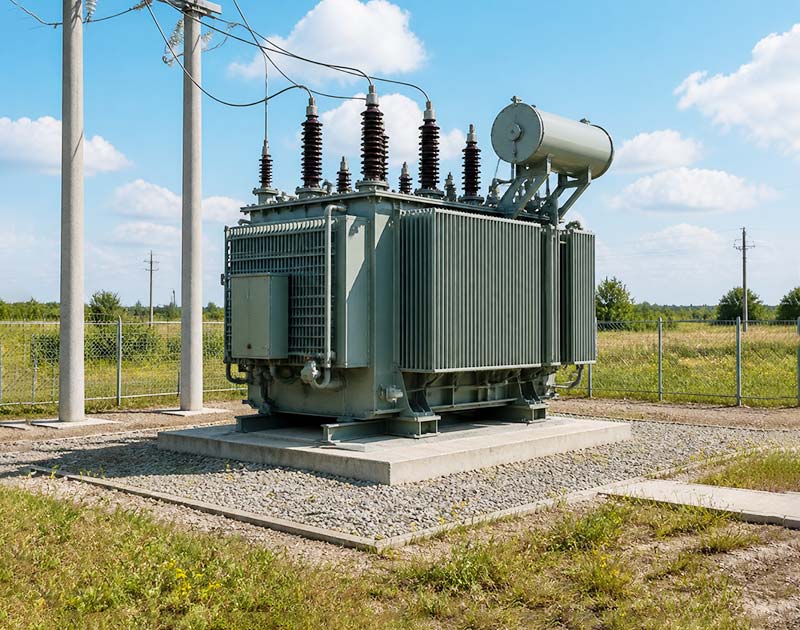
Start with a single-line diagram, load profile, technical schedule and installation drawing. Add an accessory list and an agreed testing scope. Use the following matrix to structure the enquiry, marking preliminary information rather than presenting assumptions as approved values.
| Specification group | Buyer input | Supplier confirmation |
|---|---|---|
| Electrical duty | Capacity, voltage ratio, frequency and load profile | Guaranteed ratings and operating conditions |
| System compatibility | Impedance requirements, connection arrangement and fault data | Proposed impedance, vector group and tapping schedule |
| Insulating liquid | Required fluid type and acceptance criteria | Exact fluid specification and delivery records |
| Tank and cooling | Site exposure, preservation preference and cooling expectations | Tank arrangement and ratings for each cooling mode |
| Accessories | Monitoring, alarm and trip requirements | Device list, functions and wiring interfaces |
| Acceptance and delivery | Required evidence, site responsibilities and transport restrictions | Test plan, drawings and shipment condition |
For an IEC-based oil immersed transformer specification, IEC 60076-1 provides the general framework, including liquid-preservation systems, transport and tank testing. Agree the relevant parts and editions rather than accepting an undefined reference to the entire series.
Match Rated Capacity to the Actual Operating Duty
Separate the selected rating from the demand calculation. Give the manufacturer the expected kVA, duration of high-load periods, significant motor starts and confirmed future additions. Identify whether the unit supplies the full facility or only one production area.
An oil immersed transformer carrying a brief peak does not have the same thermal duty as one carrying that load throughout a shift. IEC 60076-7 addresses the relationship between mineral-oil transformer loading, ambient conditions, operating temperature and ageing.
Record which loads remain connected during abnormal supply arrangements. Do not bury both planned expansion and uncertain growth inside several overlapping capacity allowances.
Use Lanshan’s power transformer range as the starting point for a duty-specific proposal, not as evidence that every catalogue rating suits every installation.
Define Voltage Ratio, Vector Group and Tap Positions
State the nominal system voltages, frequency and expected supply variation. Ask the engineer to define the insulation requirements separately; a voltage ratio alone does not describe dielectric withstand. IEC 60076-3 addresses insulation levels and the corresponding tests for windings and terminals.
For the oil immersed transformer, specify the winding connections, phase displacement and neutral requirements through the agreed vector group and connection drawing. Where parallel operation is planned, require a compatibility review rather than assuming matching kVA values are sufficient.
Do Not Confuse Tapping Range with Operating Method
Request the tapped winding, each tap voltage, step size and permitted operating conditions. Identify whether adjustment requires de-energization or uses equipment designed for on-load operation. A quoted percentage range does not answer that question.
Include any required regulating controller and auxiliary supply in the scope. The IEC transformer application guide covers connections, tapping quantities, voltage changes under load and parallel operation. Have the designer use those characteristics together.
Why Transformer Impedance Changes the Comparison
Impedance affects both voltage performance and fault current. For an oil immersed transformer RFQ, request the proposed percentage impedance, its reference basis and applicable tolerance. Do not describe the lowest value as automatically preferable.
A Worked Example with Two Impedance Values
Consider two hypothetical 1,000 kVA, 10 kV/400 V, three-phase units. For this screening calculation, assume nominal voltage, the principal tap, an ideal upstream source and a balanced three-phase fault directly at the LV terminals. Ignore connecting-cable impedance and other sources.
The rated secondary current is approximately:
1,000 kVA ÷ (√3 × 0.4 kV) = 1,443 A
Using transformer impedance alone, the approximate symmetrical fault current is rated current divided by per-unit impedance:
| Hypothetical impedance | Simplified calculation | Approximate LV fault current |
|---|---|---|
| 4% | 1,443 A ÷ 0.04 | 36.1 kA |
| 6% | 1,443 A ÷ 0.06 | 24.1 kA |
These are illustrative calculations, not Lanshan ratings or switchgear-selection results. They demonstrate why equal kVA and voltage do not make two offers electrically equivalent.
Have the project engineer calculate actual duty, including source impedance, operating voltage, taps, tolerances and other contributions. Review the result against the connected low voltage switchgear.
Separately, request evidence of the oil immersed transformer’s ability to withstand external short circuits. IEC 60076-5 addresses thermal and dynamic withstand; a percentage-impedance value does not establish that capability by itself.
Specify the Insulating Liquid by Its Actual Standard
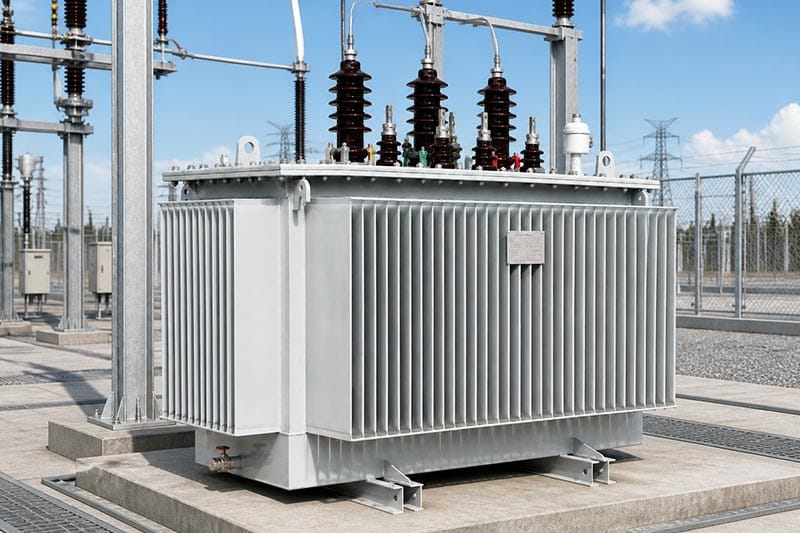
An oil immersed transformer should not be ordered with the fluid described only as “high quality” or “environmentally friendly.” State the required liquid family, specification and acceptance documentation.
IEC 60296 covers both unused and recycled mineral insulating oils in the delivered state. Therefore, a requirement for unused mineral oil should say so explicitly; citing the standard alone does not communicate that purchasing condition.
For a requested natural-ester alternative, IEC 62770 provides a separate specification. It also identifies the need to protect natural ester from atmospheric exposure through a sealed arrangement or a suitably protected conservator.
Ask the manufacturer to confirm the fluid’s suitability for the entire oil immersed transformer design, including cooling and materials. A proposed fluid substitution is a technical change, not merely a different label on the delivery drum.
Keep the fluid identity traceable through supply and filling. Ask whether the submitted record describes the delivery batch, the factory-filled transformer or a sample taken after site work. Those are different acceptance stages. Agree the required evidence at each stage instead of relying on an unlabelled oil-test sheet.
Choose Sealed or Conservator Construction Deliberately
Request an oil-system drawing rather than accepting “standard tank.” For a conservator arrangement, identify the expansion reservoir, breathing or membrane system, level indication and maintenance access.
For a sealed oil immersed transformer, ask how expansion is accommodated and how oil level, pressure and tank condition are assessed. Do not assume that every sealed design uses the same expansion method or protective devices.
Compare the preservation arrangement with the site’s maintenance capabilities. Who checks the required indicators, obtains samples and maintains any breather? Specify access to valves and replaceable accessories before approving the outline drawing.
“Sealed” should not become a promise of zero inspection or zero leakage. Require the relevant tank-test records and maintenance instructions under the agreed general transformer requirements.
Match Protection Accessories to the Tank Design
A conventional Buchholz relay detects gas accumulation and liquid movement associated with a conservator arrangement. It is not a universal accessory for every sealed oil immersed transformer. IEC 60076-22-1 addresses protective devices for liquid-immersed equipment with and without conservators.
For the selected design, identify the required temperature indication, pressure protection, liquid-level monitoring and any gas-related protection. Ask which functions are local indications, remote alarms or trip initiators.
For each oil immersed transformer trip function, specify the contact requirements, auxiliary supply and circuit breaker that will disconnect the fault. A pressure-relief device and an electrical trip circuit perform different jobs; one should not be treated as a complete substitute for the other.
Require an accessory drawing and terminal schedule. Agree how the supplied functions will be demonstrated, and who verifies the external wiring at site.
For example, a copied specification might request both a tank without a conservator and a conventional conservator-pipe Buchholz relay. Do not close the enquiry with two unchecked compliance boxes. Ask the manufacturer to identify the intended construction and a compatible protection arrangement. The final drawing, accessory list and alarm schedule should describe the same equipment.
Compare ONAN and ONAF Ratings on the Same Basis
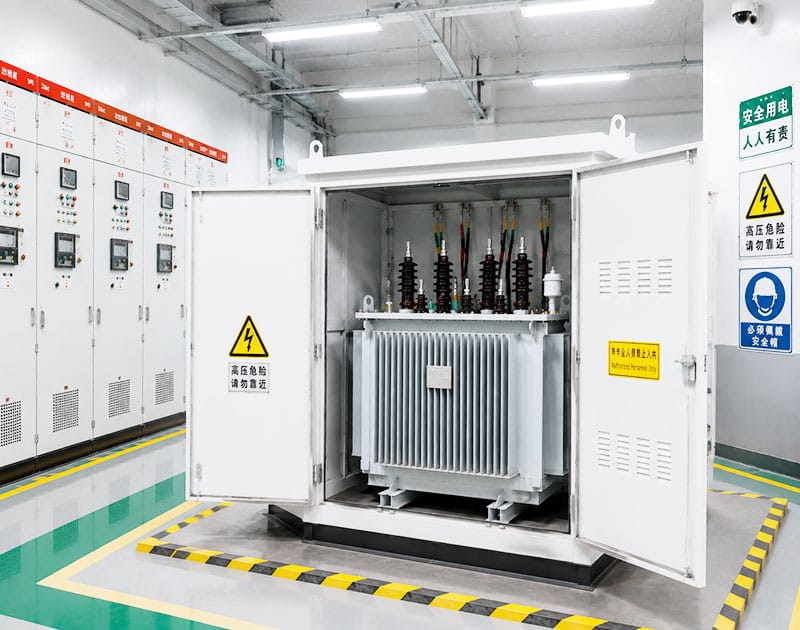
For a mineral-oil design, ONAN describes natural oil circulation with natural air cooling. ONAF retains natural oil circulation but uses forced air. IEC 60076-2 addresses cooling identification, temperature-rise limits and test methods.
An oil immersed transformer offered with fan assistance needs separately stated ratings for the applicable cooling modes. Ask which rating supports normal demand and what loading remains permitted when fans or their supply are unavailable.
Give the supplier site temperature, altitude and enclosure details. Do not compare an outdoor, freely ventilated rating with a proposal installed inside a restricted housing without a thermal review.
For an oil immersed transformer within a prefabricated compact substation, require confirmation for the combined arrangement. The surrounding enclosure is part of the operating environment, not an irrelevant packaging detail.
Request Guaranteed Losses, Not Just an Efficiency Claim
Obtain no-load loss and load loss separately. Core-related losses remain while the transformer is energized, whereas load losses vary with loading; the transformer efficiency guide hosted by the Department of Energy explains this distinction.
For an oil immersed transformer comparison, align capacity, voltage, frequency, tap position, reference temperature and the loading point used for any efficiency figure. Record applicable tolerances and whether fan power is stated separately.
A “high efficiency” description cannot tell the engineer how much heat the room must remove or how losses compare during lightly loaded operation.
Where winding material is a contractual requirement, specify it. Then retain the guaranteed performance requirements rather than assuming a material name alone establishes the finished design’s losses.
Coordinate Terminals, Oil Containment and Site Access
The oil immersed transformer outline drawing should show bushing or cable-box positions, terminal details, neutral and earth connections, radiator clearances and foundation loads. Supply actual cable quantities and connection directions before dimensions are frozen.
Request the declared insulating-liquid quantity for the site’s containment assessment. Have the responsible designers establish fire separation, spill management and drainage requirements for the actual location. IEC 61936-1 addresses relevant high-voltage installation requirements, distinct from product design.
Include sound criteria where neighboring occupied areas matter, along with corrosion exposure and replacement access. Avoid copying a containment percentage or a separation distance from an unrelated installation.
Agree the Test Schedule Before Manufacturing
An oil immersed transformer test plan should name the measurements, acceptance criteria, applicable methods and records required for the supplied unit. “Factory tested” is too vague to close a technical specification.
Ask the plan to address winding resistance, ratio and connection checks, no-load loss and current, load loss and impedance, applicable dielectric tests, tank integrity and supplied accessory functions. The engineer and manufacturer must establish which are routine, type or special tests for the agreed equipment.
Keep Oil Tests Separate from Transformer Tests
IEC 60156 specifies a method for measuring the breakdown voltage of insulating liquids. An acceptable oil result does not demonstrate every dielectric characteristic of the complete oil immersed transformer.
Agree the oil-sampling stage and acceptance criteria, including any checks needed after site filling. Request serial-number traceability, final drawings and the relevant design-test evidence. Do not imply that witnessing a routine factory test repeats every type test.
Where a design-test report comes from a reference unit, ask the technical reviewer to establish its applicability to the offered construction. Record any differences in winding design, cooling or insulation. A matching capacity on the report cover is not the complete comparison; unresolved differences need an agreed engineering disposition before approval.
Define Shipment Condition and Commissioning Responsibilities
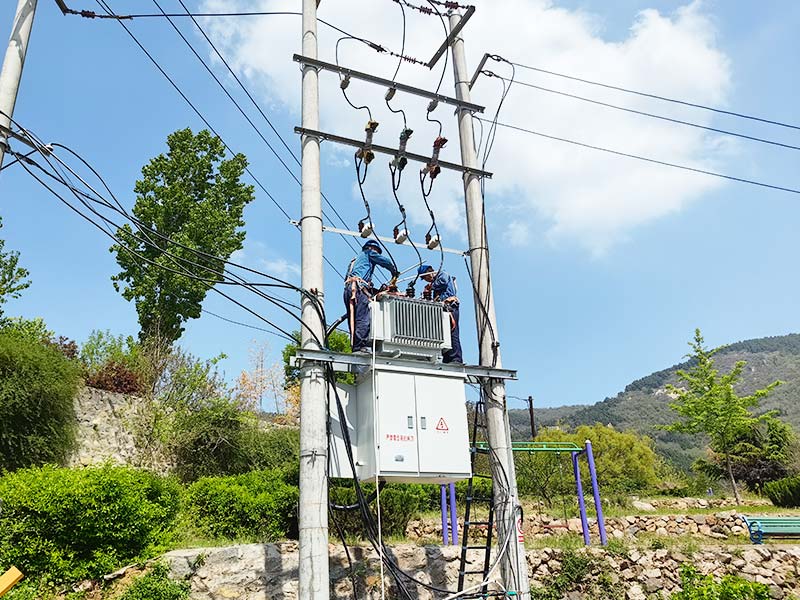
Confirm whether the oil immersed transformer ships fully assembled and filled, or with specified components removed. Request transport dimensions and masses separately from installed dimensions and total operating mass.
Where site assembly or filling is necessary, identify the responsible party, approved procedure, equipment and acceptance records. Make preservation instructions available before storage begins, not after the unit has waited on site.
List loose-shipped gauges, valves, radiators and other accessories individually where applicable. Identify who checks the packing list against the approved arrangement and who retains responsibility while components await assembly. The receiving team needs the relevant drawings and handling instructions as well as the transport booking.
For the oil immersed transformer handover, distinguish completed factory work from cable connections, earthing, protection integration and pre-energization checks. An oil-filled shipment is not automatically an installation approved for energization. Qualified personnel must follow the approved commissioning and safe-working procedures.
Turn the Schedule into a Lanshan Technical Proposal
Lanshan’s oil immersed transformer page lists sealed and conservator options, ONAN and ONAF cooling, and selectable protective accessories. These options need to be coordinated into one project-specific configuration; they are not guaranteed simultaneously for every model.
Send the load profile, voltage requirements, system diagram, site conditions and accessory schedule together. Request one completed guaranteed-data sheet, an outline drawing and a list of technical deviations.
Before approving the oil immersed transformer, close discrepancies between those documents. A revised tank, liquid, impedance or cooling arrangement should trigger review of the affected interfaces and evidence rather than remain an informal substitution.
Conclusion
A useful oil immersed transformer RFQ makes the differences behind matching nameplate values visible. Define the electrical duty, fluid, preservation system and cooling conditions, then agree the accessories and tests that support them.
Contact Lanshan Electric with your transformer schedule and installation requirements to discuss a configuration and the technical details needed for a comparable proposal.
FAQ
What specifications are needed to order an oil immersed transformer?
Provide capacity, voltage ratio, frequency, vector group, impedance, tapping requirements and the load profile. Add fluid, cooling, site, accessory, testing and delivery requirements, marking any preliminary information clearly.
Does every oil immersed transformer need a Buchholz relay?
No. A conventional Buchholz arrangement is associated with a conservator system. Sealed designs need protective devices appropriate to their construction. Confirm the actual protection scheme rather than copying a universal accessory list.
Is a lower transformer impedance always better?
No. Lower impedance can increase the available fault current, while impedance also influences voltage performance. Select it through the system studies and check compatibility with downstream equipment rather than minimizing it automatically.
Does ONAF mean the transformer keeps its full rating without fans?
Not necessarily. Request the manufacturer’s separately stated natural-air and forced-air ratings. The permitted duty without fan assistance depends on the approved design and operating conditions, not the ONAF label alone.
Can an oil immersed transformer use a different insulating liquid?
Only after the manufacturer confirms the proposed liquid and complete design are suitable. Fluid specifications, materials, preservation and thermal performance need review; a general environmental description is not enough to approve substitution.