A compact substation and a conventional substation can perform the same basic job: receive medium-voltage power, transform it, and distribute power to downstream loads. The project architecture, however, is very different. One integrates major equipment before delivery; the other relies more heavily on site-built rooms, separate equipment installation, and field interfaces.
For EPC teams and plant owners, the choice should not be reduced to “prefabricated is faster” or “conventional is more flexible.” A useful comparison looks at the complete project: available land, civil work, cable interfaces, maintenance access, future expansion, thermal conditions, utility requirements, transport limits, and who owns each design boundary.
What Is a Compact Substation?
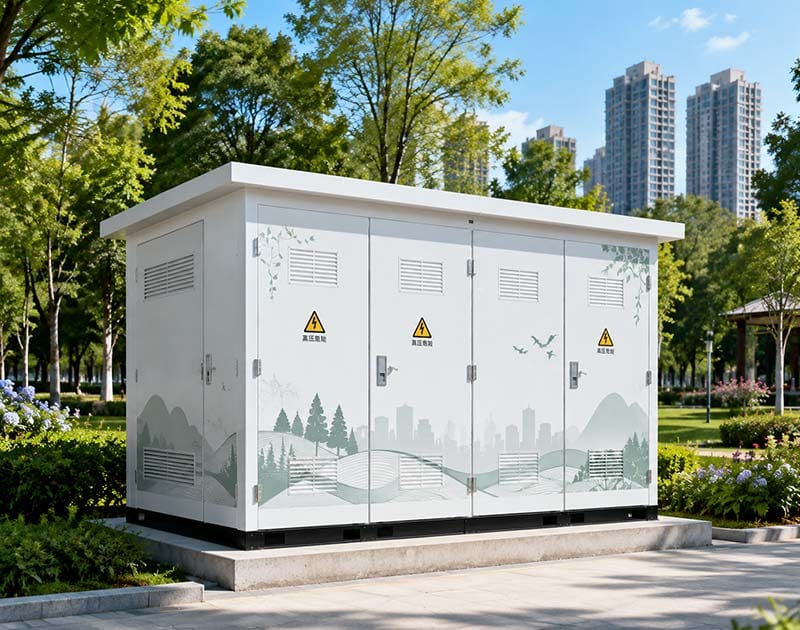
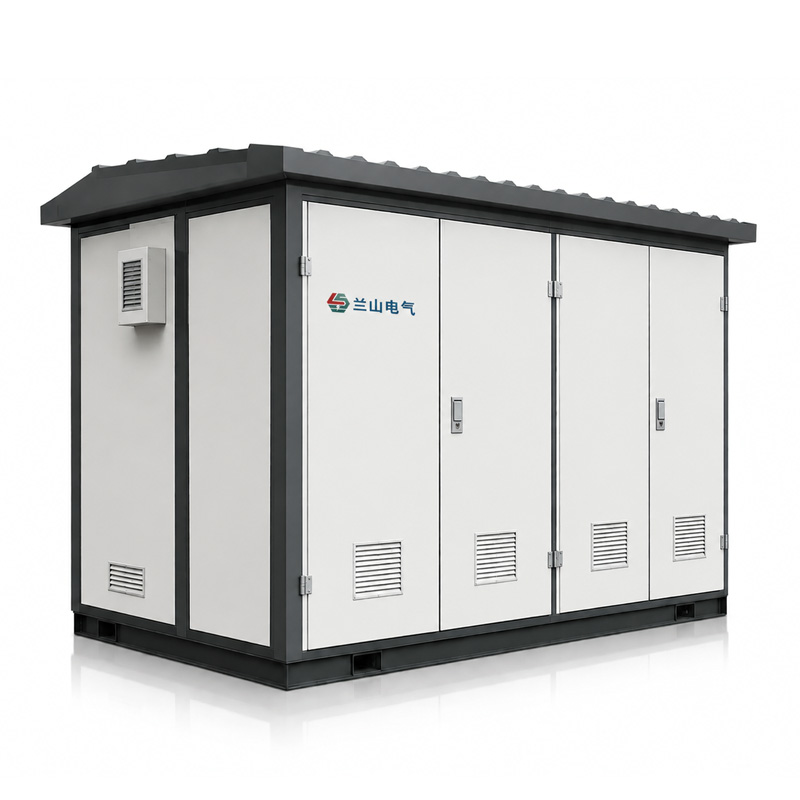
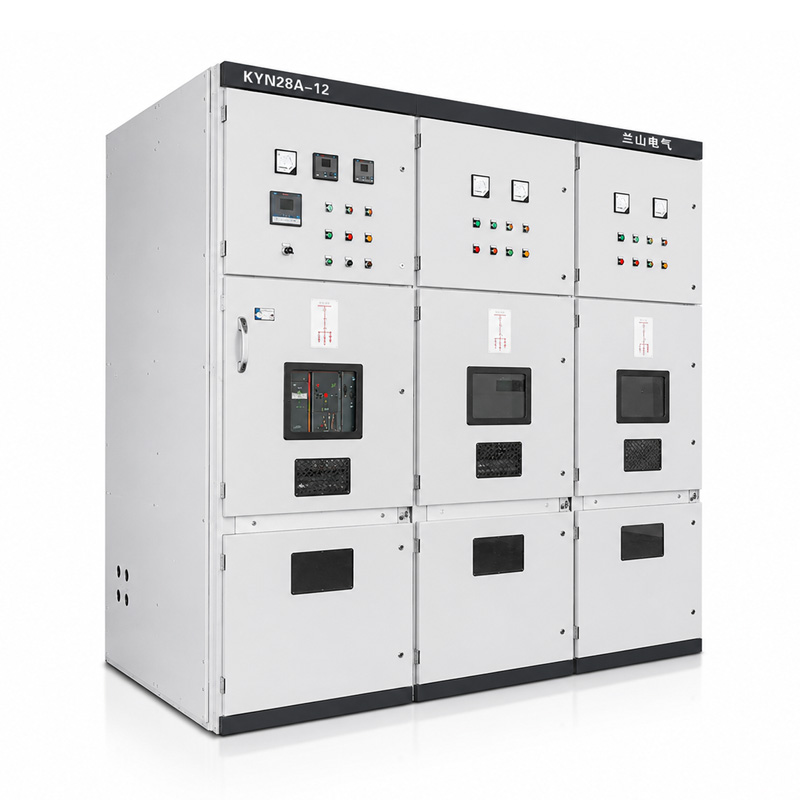
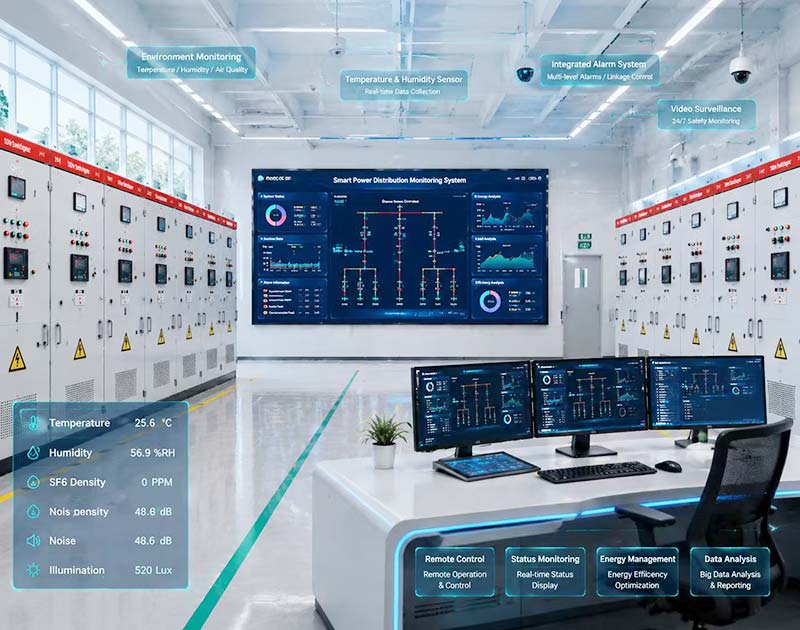
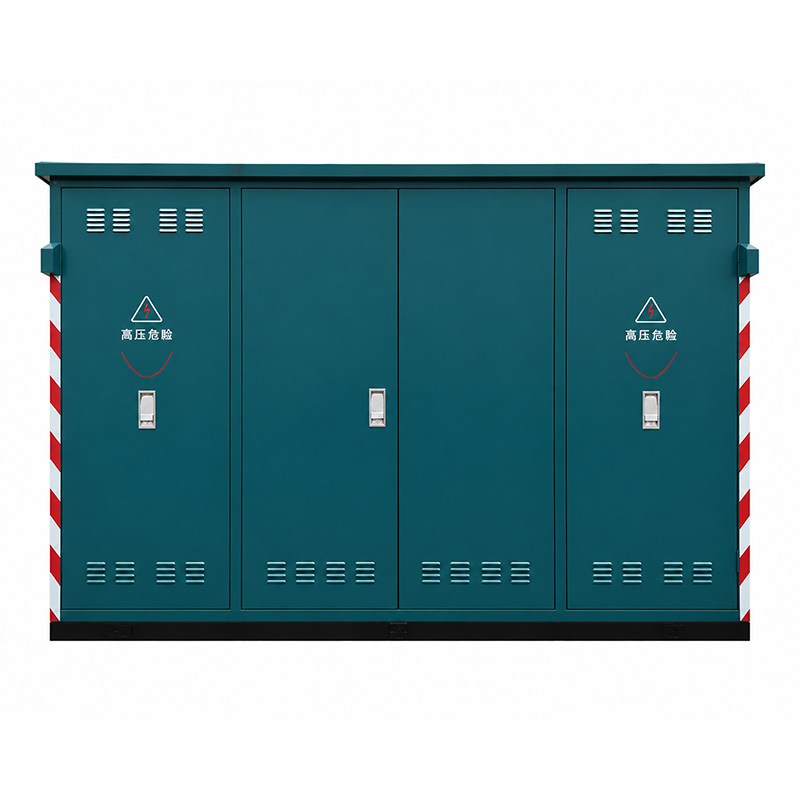
A compact substation is a prefabricated power-distribution assembly that integrates medium-voltage switchgear, a transformer, low-voltage distribution equipment, interconnections, protection, and an enclosure into a coordinated unit. Lanshan’s ZBW series follows this integrated approach, with configurable MV, transformer, LV, protection, and monitoring sections for outdoor projects.
IEC 62271-202:2022 covers enclosed AC prefabricated substations within its stated voltage range and addresses service conditions, ratings, structural requirements, temperature rise, access, and testing. The standard is important because the enclosure and integrated arrangement create system-level requirements that are not answered by the transformer datasheet alone.
A compact substation does not mean “no site work.” The foundation, incoming and outgoing cables, site earthing, external control interfaces, unloading, final connections, commissioning, and local approvals still need defined responsibilities. Factory integration shifts the boundary of work; it does not remove the boundary.
What Is a Conventional Substation?
In this comparison, a conventional substation means a site-built arrangement in which the transformer, medium-voltage equipment, low-voltage switchgear, building or fenced area, cable systems, and auxiliaries are installed more extensively as separate project packages. The exact layout may be indoor, outdoor, or mixed, depending on the project.
This approach can provide greater freedom for equipment spacing, maintenance aisles, future bays, special fire separation, or unusual site geometry. It also creates more field interfaces. Civil construction, equipment deliveries, cable installation, protection wiring, ventilation, and commissioning must be coordinated across drawings and contractors.
Conventional does not mean obsolete, and compact does not mean universally superior. The correct architecture depends on the site and the operating model.
Compact Substation vs Conventional Substation at a Glance
The table below is a project-screening tool. It describes typical differences, not guaranteed outcomes. Every point still needs confirmation against the actual design, utility requirements, and supply scope.
| Decision factor | Compact substation | Conventional substation | What to verify |
|---|---|---|---|
| Equipment integration | Major MV, transformer and LV functions coordinated in a factory-built enclosure | Major equipment installed and interconnected more extensively on site | Exact factory and site supply boundaries |
| Civil work | Usually focused on prepared foundation, cable entries and external interfaces | Often includes a dedicated building, rooms, trenches, fencing and broader site construction | Foundation loads, drainage, fire and access requirements |
| Site footprint | Can be compact because functions share one enclosure | Depends on equipment spacing, rooms and access strategy | Required clearances and future expansion area |
| Installation sequence | Factory work can run in parallel with site preparation | More sequential field installation and interconnection may be required | Approved project schedule and dependencies |
| Maintenance access | Defined by the integrated enclosure and compartment arrangement | Can be customized through room and equipment layout | Isolation boundaries, replacement paths and working space |
| Expansion | Possible if interfaces and reserved provisions are designed in advance | Can allow separate bays or building expansion where space is reserved | Future fault duty, bus capacity, cable routes and outage plan |
| Transport | Complete or large modules require route and lifting review | Individual equipment can often be transported separately | Shipping dimensions, masses and site lifting limits |
Compare Project Schedule, Not Just Equipment Delivery Time
A compact substation can reduce field assembly because much of the electrical integration is completed before delivery. Site foundation work can also proceed while the unit is being manufactured. That parallel activity can be valuable when energization is on the project’s critical path.
But “factory assembled” should not be translated into a universal number of days saved. Utility approvals, drawing review, foundation construction, cable delivery, transport permits, site testing, and protection commissioning can still control the schedule. A late interface drawing can delay either approach.
Build two schedules at RFQ stage. For the compact substation option, show design approval, factory manufacture, foundation readiness, transport, placement, cable connection, and site commissioning. For the conventional option, show civil construction, separate equipment deliveries, installation, interconnection, testing, and commissioning. Compare the critical path rather than one supplier’s factory lead time.
Compare Footprint with Maintenance and Replacement Space Included
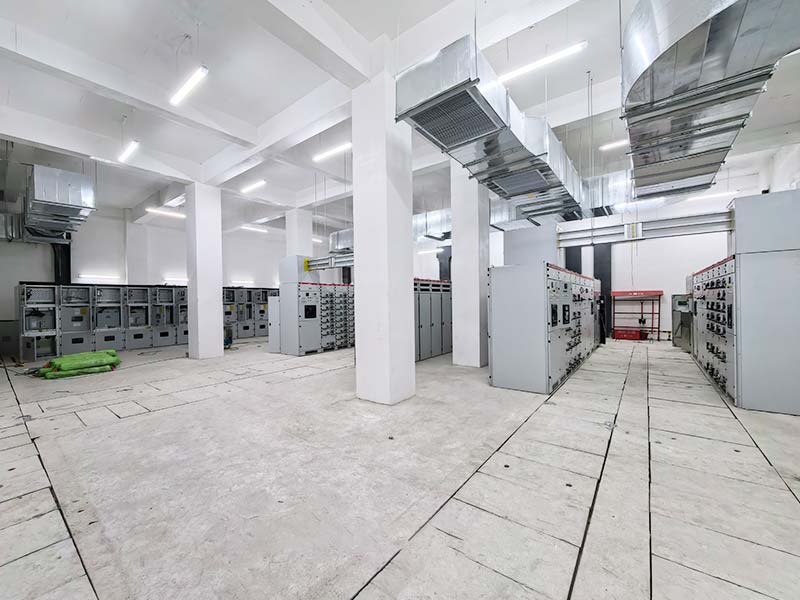
The visible footprint of a compact substation is often smaller than a purpose-built substation building, but the equipment outline is not the complete site requirement. Add access doors, operating clearances, cable approach, ventilation zones, pressure-relief requirements where applicable, and the path needed to replace the transformer or switchgear components.
A conventional substation may occupy more land, yet its room layout can provide generous working aisles, separated equipment zones, and dedicated replacement access. On a constrained industrial site, that flexibility may be more valuable than the smallest possible enclosure.
Ask for one dimensioned site plan for each option. Draw the permanent fences, walls, roads, drainage, cable trenches, doors, crane or lifting positions, and future buildings. A compact substation should be selected because the complete installed arrangement fits, not because its catalogue outline is smaller.
Civil Work and Site Interfaces Can Decide the Project Risk
For a compact substation, factory integration can reduce the amount of electrical assembly performed outdoors, but the foundation and interfaces become especially important. The manufacturer should provide base dimensions, support loads, cable openings, anchor locations, earthing terminals, and any drainage or ventilation constraints before civil work is frozen.
In a conventional substation, civil scope is generally broader. Room dimensions, structural openings, trenches, transformer foundations, fire separation, ventilation, and equipment plinths all need coordination with separately supplied electrical equipment.
Neither approach removes interface risk. It moves that risk to different locations. A compact solution concentrates risk at the factory-to-site boundary. A conventional solution creates more boundaries between civil, MV, transformer, LV, and control packages. Use a responsibility matrix to assign each interface before issuing the purchase order.
Factory Integration Changes What Can Be Tested Before Shipment
One advantage of a compact substation is the opportunity to assemble and functionally check more of the integrated system before it reaches site. Interconnections, selected control logic, alarms, interlocks, and the physical relationship between compartments can be reviewed in the factory configuration.
That does not mean one factory test proves every project requirement. Design verification, routine tests on individual equipment, functional demonstrations, and site acceptance answer different questions. The applicable transformer, switchgear, LV assembly, and prefabricated-substation evidence should remain distinguishable.
For a conventional substation, individual equipment is also factory tested, but more interfaces are completed at site. The commissioning plan therefore needs greater emphasis on field wiring, cable testing, inter-equipment protection, control interfaces, and the final installed system.
For either approach, define the factory acceptance test and site acceptance test before manufacture. A signed witness sheet is useful only when everyone agrees what it actually demonstrates.
Thermal Performance Needs an Assembly-Level Review
A compact substation places heat-producing equipment inside a shared enclosure. Transformer losses, LV losses, solar exposure, airflow restrictions, and ambient temperature therefore need to be considered together. IEC 62271-202:2022 specifically addresses temperature-rise testing and includes updated treatment of solar radiation and equipment installed within the enclosure.
This is why a transformer’s standalone kVA rating should not automatically be treated as the enclosed station’s guaranteed continuous capability. Ask the supplier for the supported loading conditions of the complete offered arrangement, including the selected cooling method and site environment.
A conventional substation can provide greater separation between transformer and switchgear rooms, but it still needs engineered ventilation or outdoor heat dissipation. More room volume does not automatically mean acceptable temperatures. Both approaches require a thermal design matched to the equipment losses and actual ambient conditions.
Maintenance Strategy Can Favor Either Architecture
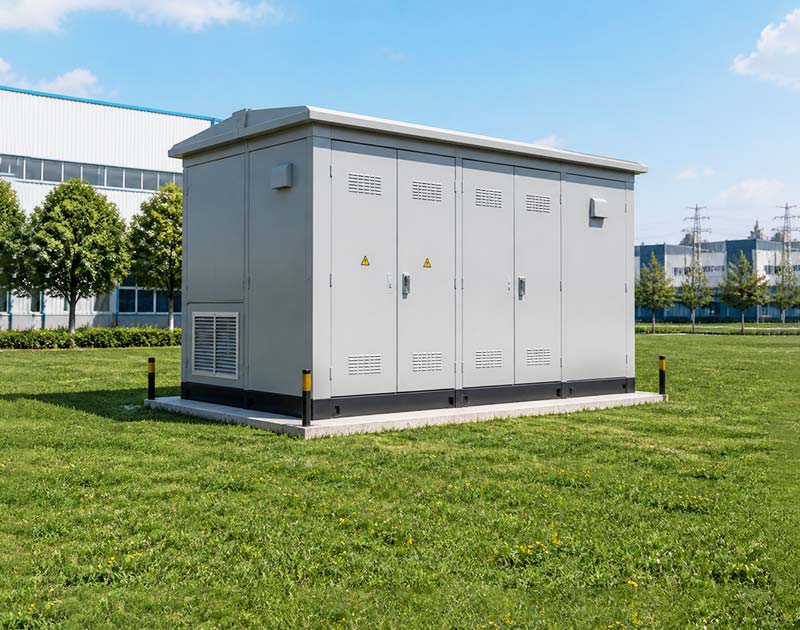
Before selecting a compact substation, list the maintenance tasks the owner expects to perform: transformer inspection, MV cable work, breaker maintenance, LV feeder replacement, protection testing, and cleaning or ventilation checks. Ask which other equipment must be isolated for each task.
Compact construction can simplify a standardized maintenance program when the site has many repeated units. However, tight integration may also make some replacement operations dependent on enclosure access or shared shutdown boundaries. Those conditions should be understood before the station is installed beside permanent structures.
A conventional substation can provide larger work areas and more separated equipment, which may suit sites with frequent maintenance or specialized replacement requirements. The trade-off is greater building infrastructure and more field-installed systems to maintain.
Do not assume that either architecture permits energized work. Maintenance access and safe-working authorization are separate issues.
Future Expansion Is More Than Reserving Empty Space
Expansion should be treated as a future electrical project, not a note saying “space for one more transformer.” For a compact substation, determine whether expansion means adding another independent unit, using a prepared MV feeder, extending an existing lineup, or replacing the original station with a higher-capacity configuration.
For a conventional substation, reserved building space or an empty switchgear bay can make expansion easier, but only if the original bus rating, fault duty, protection architecture, cable routes, ventilation, and civil design support the new load.
Ask the engineer to calculate the future operating modes at the planning stage. A new transformer changes load flow and can change fault current. The expansion method should be checked against the electrical studies, not just the physical layout.
Where multiple identical facilities will be developed over time, a standardized compact substation may offer repeatability. Where one site expects major, uncertain changes, a conventional arrangement may provide more freedom. Neither advantage is automatic; both depend on what is deliberately reserved.
Transport and Site Access Are Often Overlooked
A compact substation can leave the factory as a large integrated unit or as defined transport sections. That makes road access, turning radius, lifting capacity, overhead restrictions, unloading position, and shipping dimensions part of the equipment decision.
For a remote or congested site, confirm that the selected compact substation can physically reach its final foundation. Ask what must be removed for transport and who reconnects and verifies those parts after delivery.
A conventional substation usually receives transformers and switchgear as separate deliveries. Individual pieces may be easier to route through restricted access, although the site then carries more installation and interconnection work.
Perform the transport study before approving the general arrangement. Changing shipping sections after manufacturing begins can affect drawings, internal wiring, sealing, and test responsibilities.
Utility and Local Approval Requirements Can Override the Preferred Design
Before choosing compact or conventional construction, obtain the network operator’s connection, metering, access, protection, and ownership requirements. Some projects also impose civil, fire, environmental, or local equipment-approval conditions that influence the acceptable arrangement.
A compact substation covered by IEC 62271-202 still needs project-specific approval where required. An international standard reference is not automatic permission to connect to every utility network.
Likewise, a conventional substation does not gain approval simply because its components are individually certified. The complete installation, protection scheme, earthing system, and interfaces still need to satisfy the project requirements.
Include the approval path in the option comparison. The technically attractive solution is not the practical solution if the responsible authority will not accept its configuration.
Example: Choosing a Substation for an Expanding Factory
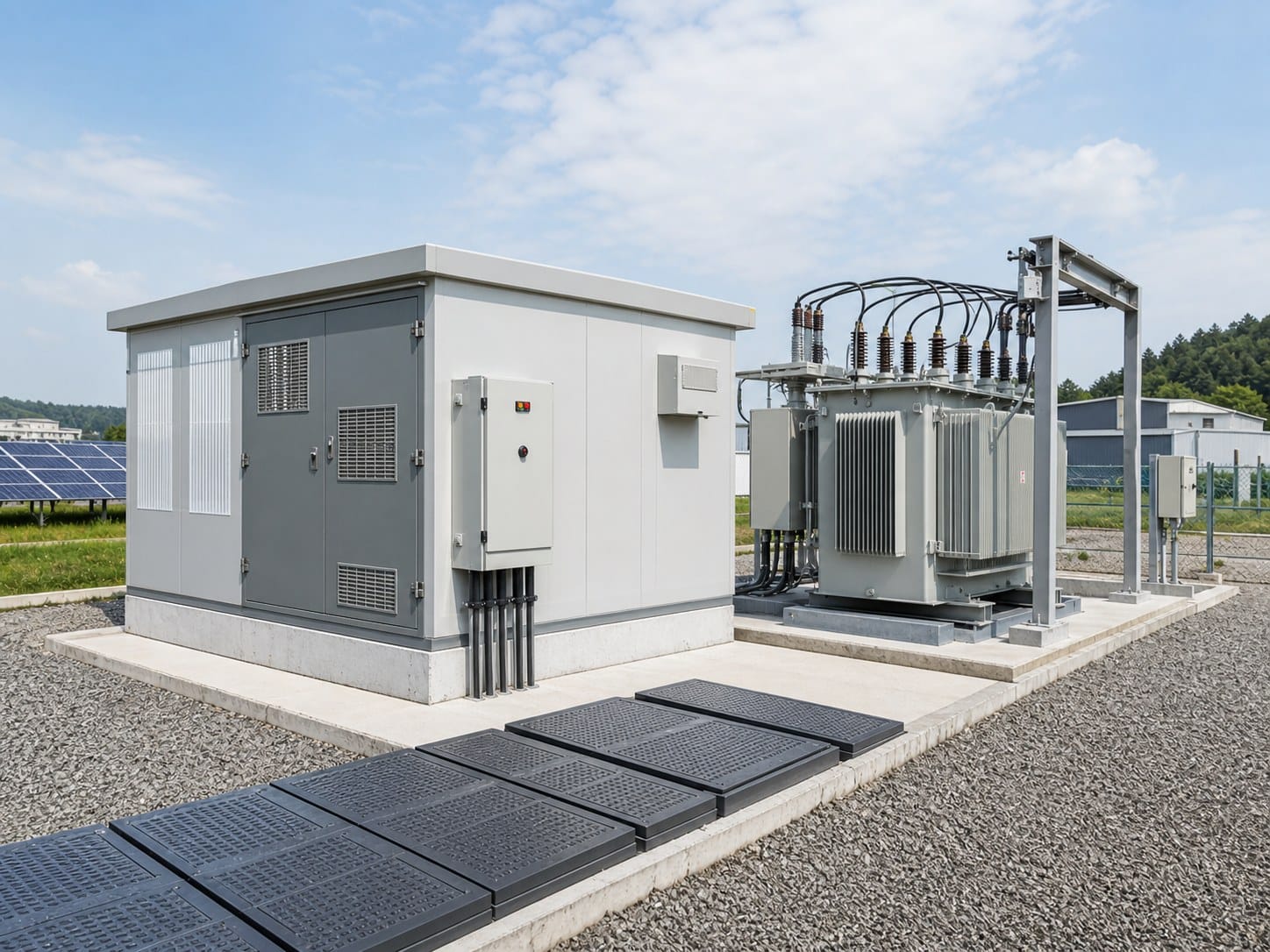
Consider a hypothetical factory adding a new production building. The electrical design requires a 10 kV supply to a local transformer and low-voltage distribution near the new loads. The site has limited construction space and wants the new building energized while existing production continues.
Option A uses a compact substation beside the new building. Site work focuses on the foundation, incoming MV cable, outgoing connections, earthing, and external controls while the integrated equipment is manufactured in parallel.
Option B uses a conventional electrical building with separate MV switchgear, transformer area, and LV switchboard. It offers more room for future bays and maintenance, but requires a larger civil package and more field installation.
If the next five years are expected to bring several identical buildings, the standardized compact approach may simplify replication. If the site expects major changes in transformer size, numerous future feeders, or specialized maintenance access, the conventional layout may deserve greater weight.
This example does not declare a winner. The correct decision would compare approved schedule, layout, fault studies, maintenance requirements, expansion plan, transport, and authority acceptance.
A Procurement Matrix for the Final Decision
Use a weighted engineering comparison rather than a list of generic advantages. The table below identifies questions that can be answered with project evidence.
| Decision question | Evidence for compact option | Evidence for conventional option |
|---|---|---|
| Can the project meet the energization date? | Factory and site schedule with interface milestones | Civil, delivery, installation and commissioning schedule |
| Does the installed arrangement fit? | Complete footprint, access, ventilation and replacement drawing | Building plan, equipment clearances and future bay layout |
| Can the site maintain it safely? | Task-specific access and isolation requirements | Room access, isolation boundaries and handling provisions |
| How will expansion occur? | Prepared feeder, second unit or defined extension interface | Reserved bays, bus capacity, building expansion and cable routes |
| What is verified before delivery? | Integrated configuration evidence plus equipment records | Individual equipment evidence plus site integration plan |
| Who owns each interface? | Factory/site responsibility matrix | Civil/electrical/package responsibility matrix |
When a Lanshan ZBW Compact Substation Is Worth Evaluating
Lanshan’s ZBW prefabricated compact substation integrates MV switchgear, a transformer, LV distribution, protection, and enclosure functions in a factory-assembled outdoor solution. Published options include different voltage levels, transformer capacities, oil-immersed or dry-type transformers, and natural or forced cooling.
Treat those published ranges as a starting point for configuration. Request confirmation for the exact transformer, MV arrangement, LV circuits, protection, enclosure, environmental conditions, and project standard. Do not assume every listed option applies simultaneously to every unit.
A strong enquiry includes the single-line diagram, load schedule, required voltage ratio, fault data, site layout, foundation constraints, cable entry information, monitoring needs, expansion plan, and responsibility matrix.
If the project instead needs a conventional site-built architecture, the same input package is still useful. It lets the engineering team compare the two approaches on the same electrical and site assumptions rather than comparing unrelated proposals.
Conclusion
A compact substation is usually most attractive when integration, limited space, repeatable design, and reduced field assembly matter. A conventional substation can be the stronger option when the project needs extensive customization, generous maintenance access, or a large and uncertain expansion path.
The decision should follow project evidence, not a generic claim that one architecture is always faster, cheaper, or safer. Compare the complete installed arrangement, testing boundary, maintenance strategy, future operating modes, and approval requirements.
Contact Lanshan Electric with your single-line diagram, site layout, transformer duty, and supply-scope requirements to review whether a ZBW compact configuration fits the project and which interfaces still need engineering confirmation.
FAQ
Is a compact substation the same as a conventional substation?
No. A compact substation integrates more of the MV, transformer, LV, and enclosure system before delivery. A conventional substation relies more extensively on site-built rooms or structures and separately installed equipment. Both can perform the same overall distribution function, but their project boundaries differ.
Is a compact substation always faster to install?
It can reduce field assembly and allow factory work to proceed in parallel with site preparation, but the total project schedule still depends on approvals, foundation readiness, cables, transport, connections, and commissioning.
Which option is better for future expansion?
Neither is automatically better. A conventional substation may provide easier physical expansion when bays and building space are reserved. A compact substation can also expand through prepared feeders, additional units, or designed interfaces. Future load flow and fault duty must be checked in either case.
Does a compact substation require civil work?
Yes. It still requires a suitable foundation, cable interfaces, earthing, access, drainage and other site provisions defined by the project. Factory assembly reduces some site activities; it does not remove civil and installation responsibilities.
What should I send for a compact substation proposal?
Send the single-line diagram, load schedule, voltage and transformer requirements, fault information, site layout, environmental conditions, cable details, monitoring needs, expansion plan, and required supply boundaries. These inputs allow a configuration-specific review.