An 11kV ring main unit should be specified from the network duties it must perform, not from a generic three-way or four-way cabinet description. Two RMUs can have the same number of ways and still use different switching devices, transformer protection, cable interfaces and monitoring arrangements.
For EPC buyers and electrical engineers, a complete 11kV ring main unit specification should answer four questions before a quotation is compared: what each way does, what current and fault duties apply, how the protected feeder trips, and how the external cables and control system connect. This guide turns those questions into a practical procurement checklist.
Start the 11kV Ring Main Unit Specification with the Network Diagram
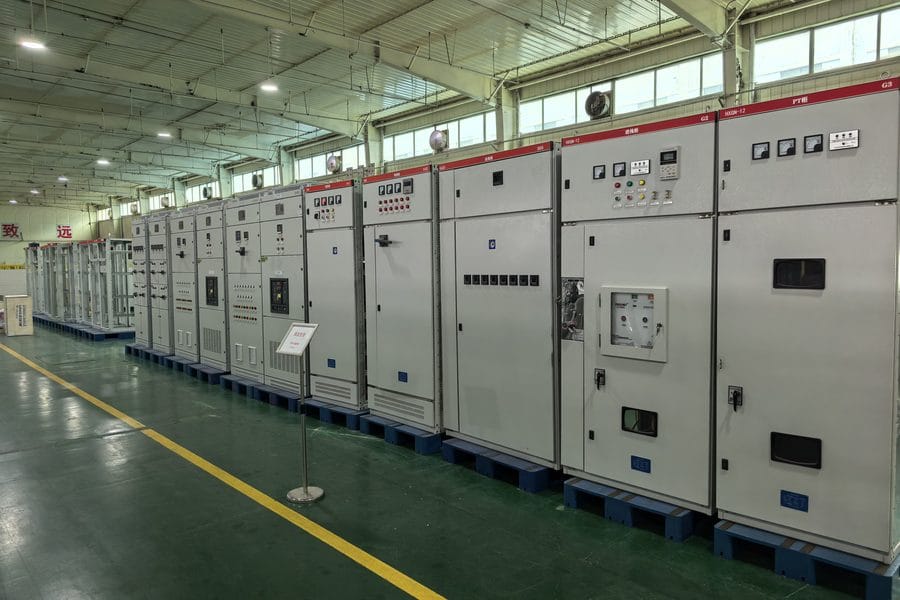
Begin with a single-line diagram showing the incoming ring cable, outgoing ring cable, transformer branch and any additional feeder. Mark the normally open point in the wider network if it matters to the operating scheme. The term ring describes the distribution arrangement; it does not mean that every RMU must operate with both ring directions energized under every condition.
For each 11kV ring main unit, give every way a function rather than only a number. For example: ring incomer, ring outgoing feeder, transformer feeder and metering way. This prevents one supplier from quoting a load-break switch on a circuit where another supplier assumes a circuit breaker.
Also identify which switching operations are expected during restoration and maintenance. Do not assume that the presence of an alternative feeder guarantees uninterrupted supply. Available capacity, protection coordination and the approved switching procedure determine whether the healthy network can be reconfigured safely.
For a wider explanation of these functions, see Lanshan’s guide to how medium voltage switchgear works.
Confirm Rated Voltage and Insulation Requirements
An 11kV system voltage does not mean the assembly should simply be marked 11 kV. The project engineer must establish the applicable equipment rated voltage, insulation levels and frequency from the network and local requirements. For IEC-based projects, IEC 62271-200 applies to relevant AC metal-enclosed switchgear assemblies above 1 kV and up to and including 52 kV.
In the 11kV ring main unit datasheet, separate nominal network voltage from equipment rated voltage, power-frequency withstand voltage and lightning impulse withstand level. Ask the supplier to state the exact values for the offered configuration instead of copying the widest product-family range into the proposal.
Altitude and environmental conditions can affect insulation and thermal performance. Include site altitude, ambient temperature and contamination conditions in the enquiry so the supplier can confirm whether standard ratings apply or whether a project-specific review is required.
Define the Switching Device in Every RMU Way
The 11kV ring main unit specification should identify the switching device and duty in every circuit. A load-break switch, switch-disconnector, switch-fuse combination and circuit breaker are not interchangeable descriptions.
IEC 62271-103 covers AC switches and switch-disconnectors within its scope, including their specified making and breaking duties. A switch may be capable of breaking normal load current and making onto a short circuit without being the device that interrupts the resulting fault current. Keep those capabilities separate in the technical schedule.
Ring Ways with Load-Break Switching
For ring incomer and outgoing ways, define the expected load current, switching duty and earthing arrangement. Request confirmation of the proposed load-break or switch-disconnector ratings under IEC 62271-103 or the applicable project standard.
Do not use a short-time withstand rating as proof of short-circuit interruption capability. The 11kV ring main unit proposal should make clear which upstream or local protective device actually clears a fault on the ring circuit.
Transformer Feeder with Switch-Fuse Protection
A switch-fuse combination can be used for a transformer branch where the protection study supports that approach. IEC 62271-105 addresses coordinated switch-fuse combinations for distribution systems. Ask for the selected fuse characteristics and the basis for matching them to the transformer duty.
The 11kV ring main unit submission should identify how fuse operation initiates the required three-phase opening function, where applicable, and which replacement fuse types are approved. Do not approve the feeder from fuse current alone.
Transformer Feeder with Circuit Breaker Protection
A circuit-breaker feeder uses a breaker with a defined protection and tripping scheme. IEC 62271-100 covers AC circuit breakers and their making and breaking tests. The proposal should identify the breaker, protection relay or equivalent protection function, sensing arrangement and trip-power source.
The choice between switch-fuse and breaker protection should come from transformer size, protection objectives, network coordination and owner requirements rather than a blanket rule that one technology is always better.
Keep Continuous Current and Fault Ratings Separate
An 11kV ring main unit needs several current ratings, and they describe different duties. Record them in separate fields rather than accepting one headline kA figure.
The table below is a screening checklist. The actual required values must come from the system study and the offered equipment documentation.
| Parameter | What it describes | What the buyer should verify |
|---|---|---|
| Rated normal current | Continuous current capability of the relevant circuit | Ring load, transformer feeder duty and supported service conditions |
| Short-time withstand current | Current the assembly or circuit can withstand for a specified duration | kA value together with the exact duration |
| Peak withstand current | Peak electrodynamic withstand capability | Declared peak value and applicability to the offered assembly |
| Short-circuit making current | Ability of the specified switching device to close onto a fault | Device function and declared making rating |
| Short-circuit breaking current | Fault current the assigned interrupting device can clear | Breaker or coordinated switch-fuse capability, not a generic switch rating |
Use Fault-Level Data, Not a Standard kA Number
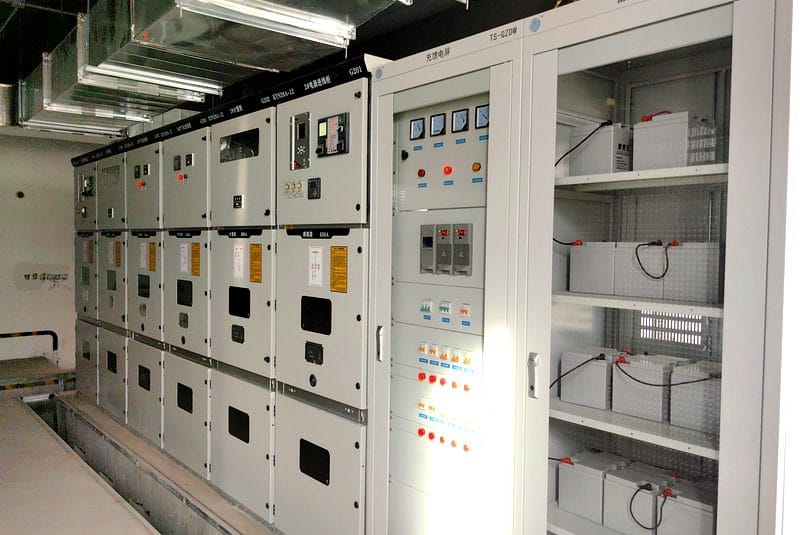
Provide the calculated or utility-supplied prospective fault current at the RMU location. If the network can operate in more than one source configuration, identify the configurations included in the fault study.
For an 11kV ring main unit, do not copy a 20 kA or 25 kA requirement from another project simply because the voltage is similar. Source impedance, cable impedance and network configuration determine the actual fault duty. The equipment rating must then provide the required margin under the applicable engineering rules.
Also keep fault-current duration explicit. A short-time withstand value without its associated time is incomplete. The protection study should confirm that the clearing time and equipment withstand are compatible.
Specify Transformer Protection as a Complete Trip Chain
Where the 11kV ring main unit uses a circuit breaker, follow the protection chain from current measurement to final interruption. Identify the current transformers or sensors, relay functions, trip output, auxiliary power and breaker trip mechanism.
Give the supplier the transformer capacity, impedance, vector group and relevant inrush information. The protection engineer should use those inputs to establish settings and coordination with upstream and low-voltage devices.
Do not treat the relay model name as the protection specification. State the required functions and who is responsible for calculating, approving and entering settings. If self-powered protection is proposed, ask which functions remain available without an external auxiliary supply and under what minimum current conditions.
For a switch-fuse transformer feeder, require the same clarity about the protection boundary: which faults the combination is intended to clear, which fuses are approved, and how the upstream protection provides backup.
Define Cable Terminations Before the Cabinet Layout Is Frozen
The cable compartment is often where an otherwise acceptable 11kV ring main unit becomes difficult to install. Provide the cable voltage class, conductor size and material, number of cores, outside diameter and entry direction before approving dimensions.
Ask the supplier to show the termination interface, cable support arrangement, screen earthing, available bending space and access needed for installation. If separable connectors are required, identify the interface and approved accessory arrangement rather than assuming every elbow or T-connector fits every bushing.
Where the cable route comes from a basement or trench, coordinate the RMU base opening with the civil drawing. A cabinet footprint that fits the room may still fail the project if the cables cannot reach the terminals within their permitted bending radius.
Specify Earthing Switches and Interlocks by Function
IEC 62271-102 addresses disconnectors and earthing switches within its scope. In an 11kV ring main unit specification, identify which part of each circuit the earthing switch connects to earth and what rating applies.
Ask for the operating sequence and interlocks on the approved schematic. Interlocks should prevent defined incompatible operations, but they are not a replacement for the site’s safe isolation procedure. A position indicator should also not be treated as independent proof that a cable is de-energized.
Only qualified, authorized personnel should operate and access medium-voltage equipment under the project’s applicable rules. The procurement specification should establish the equipment functions without turning them into field-work instructions.
Separate Voltage Indication, Fault Indication and Metering
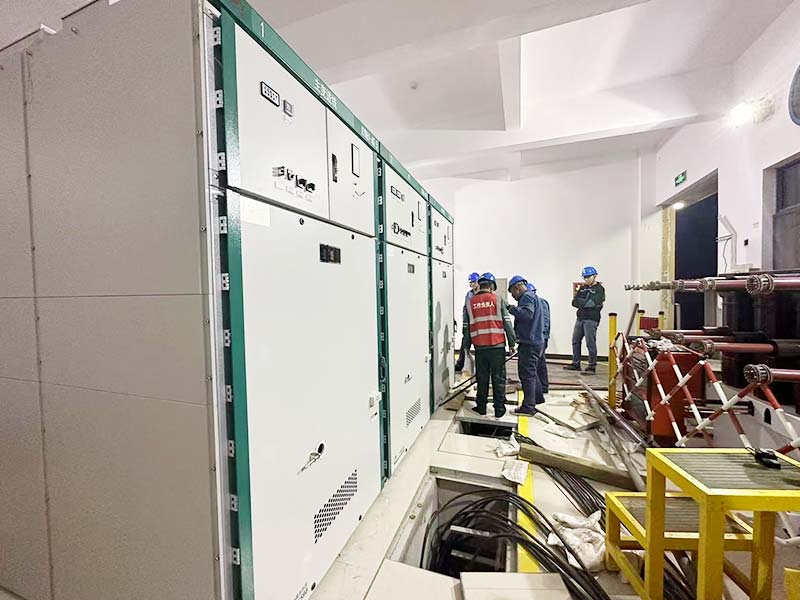
These three functions are often combined under a vague request for monitoring, even though they provide different information.
IEC 62271-213 covers voltage detecting and indicating systems installed on high-voltage equipment. If such a system is required on the 11kV ring main unit, specify its intended function and interface. Do not treat a voltage-presence indication as a substitute for the approved procedure used to establish a safe working condition.
A fault passage indicator helps operators identify that qualifying fault current has passed a sensing location. It does not interrupt the fault. Specify whether directional indication, local display, remote output or automatic reset is required.
For revenue or operational metering, define the required CTs or voltage transformers, accuracy requirements and ownership boundary separately. A metering way can materially change the RMU arrangement, so it should appear on the single-line diagram before quotation.
Do Not Confuse LSC, Partitioning and Internal Arc Performance
For IEC-based metal-enclosed switchgear, loss of service continuity, partition class and internal arc classification describe different characteristics. They should be requested only where relevant to the project and supported by evidence for the offered 11kV ring main unit configuration.
An internal arc classification should state the applicable current, duration and accessibility conditions. Do not infer arc performance from an enclosure style or the phrase metal enclosed. Likewise, a partition or service-continuity classification does not authorize live maintenance.
If internal arc performance is required, provide the room layout and ask the supplier to identify any pressure-relief or installation conditions associated with the tested arrangement. The complete installation needs to remain consistent with the evidence used for approval.
Include the Actual Installation Environment
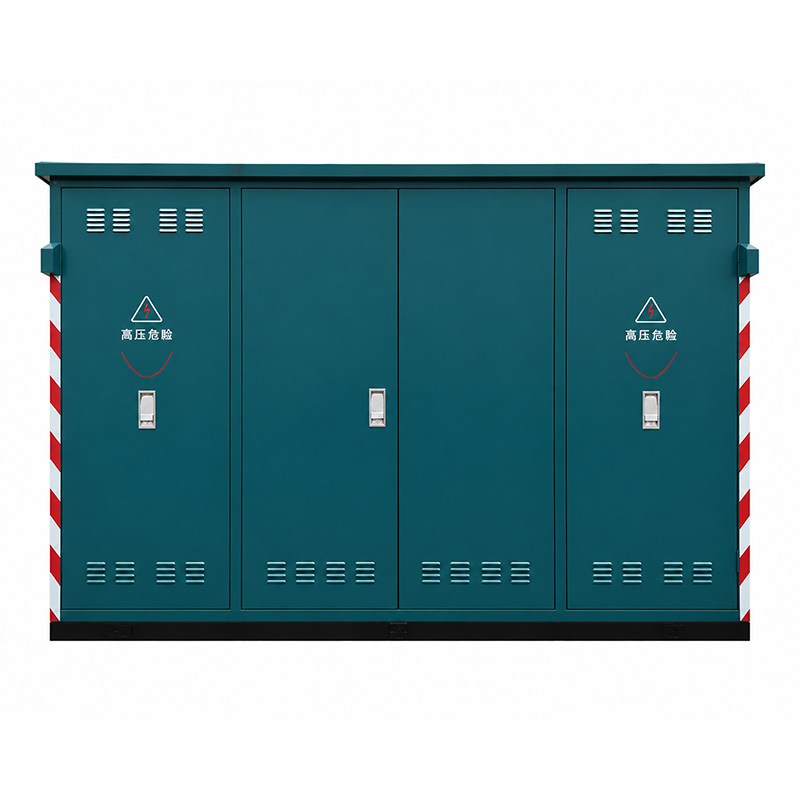
An 11kV ring main unit specified for an indoor electrical room has different exposure from one installed inside an outdoor prefabricated substation. State whether the RMU is indoor, inside another enclosure, or directly exposed to the external environment.
Provide ambient temperature, altitude, humidity, dust, salt exposure and any condensation concern. Ask the manufacturer to identify the applicable enclosure protection, anti-condensation provisions and limitations of the offered configuration.
For equipment installed inside a compact substation, coordinate RMU ventilation and heat release with the overall enclosure. A separate IP rating does not establish the thermal performance of the complete station.
Define Remote Operation and Automation Signals Precisely
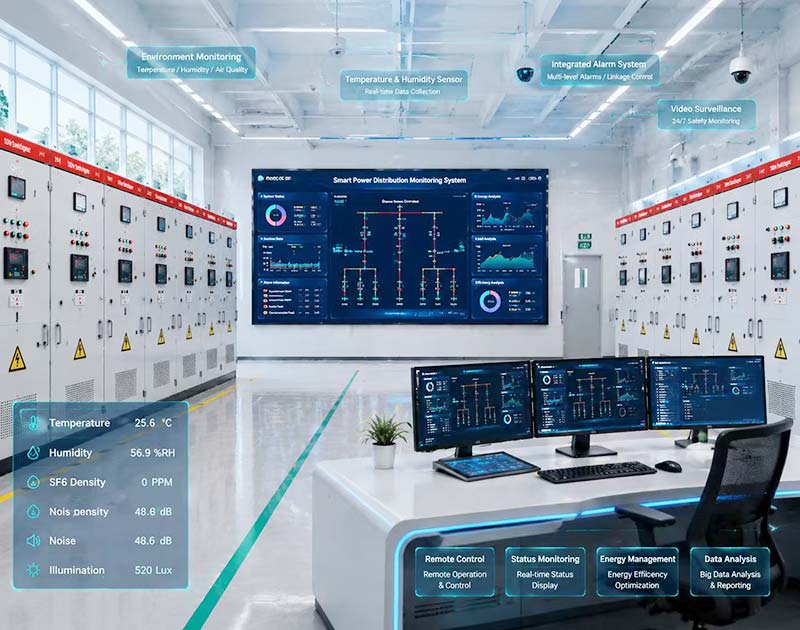
A motor-operated 11kV ring main unit is not automatically a remotely controlled or self-healing distribution system. Specify the motor mechanism, auxiliary supply, local/remote selector, status contacts and external communication interface as separate items.
Create an I/O schedule listing each required signal: switch position, earthing-switch position, fault indication, protection trip, voltage status and any measured values. Identify which commands are allowed remotely and what interlocks or permissions apply.
If the project expects automated restoration, define the controller and communication responsibilities outside the RMU as well. The equipment should provide the required switching and indication interfaces, while the network automation logic must be engineered as a system.
Plan Future Expansion Before Ordering the First RMU
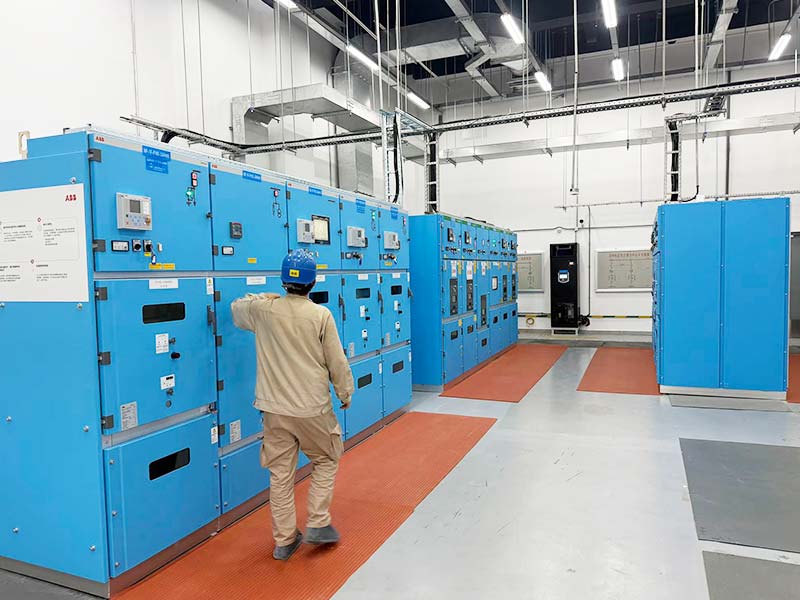
Future expansion can mean an equipped spare way, an extensible bus connection, another RMU beside the first, or a completely separate feeder. These are not equivalent provisions.
For an 11kV ring main unit in a growing industrial park or commercial development, describe the planned future network on the single-line diagram. Ask which interfaces are included now and what outage would be needed to make the future connection.
Recheck fault duty when another source, transformer or ring section is added. Physical space for one more cabinet does not prove that the existing bus, protection and cable system can accept the new configuration.
Use an RFQ Checklist That Forces Comparable Proposals
The following 11kV ring main unit checklist turns the design inputs into fields that different suppliers can answer on the same basis.
| RFQ item | Buyer should provide | Supplier should confirm |
|---|---|---|
| Network arrangement | Single-line diagram and operating modes | Function and device in each RMU way |
| Electrical ratings | System voltage, frequency, fault current and duration | Rated voltage, insulation, current and fault ratings |
| Transformer feeder | Transformer duty and protection philosophy | Switch-fuse or breaker arrangement and protection scope |
| Cables | Cable type, size, entry direction and accessory preference | Termination interface, space and earthing arrangement |
| Monitoring | Required indication, metering and remote I/O | Sensors, instruments, terminals and communications scope |
| Environment | Indoor/outdoor condition, temperature, altitude and contamination | Applicable enclosure and operating limitations |
| Verification | Required standards, classifications and document schedule | Configuration-specific evidence and routine test records |
How to Review a Lanshan HXGN15-12 Proposal
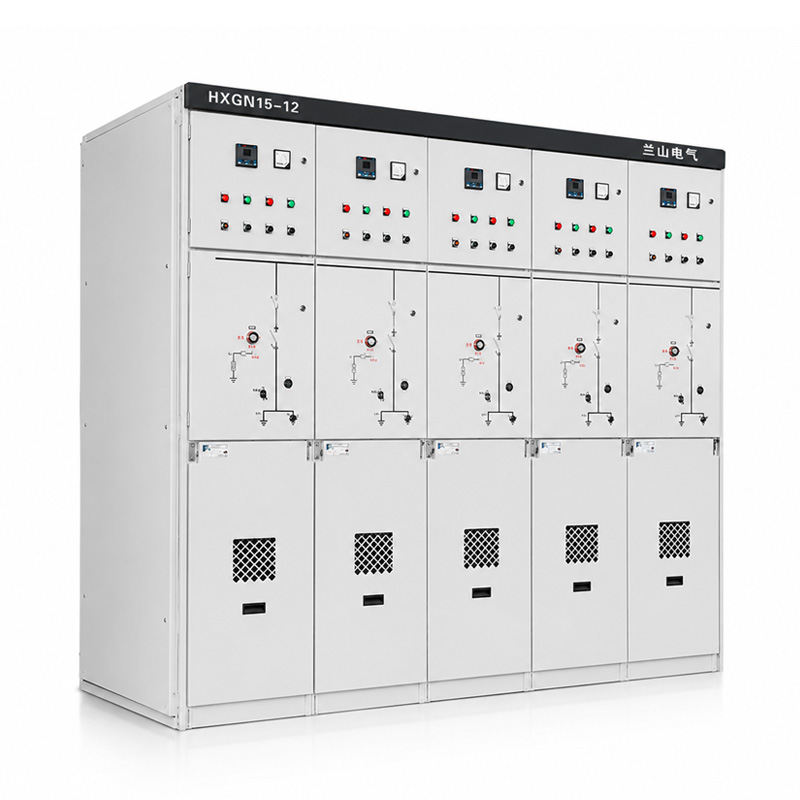
Lanshan’s HXGN15-12 ring main unit is presented for medium-voltage distribution with configurable incoming, outgoing, transformer-protection and metering functions. Use that product platform as the starting point for an 11kV ring main unit discussion, then request a project-specific datasheet and single-line arrangement.
Confirm the exact switching device in each way, insulation arrangement, rated normal current, short-time withstand current and duration, earthing-switch functions, cable interfaces and protection equipment. Do not apply the broadest series values to every configuration without written confirmation.
The same applies to monitoring and automation. Request the actual signal list, auxiliary supply and terminal arrangement for the offered unit. Where the project requires features outside the confirmed HXGN15-12 configuration, ask for a documented alternative rather than assuming they are standard.
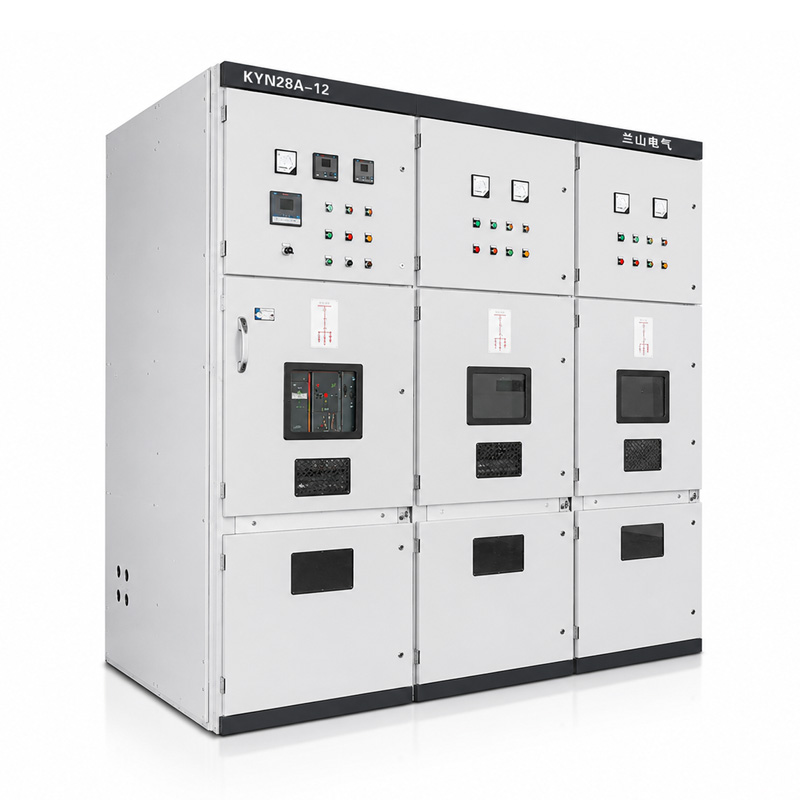
You can also review Lanshan’s medium voltage switchgear range when the project needs a different breaker arrangement or maintenance architecture.
Conclusion
A useful 11kV ring main unit specification defines the job of every feeder and keeps switching, fault withstand, protection and monitoring duties separate. It also resolves cable and site interfaces before the cabinet layout is approved.
Send the network diagram, transformer data, fault level, cable schedule and required control signals with the RFQ. That information allows suppliers to quote the same electrical problem instead of making different assumptions behind similar-looking RMUs.
Contact Lanshan Electric with your project requirements to review an HXGN15-12 configuration and identify the technical items that need confirmation before manufacture.
FAQ
What is an 11kV ring main unit used for?
An 11kV ring main unit is used to switch, sectionalize and protect medium-voltage distribution circuits. Typical arrangements include ring cable ways and a protected transformer feeder, but the exact circuit functions must be defined for the network.
Is a 12kV-rated RMU suitable for an 11kV network?
It may be, depending on the applicable equipment standard, insulation requirements and network conditions. The project engineer should specify the required rated voltage and withstand levels rather than selecting equipment from nominal system voltage alone.
Does every 11kV ring main unit use a circuit breaker?
No. Ring ways commonly use switches or switch-disconnectors, while transformer protection may use a coordinated switch-fuse combination or a circuit breaker. The required arrangement depends on the protection design and project requirements.
What fault rating should an 11kV RMU have?
The required fault rating must come from the project short-circuit study and include the relevant current and duration. Do not choose a generic kA value solely from the system voltage or another project.
What should I send for an 11kV ring main unit quotation?
Send the single-line diagram, system and fault data, transformer ratings, cable details, protection requirements, metering needs, environmental conditions and remote-control I/O. Mark preliminary values clearly so they can be confirmed before manufacture.